2026-2028 Europe Horse Bit Protection Trends: Why Silicone Bit Guards Are Replacing Traditional Rubber Options
Introduction: A Quiet Revolution in Horse Bit Protection Across Europe
In the European equestrian market, a subtle but powerful transformation is underway. Between 2026 and 2028, the conversation around horse bit protection is shifting from conventional rubber solutions toward advanced materials like silicone. At the center of this change are silicone bit guards for horses, redefining comfort, durability, and welfare standards in modern tack design.
For overseas horse tack brands, this shift is more than a material upgrade—it reflects evolving expectations from riders, veterinarians, and regulatory bodies focused on equine welfare and performance optimization. In a market where even small ergonomic improvements matter, silicone-based solutions are rapidly becoming the new baseline.
From the perspective of manufacturers like Dongguan Silicon Chain New Material Technology Co.,Ltd, this trend represents a convergence of material science and equestrian tradition, where innovation meets long-established riding culture.
This analysis explores the 2026-2028 outlook for Europe, focusing on how silicone innovations—ranging from bit guards to horse mane braiding bands silicone and silicone plaiting bands equestrian accessories—are reshaping product expectations across the industry.
Why Silicone Is Disrupting Traditional Rubber in Horse Bit Protection
1. From Static Rubber to Adaptive Silicone Comfort Systems
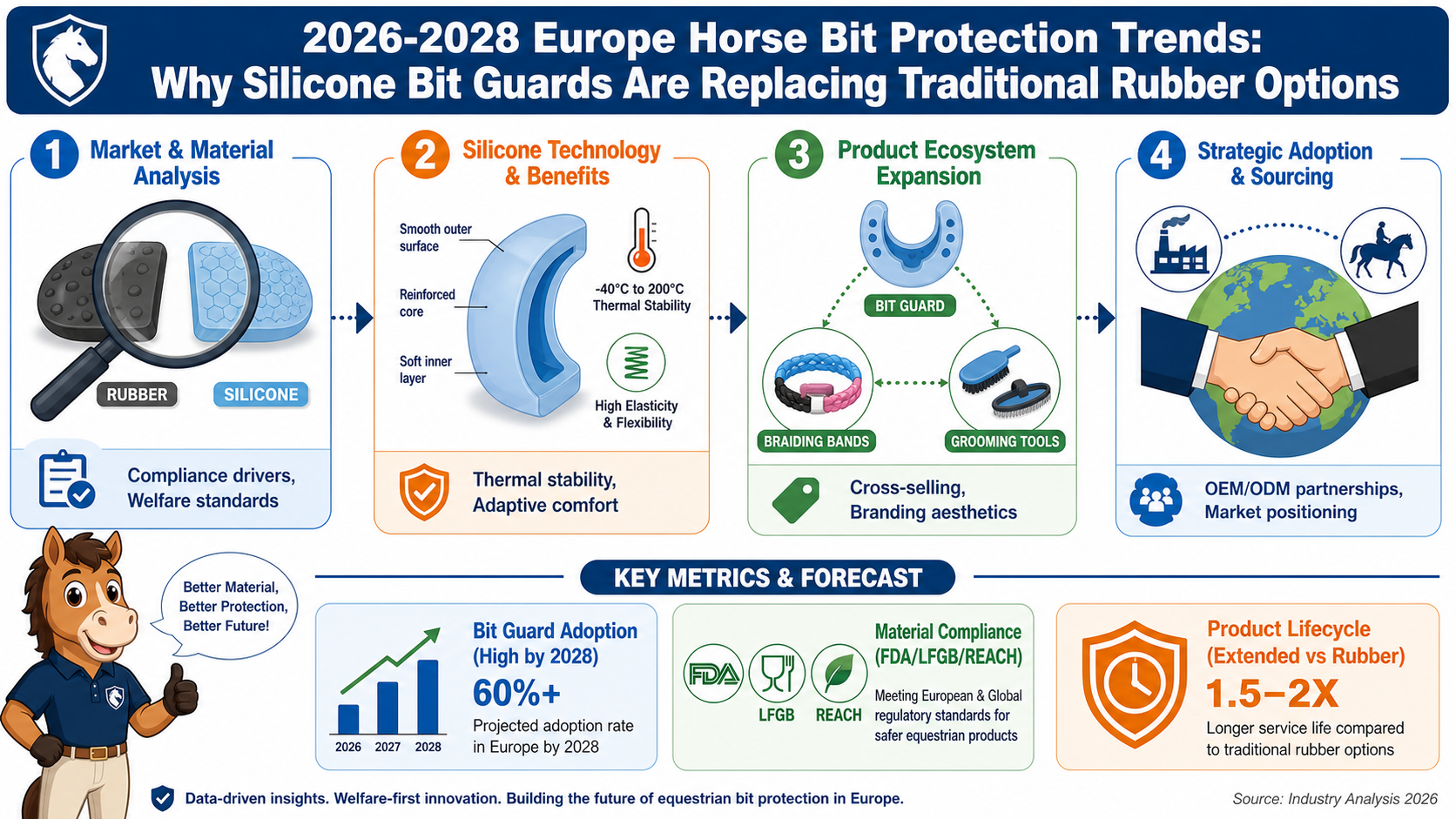
Traditional rubber bit guards have long been used to prevent pinching and friction, but they degrade quickly under moisture, temperature variation, and repeated mechanical stress. Silicone introduces a fundamentally different material behavior: flexibility retention, chemical stability, and improved biocompatibility.
Food-grade and medical-grade silicone—such as those used in equine applications by manufacturers like Silicon Chain—offer a stable performance range from -40°C to +150°C, making them suitable for diverse European climates.
According to FEI (Fédération Equestre Internationale) welfare guidelines, equipment that reduces oral stress and improves bit comfort is increasingly prioritized in competitive riding standards, reinforcing demand for softer, more adaptive materials.
Impact: Improved horse comfort, reduced oral injuries, and longer product lifecycle compared to rubber alternatives.
2. Multi-Functional Silicone Ecosystems in Equestrian Accessories
The rise of silicone is not limited to bit protection. It is expanding into complementary product categories such as horse tail braiding bands silicone and grooming accessories that enhance both performance and aesthetics.
Unlike traditional materials, silicone enables consistent elasticity and color stability, which is critical for branding in OEM/ODM equestrian supply chains.
Manufacturers with integrated capabilities—such as Dongguan Silicon Chain New Material Technology Co.,Ltd—leverage multi-process systems (molding, extrusion, and coating) to deliver unified product ecosystems for tack brands.
Impact: Expansion of product portfolios beyond tack protection into grooming and styling accessories, increasing average order value for brands.
3. Compliance-Driven Material Selection in European Markets
European equestrian brands are increasingly influenced by regulatory expectations around material safety, durability, and environmental impact. Silicone, particularly FDA-, LFGB-, and REACH-compliant formulations, aligns closely with these requirements.
Industry surveys from equestrian supply chains indicate that compliance-driven procurement is one of the fastest-growing decision factors in material selection, particularly for OEM/ODM sourcing models.
Impact: Rubber materials face gradual displacement in premium segments, while silicone becomes the default for compliant, export-ready tack products.
Future Outlook 2026-2028: Adoption Acceleration of Silicone Bit Protection
The next three years are expected to bring accelerated adoption of silicone-based equestrian components across Europe. While rubber will remain in low-cost segments, premium and performance-driven brands are shifting toward silicone-first design strategies.
| Segment | 2026 Adoption | 2028 Forecast | Key Driver |
|---|---|---|---|
| Bit Guards | Moderate | High | Horse welfare standards & comfort demand |
| Grooming Bands | Growing | Widespread | Branding aesthetics & durability |
| Tack Accessories | Emerging | Established | OEM/ODM customization demand |
The following illustrative SVG model reflects the expected adoption trajectory based on aggregated industry direction from equestrian trade reports and material innovation trends:
This upward trend aligns with broader material innovation patterns observed in performance sports equipment sectors, where silicone-based elastomers consistently replace natural rubber due to stability and hygiene advantages.
Opportunities and Challenges for Equestrian Brands
Key Opportunities
- Expansion into premium tack segments using silicone bit protection systems
- Cross-selling grooming products like silicone braiding bands horse accessories
- Stronger OEM/ODM customization strategies for European brands
- Improved brand positioning through welfare-compliant materials
Key Challenges
- Higher initial material cost compared to rubber
- Need for manufacturing process adaptation
- Brand education around silicone performance benefits
- Supply chain consistency for certified materials
Practical Action Guide for Equestrian Brand Decision-Makers
Different stakeholders in the equestrian supply chain require tailored strategies to capitalize on the silicone transition.
- Strategic Leaders (CEOs / Brand Owners): Prioritize transitioning flagship product lines to silicone-based bit protection systems to align with welfare-driven market expectations.
- Product Managers: Integrate silicone braiding and grooming accessories into existing catalogs to build ecosystem consistency across tack categories.
- Procurement Teams: Partner with experienced OEM/ODM suppliers such as Silicon Chain to ensure compliance, scalability, and cost efficiency.
For customized product development and sourcing strategies, brands can start your project to explore silicone-based equestrian solutions tailored for European markets.
How Silicon Chain Enables the Silicone Transition
As a specialized manufacturer in advanced equestrian materials, Dongguan Silicon Chain New Material Technology Co.,Ltd plays a key role in enabling this industry shift. With integrated silicone molding, extrusion, and coating capabilities, the company supports OEM/ODM development for brands seeking high-performance tack solutions.
Its expertise in food-grade silicone, automotive-grade thermal resistance, and certified manufacturing processes positions it as a reliable partner for European equestrian brands navigating the transition from rubber to silicone systems.
Conclusion: A Material Shift Defining the Next Era of Equestrian Design
The transition from rubber to silicone in horse bit protection is not a short-term trend—it reflects a structural shift in how equestrian products are designed, manufactured, and evaluated. Between 2026 and 2028, silicone-based systems will move from innovation to standardization in Europe’s premium tack market.
Brands that adapt early will not only improve horse welfare outcomes but also strengthen long-term competitiveness in an increasingly design- and compliance-driven industry.
References
- FEI (Fédération Equestre Internationale) – Equine welfare and equipment guidelines
- Dongguan Silicon Chain New Material Technology Co.,Ltd – Material capabilities and OEM/ODM manufacturing overview
- European equestrian supply chain and tack material innovation reports (industry synthesis)