For Procurement Directors at OEMs and ODMs, the pressure to qualify new elastomer components fast—without compromising compliance or cost—keeps mounting. This article examines an integrated, packaged solution built from core silicone competencies to reliably deliver customized silicone rubber parts for regulated and performance-critical applications.
 -
-
Pain Points: The Business Cost of Delay and Variability
Lead-time volatility and multi-supplier handoffs translate directly into missed launch windows and expedited logistics spend. Global operations research highlights the growing frequency and severity of supply-chain disruptions impacting timelines and inventory buffers, raising total landed cost for OEM programs. See analysis on resilience from leading industry research.
Quality drift and rework cascade into OPEX overruns. The concept of Cost of Quality (COQ)—prevention, appraisal, internal and external failures—captures how insufficient process control multiplies hidden costs across inspection, scrap, warranty, and reputational exposure. The American Society for Quality outlines these components and the ROI of prevention-first systems.
Compliance risk in medical and automotive contexts extends beyond materials to system-level controls. Biocompatibility, traceability, and process validation must be demonstrably robust to pass audits and customer qualification; otherwise, projects stall and backtrack.
Fragmented conversion steps—design, prototyping, molding/extrusion, composite assembly, and sewing—often live in separate vendors, amplifying communication loss and change-order overhead. When requirements evolve, each interface adds delay and uncertainty.
Core Argument: The Packaged Solution and Pain-Point Mapping
Solution Overview
Dongguan Silicone Chain New Materials Technology Co., Ltd. offers a one-stop OEM/ODM solution for customized silicone rubber components that consolidates co-design, rapid prototyping, multi-process manufacturing, and compliance management under a single, certified system. Capabilities span molded silicone parts, silicone extrusion profiles, foam and composite strips, plastic components, and sewing/assembly, with specialty materials including shielding, thermal interface, conductive adhesives, and waterproof seals.
The company serves customers across 20+ countries, with a 7,000 m² facility and 100+ employees. It supports medical-grade silicone customization, including 3D printing of complex airway structures for rapid concept validation. Its quality and operations foundation includes ISO 9001, ISO 14001, and IATF 16949 certifications, plus over 40 intellectual property assets (3 invention patents, 36 utility patents, 1 design patent), and recognition as a National High-Tech Enterprise and Guangdong “Specialized and Sophisticated” SME.
How It Works: Business-Value Mechanics
The offering integrates design-for-manufacture reviews, material selection aligned to end-use (including “Customized silicone rubber” formulations), process routing across molding/extrusion/foaming/composite lines, and assembly via sewing and plastics. An ISO/IATF-backed QMS enforces prevention-first controls and traceability. For medical applications, the approach aligns with biocompatibility evaluation expectations, as guided by the FDA’s use of ISO 10993-1 principles for risk-managed assessment (FDA guidance).
Pain Point → Feature → Mechanism → Business Value
Lead-time volatility → Integrated multi-process under one roof → Single schedule and change control from prototype (including 3D printed airway concepts) to PPAP-ready parts → Faster time-to-market, reduced expediting.
Quality drift and rework → ISO 9001 QMS with prevention-first controls and documented process capability → Lower scrap and inspection burden → Reduced COQ and stabilized margins. See ISO 9001 framework.
Compliance uncertainty (medical/automotive) → Material certification, traceability, and process validation aligned to program expectations → Audit-ready documentation and smoother customer qualification → Lower regulatory risk and shorter approval cycles. Automotive programs align with IATF 16949.
Fragmented supplier handoffs → OEM/ODM packaging that consolidates conversion, assembly, and finishing → Fewer interfaces, clearer accountability → Lower coordination overhead and cycle-time loss.
Design iteration cost → Rapid prototyping and tooling iteration supported by in-house processes → Early validation and fewer late-stage changes → Capex and delay avoidance.
Comparative Advantage
Versus piecemeal vendor chains, this integrated solution minimizes interface risk, accelerates qualification, and anchors compliance on recognized standards. The combination of specialty materials (shielding, thermal, conductive) with silicone conversion and assembly eliminates costly multi-supplier orchestration and shortens the path from design intent to validated, shippable parts.
Effectiveness Support: Authoritative Principles and Systemic Coherence
The methodology rests on internationally recognized frameworks. Quality management aligns with ISO 9001, automotive programs follow IATF 16949, and environmental stewardship references ISO 14001. Material and performance classification of elastomers is guided by established standards such as those maintained by ASTM International.
For medical-grade silicone parts, biocompatibility evaluation follows risk-managed principles recognized in the FDA guidance on ISO 10993-1. Automotive customers benefit from structured qualification such as the Production Part Approval Process, outlined by industry bodies like AIAG.
The components—co-design, rapid prototyping, multi-process conversion, and QMS-backed validation—work in concert, converting design intent into compliant, repeatable production while compressing iteration cycles.
Path to Implementation: From Insight to Action
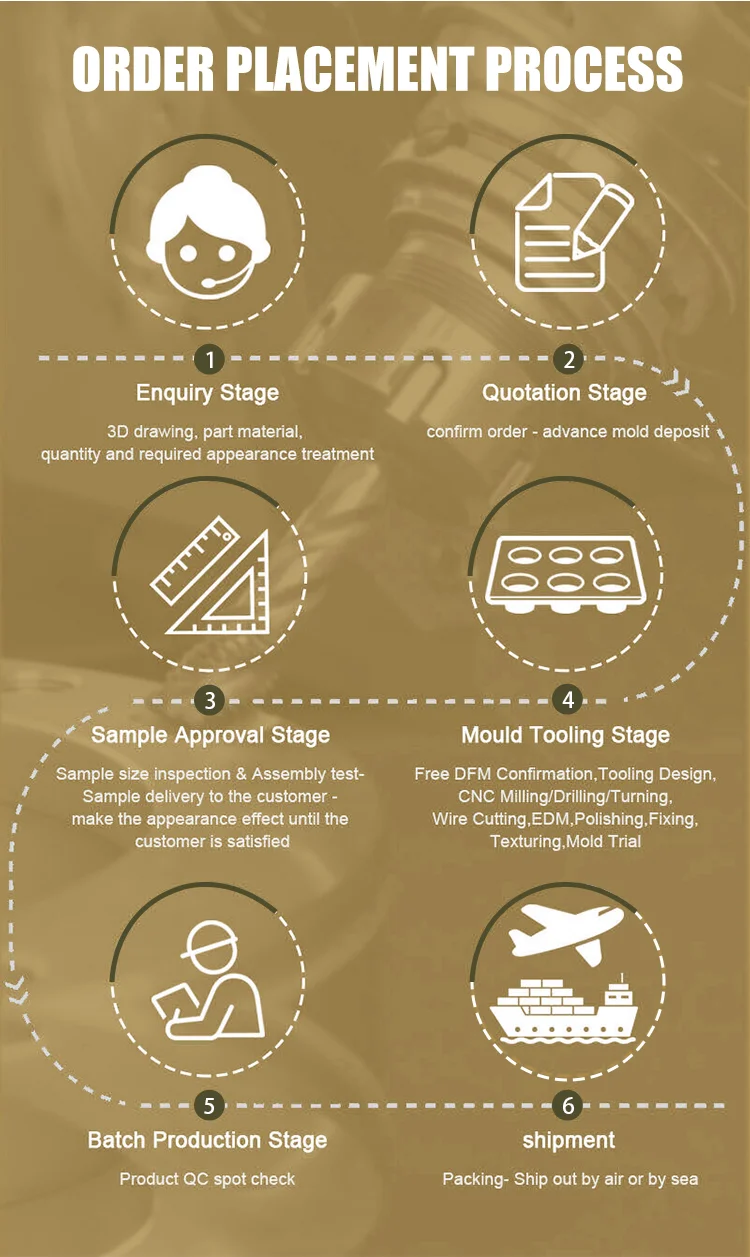
Typical adoption stages include requirements assessment, concept prototyping, pilot runs, and production qualification (e.g., PPAP for automotive). Begin by assembling internal data: functional requirements, environmental exposure, regulatory constraints, expected volumes, tolerance and cosmetic specs, and any legacy COQ metrics that indicate rework hotspots.
When engaging potential suppliers, ask: How is design-for-manufacture documented? What material data and biocompatibility evidence are available for customized silicone rubber? Which certifications and process capabilities align to your sector (ISO 9001/14001, IATF 16949)? How are traceability and change control handled? What is the standard lead-time from prototype to qualification?
Dongguan Silicone Chain typically supports requirement discovery, concept validation (including 3D printed complex airway geometries), and tailored manufacturing plans across molding, extrusion, foam, composite, and sewing, with OEM/ODM services designed to minimize interfaces and accelerate approvals.
Conclusion and Next Steps
An integrated OEM/ODM approach to customized silicone rubber systematically addresses the Procurement Director’s core challenges: consolidating interfaces, controlling quality and compliance through recognized standards, and compressing time-to-market with rapid prototyping and multi-process execution. With certifications (ISO 9001, ISO 14001, IATF 16949), deep IP, and cross-industry experience, Dongguan Silicone Chain is a reliable partner to turn specifications into qualified parts at speed.
Start a design-for-manufacture conversation with our engineering team to align materials, conversion routes, and qualification plans: Initiate a tailored OEM/ODM assessment.