Horse Welfare-Centered Tack Design: Principles for Equine Comfort and Natural Movement
Horse Welfare-Centered Tack Design is the practice of designing horse tack around the horse's body shape, movement, skin, mouth, and behavior, so the equipment supports control without causing avoidable pain, pressure, rubbing, or restriction.
In modern horse tack manufacturing, welfare-centered design is not only about making a product look refined. It is about helping horses move naturally and communicate clearly through their horse body language. This matters to overseas equestrian buyers because product quality, material safety, fit, traceability, and practical cleaning needs can all affect brand trust in the European market.

Core Principles of Welfare-Centered Tack Design
1. Start With the Horse's Shape, Not a Generic Size
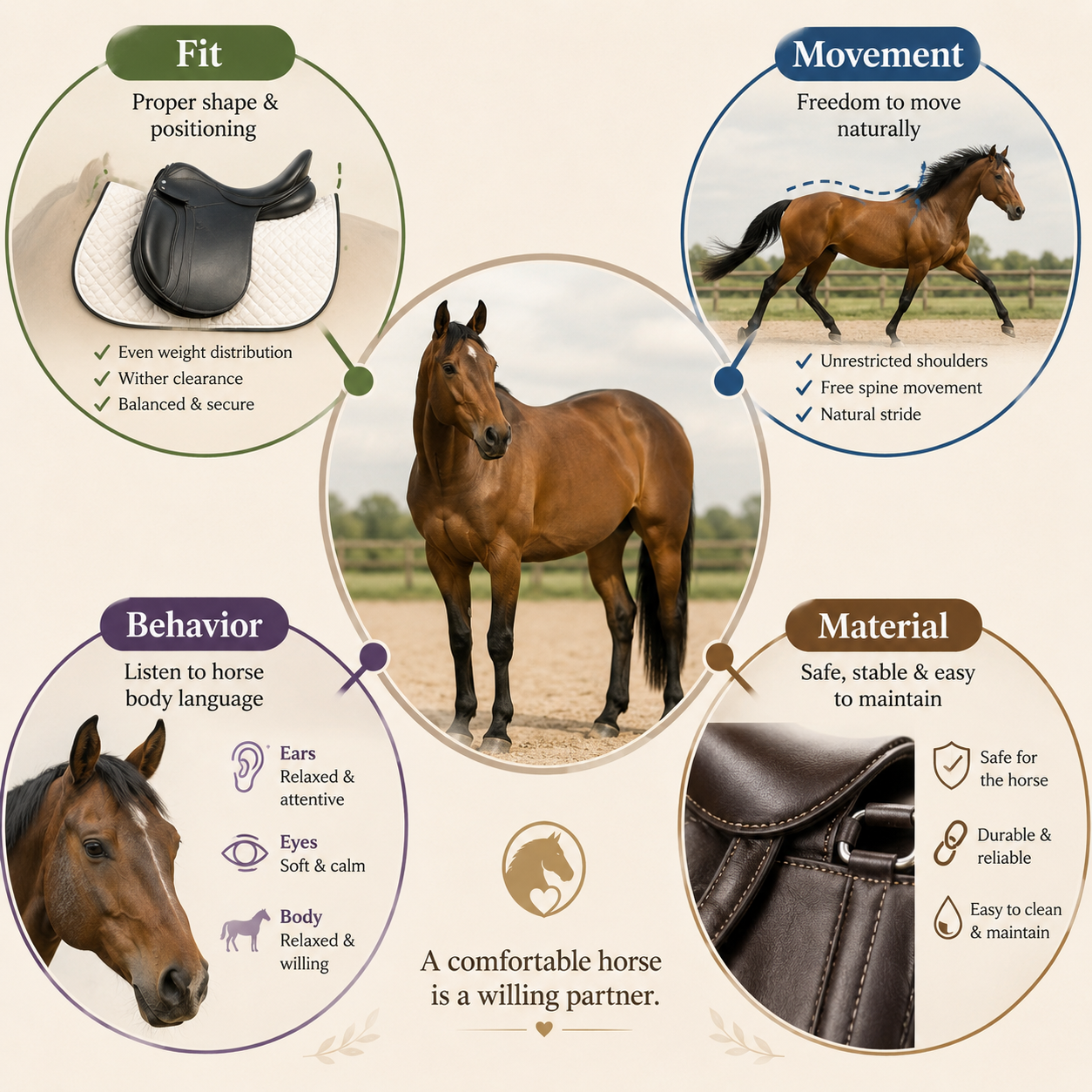
Every horse has a different head, jaw, back, leg, and girth shape. Tack should follow these differences instead of forcing the horse into a fixed form. A well-designed bit guard, leg liner, girth cover, or stirrup accessory should sit securely while leaving room for normal movement.
Fit should be checked during standing, walking, turning, and work. A product that looks correct in a stable may move, pinch, or rub when the horse bends, breathes, or sweats. Guidance from World Horse Welfare explains that poor fit can contribute to injury, welfare problems, and back pain.
2. Protect Natural Movement
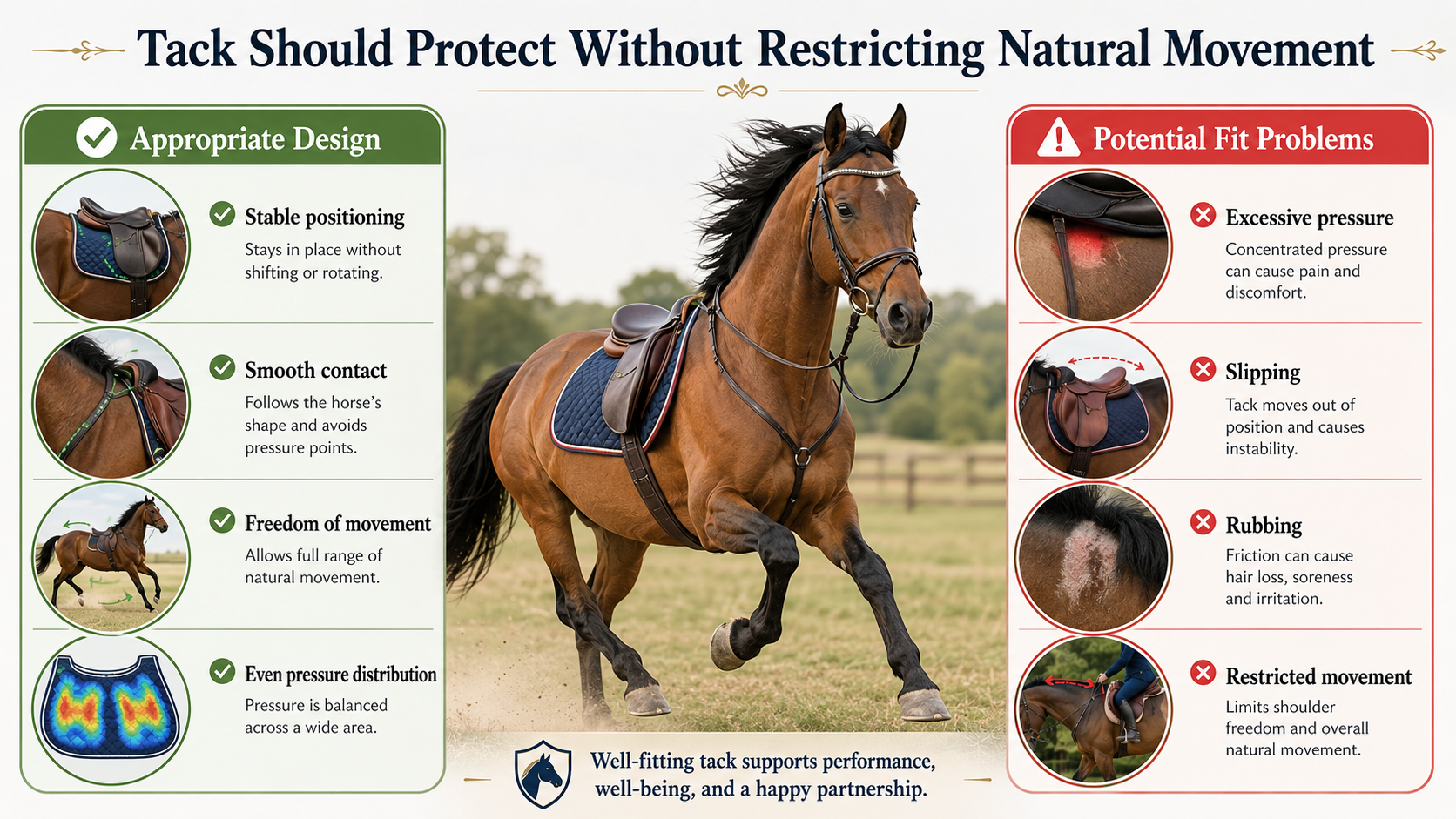
A horse should be able to stride, flex joints, breathe deeply, lower the head, and use the back without unnecessary restriction. Protective tack should protect the body without becoming a rigid barrier. This is especially important for leg guards, stirrup accessories, girth components, saddle pads, and bridle parts.
Soft, stable materials can help spread pressure across a wider area. However, softness alone is not enough. A soft product that slips, traps heat, or has poorly placed straps may still reduce horse comfort. Equipment should be sized correctly, fastened securely, and inspected often. The Good Welfare for Equids white paper states that saddles, bridles, bits, boots, bandages, and similar equipment can have a significant effect on equid health and welfare when poorly fitted or maintained.
3. Treat Horse Behavior as Product Feedback
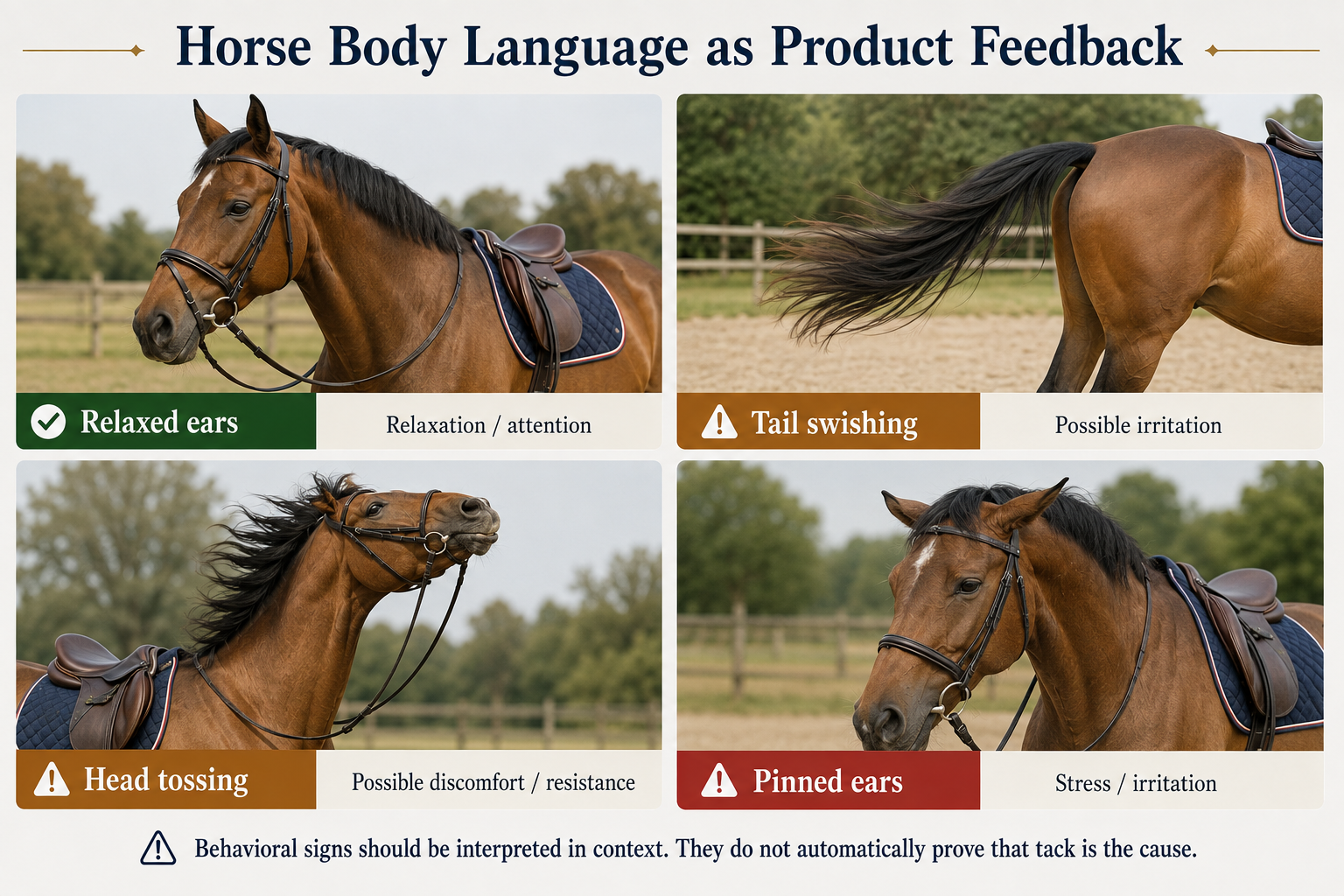
Horse behavior is useful feedback. A horse cannot complete a product review, but it can show discomfort through tension, head movement, tail swishing, ear position, biting, kicking, reluctance to move, or resistance during tacking up.
These signs do not prove that tack is the only cause. Pain, dental issues, rider balance, training, and lameness may also be involved. Still, they should never be ignored. World Horse Welfare notes that poor saddle fit, back pain, and lameness can be linked with unusual behaviors during tacking up and mounting.
For buyers and product teams, this means horse communication should be included in product testing. Product trials should record both physical fit and behavioral response before a design moves into mass production.
4. Use Materials That Are Safe, Stable, and Easy to Maintain
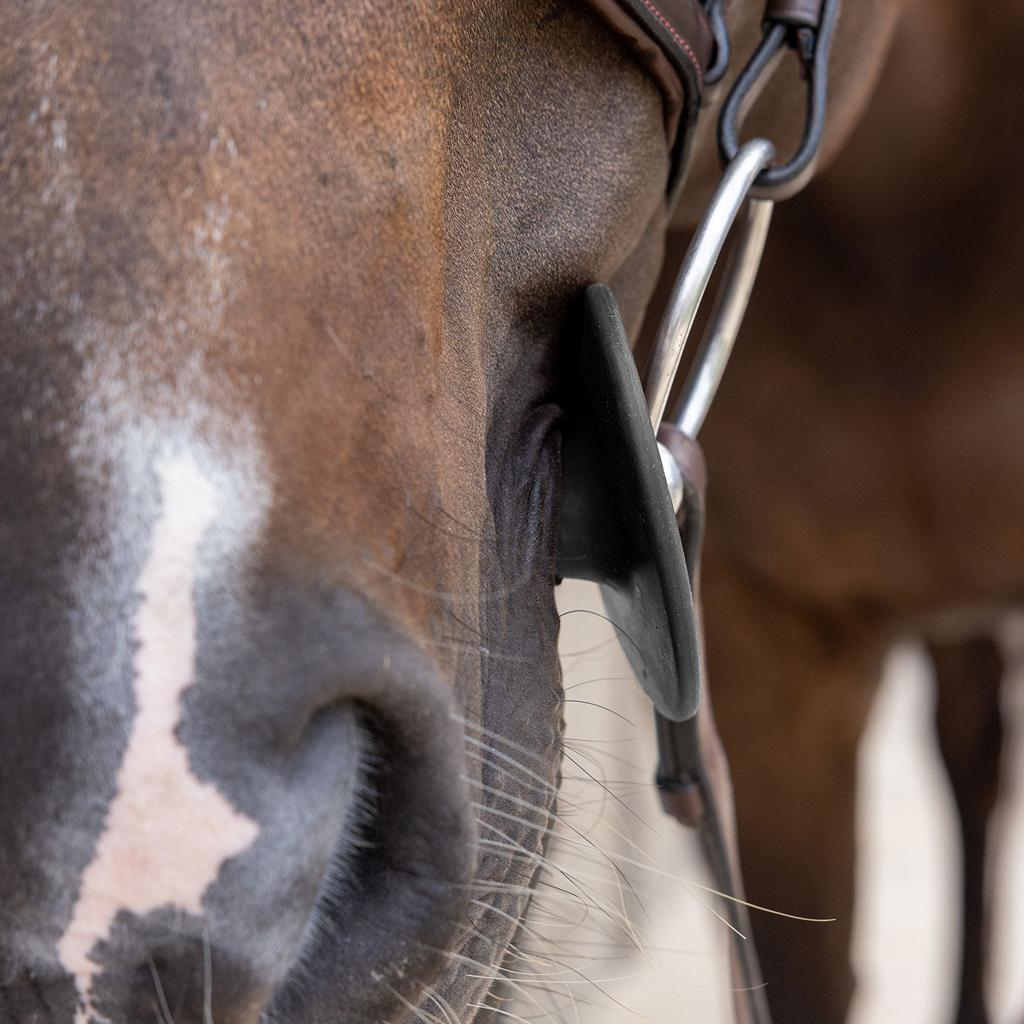
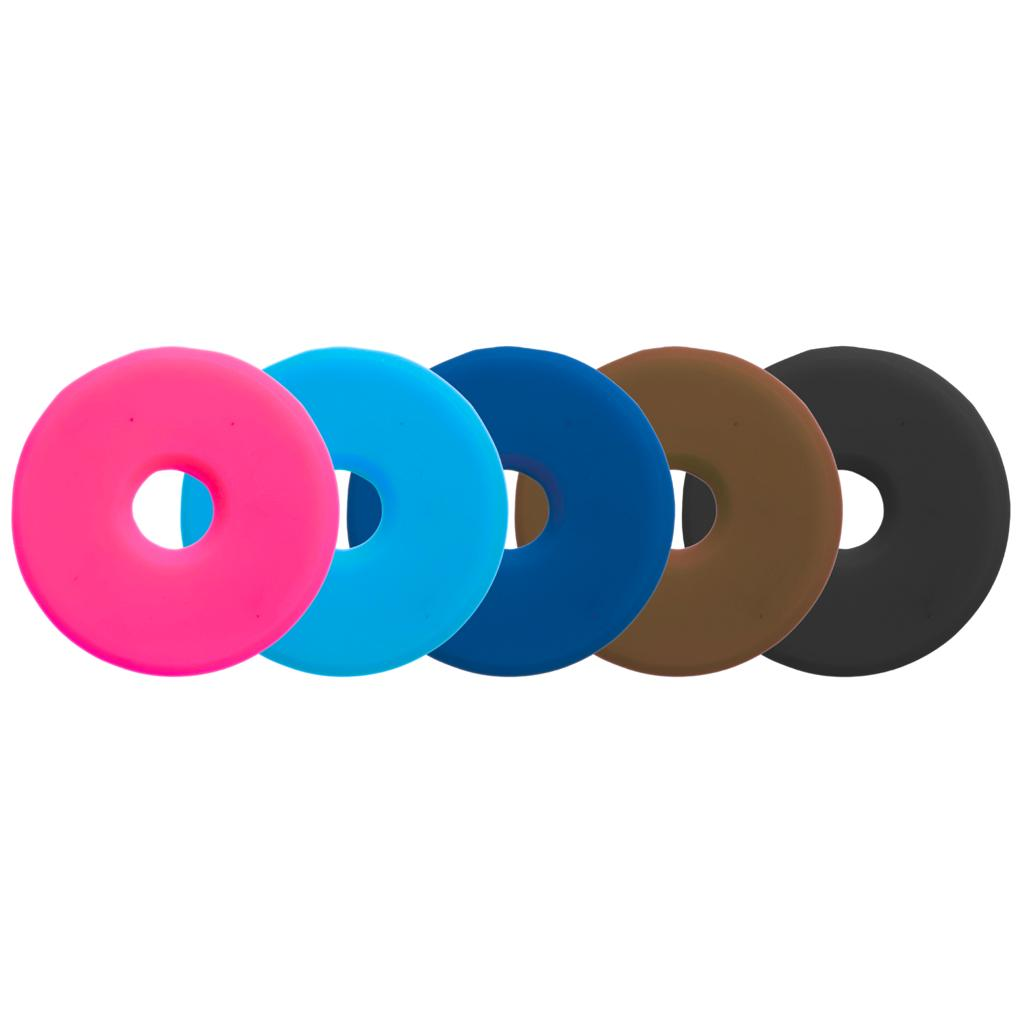
Material choice affects skin contact, mouth contact, grip, flexibility, cleaning, odor retention, and service life. Silicone can be useful for selected horse tack components because it can be molded into smooth shapes and cleaned more easily than many porous materials. The final material choice must still match the product's contact area, force level, climate, cleaning method, and intended use.
For products that contact skin or the mouth, buyers should request batch-level material documents and verify the correct testing scope for the destination market. Chemical compliance documents may support procurement decisions, but they do not replace fit testing, veterinary review, or real-horse trials.
| Design Check | Why It Matters for Horse Welfare | Buyer Evidence to Request |
|---|---|---|
| Contact shape | Helps reduce concentrated pressure and rubbing | 2D or 3D drawings and sample approval records |
| Material safety | Supports safer skin and mouth contact decisions | Material declaration and relevant test reports |
| Strap and closure design | Helps prevent slipping, over-tightening, and chafing | Pull-test data and use instructions |
| Movement trial | Shows whether the product stays stable in work | Trial notes, photos, and behavior observations |
| Cleaning durability | Supports hygiene and repeatable product performance | Cleaning guidance and repeated-use test plan |
Why Welfare-Centered Tack Design Matters
Horse welfare-centered design creates value for the horse, rider, brand, and buyer. For the horse, the goal is lower risk of avoidable pressure, rubbing, and restriction. For the rider, better comfort may support clearer movement and calmer handling. For a brand, a documented design process can reduce quality disputes and support a more credible product story.
Welfare also has a wider meaning. The UK Code of Practice for horses describes key welfare needs as a suitable environment, suitable diet, normal behavior, appropriate company, and protection from pain, suffering, injury, and disease. Tack is only one part of this system, but it should support rather than conflict with those needs.
Typical Applications in Modern Horse Tack Manufacturing
For an overseas equestrian equipment buyer, a practical application may begin with a private-label request for silicone bit guards, anti-slip stirrup covers, or shock-absorbing leg guards. The buyer needs a product that matches a brand color, fits common equipment, is simple to clean, and has a clear quality file for the European market.
A welfare-centered supplier should begin by asking where the product contacts the horse, how it moves during use, and what signs may show discomfort. The supplier can then build samples, test closure strength and dimensions, gather rider and handler feedback, and refine the design before production.
Dongguan Silicon Chain New Material Technology Co., Ltd. applies this approach to silicone-based horse tack programs for brand buyers. According to company-supplied project information, its development process can include technical design review, parametric CAD work for different horse shapes, prototype testing, material testing, and production inspection documents.
The company also states that it can support private-label selections such as girths, saddle pads, bit guards, grooming brushes, and leg protection liners. Its stated material and quality support includes FDA and LFGB food-grade silicone options, REACH-related documentation, ISO 9001 quality-system materials, and inspection records. Buyers should confirm the exact certificate, product scope, issue date, and batch coverage before purchase.
Design Decisions That Support Horse Comfort
- Use smooth edges around sensitive areas such as the mouth, jaw, pastern, and girth line.
- Choose a shape that spreads contact instead of creating a narrow pressure point.
- Keep straps stable without tightening them beyond the product's intended fit.
- Use breathable construction where sweat and heat may build up.
- Check the tack during work, not only before mounting.
- Stop use and seek qualified advice when horse body language suggests pain or distress.
- Review fit again when the horse changes weight, muscle condition, workload, or season.
Regular inspection is important. UK statutory guidance for hired horses says saddles and tack should be checked regularly to confirm they are safe and fit the horse correctly, especially where horses are young or have changed weight or muscle condition. Read the guidance from GOV.UK.
Further Reading and Related Topics
Horse welfare-centered tack design connects closely with material selection, fit testing, product durability, and responsible quality control. To discuss a private-label silicone horse tack program, material documentation, or a custom product review, contact the Silicon Chain product team.
Dongguan Silicon Chain New Material Technology Co., Ltd. reports experience in silicone manufacturing for automotive, medical, and food-contact applications. It also reports ISO 9001, ISO 14001, and IATF 16949 quality-system credentials, together with product-level material and compliance support. These records can help overseas equestrian buyers build a more controlled sourcing process, but each buyer should independently verify documents against the final product and target-market requirements.
Common Questions
How can I tell whether horse tack may be causing discomfort?
Look for changes during tacking up and riding. These may include pinned ears, tail swishing, head tossing, biting, kicking, reluctance to move, or a changed gait. These signs can have several causes, so inspect the tack and ask a veterinarian or qualified fitter for help. World Horse Welfare advises that subtle behavior changes can signal stress, pain, or discomfort.