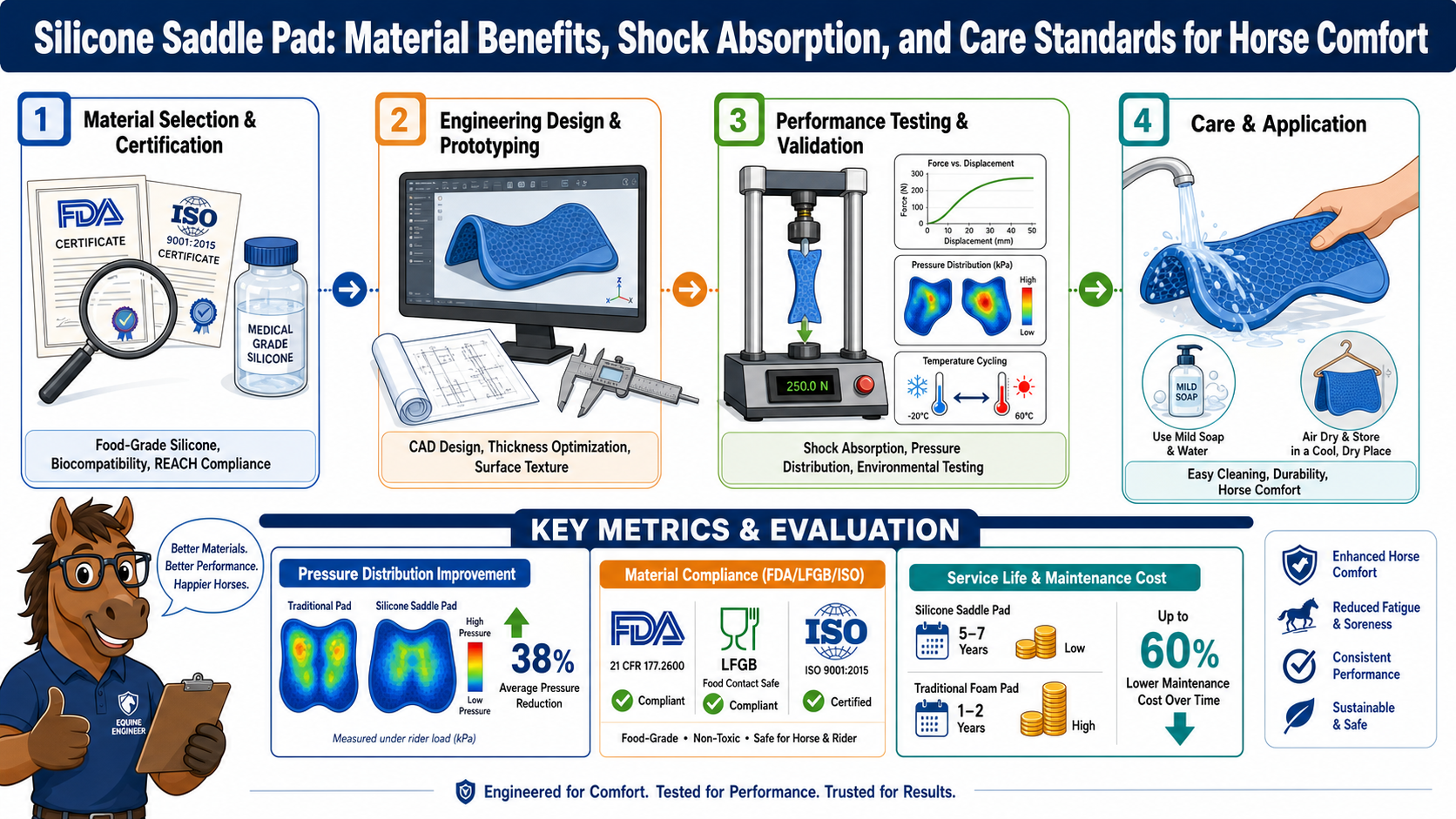
Silicone saddle pad is a horse saddle accessory that uses silicone-based materials to improve comfort, stability, pressure distribution, and protection between the horse’s back and the saddle.
In the modern equestrian equipment industry, silicone saddle pads help brands create safer and easier-to-maintain products by combining advanced material science with traditional horse care needs. For European equestrian brands, choosing the right silicone material can improve horse comfort while meeting strict expectations for safety, durability, and product quality.
Material Benefits and Key Properties of Silicone Saddle Pads
A silicone saddle pad mainly depends on the special features of silicone, including flexibility, elasticity, skin-friendly contact, and resistance to environmental changes. Compared with traditional rigid materials, silicone can better follow the natural movement of the horse’s body.
High-quality silicone used in equestrian products is often selected from food-contact or medical-grade material systems. These materials are designed to reduce unwanted reactions during skin or mouth contact applications. International material safety requirements for food-contact silicone are described in regulations such as the FDA food contact material guidance and European chemical safety frameworks such as REACH regulations.
Silicon Chain applies FDA and LFGB certified food-grade silicone experience to equestrian products. The material selection focuses on low sensitivity performance and excludes chromium, latex, and formaldehyde. Products are also evaluated according to ISO 10993 related biocompatibility testing principles for skin-contact applications.
Main Material Advantages
| Property | Benefit for Horse Equipment |
|---|---|
| Elastic silicone structure | Helps absorb movement impact and improves riding comfort |
| Non-slip surface | Supports saddle stability during training and competition |
| Easy-clean surface | Allows simple maintenance after riding sessions |
| Weather resistance | Supports use in different climates including cold regions |
Shock Absorption and Design Process
The shock absorption ability of a silicone saddle pad comes from its flexible molecular structure. During riding, the material works like a soft buffer between the saddle and the horse’s back. It helps reduce concentrated pressure points and improves weight distribution.
The performance of a silicone saddle pad depends on several design factors:
- Silicone thickness and hardness selection
- Surface texture design for grip control
- Shape adaptation for different horse back structures
- Combination with breathable support layers
Silicon Chain uses engineering evaluation before production. The team checks material selection, surface treatment, structure, and 3D/2D drawings. Testing equipment includes tensile testing machines, environmental testing systems, temperature and humidity chambers, dimensional inspection tools, and microscopes.
Care Standards and Maintenance Requirements
Proper care helps maintain silicone saddle pad performance over a longer service period. Silicone surfaces should be cleaned after use to remove sweat, dust, and stable dirt.
Recommended Care Steps
- Rinse the silicone surface with clean water after riding.
- Use mild soap when deeper cleaning is required.
- Avoid strong chemicals that may affect material performance.
- Store the product in a dry place away from sharp objects.
For cold-weather applications, Silicon Chain performs product testing in Nordic locations such as Stockholm, Göteborg, and Umeå before releasing related SKUs. These tests help verify performance under low-temperature conditions.
Silicone Saddle Pad Applications in Modern Equestrian Equipment
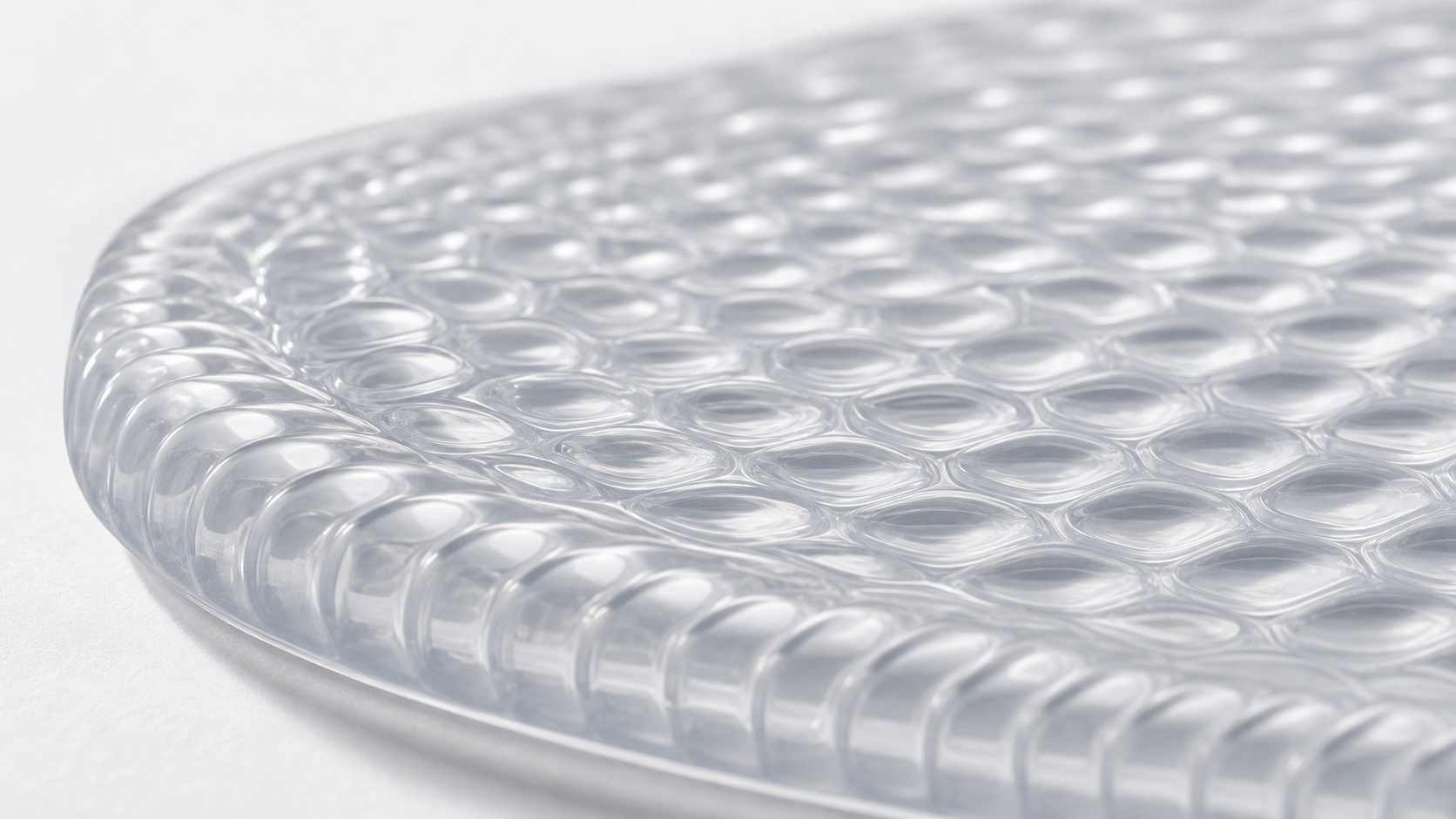
In the equestrian industry, silicone saddle pads are used by horse owners, professional riders, and private-label brands that need comfortable and reliable saddle solutions.
A European equestrian brand, for example, may need a custom saddle pad collection that matches different horse sizes and riding styles. Silicon Chain can support this process through modular product development, material customization, and quality documentation.
Silicon Chain developed a customization solution for FlexiGel Pro after the original hard plastic horse mouth protection product showed only 65% fitting performance compared with an 85% industry target. The company introduced pre-evaluated silicone materials, modular mold structures, and veterinary input during quality review.
The project included 12 horse jaw shape designs through parameter-based CAD templates. Prototype testing covered 12 horses, and the development process was completed within 90 days. The final production stage included AQL 1.5 quality inspection documentation.
Related Technology and Supplier Support
To learn more about silicone equestrian product development, material solutions, and customization services, brands can contact Silicon Chain for professional support.
Dongguan Silicon Chain New Material Technology Co., Ltd helps equestrian brands use silicone technology to create safer, more comfortable, and easier-to-maintain horse equipment. The company combines more than 12 years of silicone manufacturing experience from automotive, medical, and food-contact industries with equestrian product innovation.
Silicon Chain provides compliance support including FDA, LFGB, REACH preparation, and ISO 9001 quality management documents. The company also highlights ISO14001 and IATF16949 quality system experience, together with more than 30 patents and continuous product development.
Frequently Asked Questions
What makes a silicone saddle pad better for horse comfort?
A silicone saddle pad improves comfort through flexible material performance, better grip, and improved pressure distribution. Proper design and fitting remain important factors for horse health.
How should a silicone saddle pad be cleaned?
A silicone saddle pad should be cleaned with water and mild soap after use. Avoid harsh chemicals and store it in a dry environment.
Is silicone safe for horse contact applications?
High-quality silicone designed for contact applications can meet safety requirements through material testing and compliance systems such as FDA, LFGB, and ISO 10993 related evaluations.