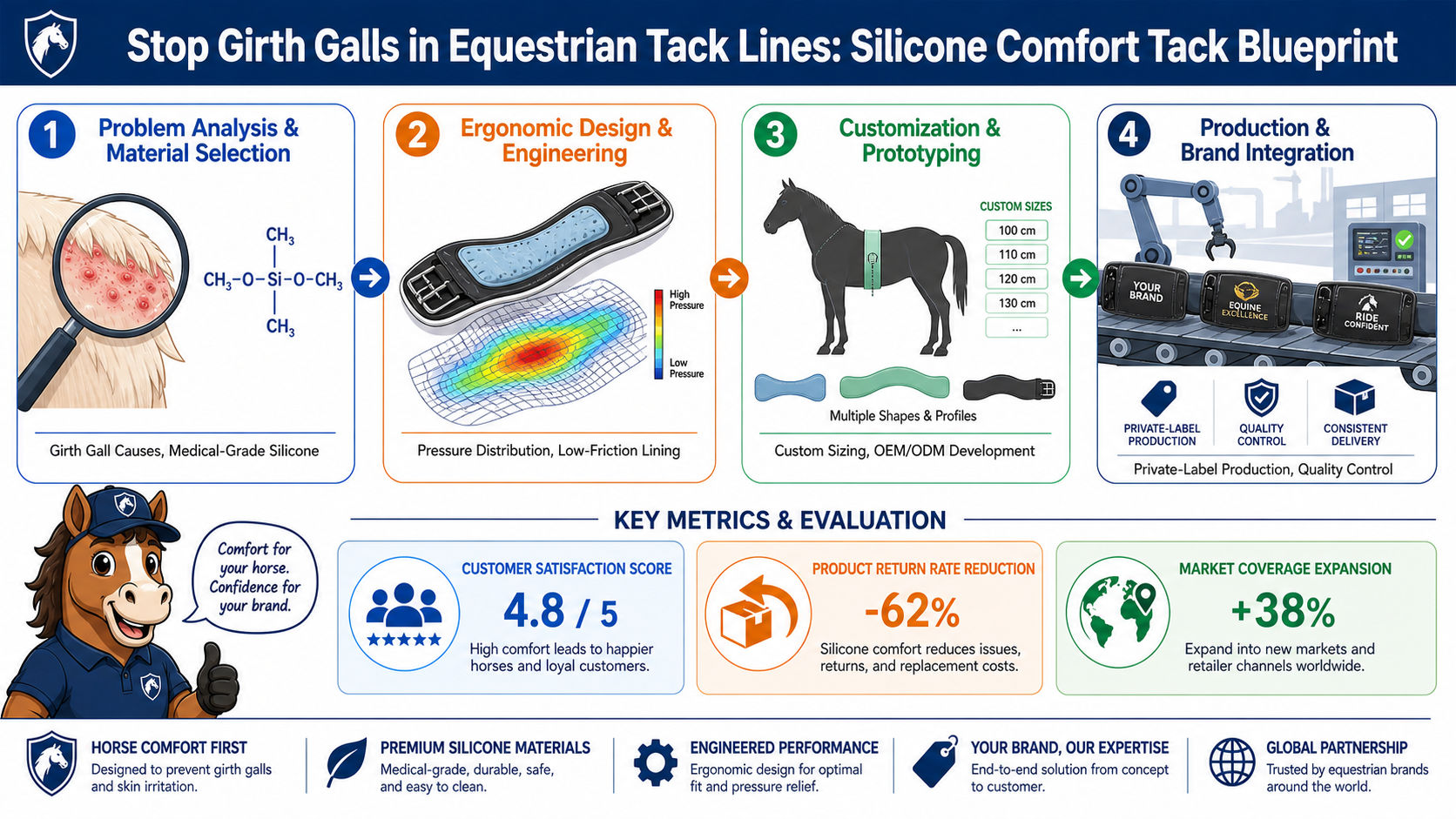
European horse tack brands often face a difficult product challenge: horses develop girth galls during daily schooling, competitions, and long trail rides. These skin problems can reduce rider confidence, increase customer complaints, and weaken brand trust.
This article explains how a silicone comfort tack upgrade blueprint combines skin-safe medical-grade silicone girth construction, low-friction lining engineering, ergonomic pressure distribution shaping, custom sizing development, and easy-clean private-label production to create a more horse-friendly and commercially valuable tack solution.
Why Girth Galls Are a Business Challenge for Modern Horse Tack Brands
Understanding what causes girth galls is the first step for brands that want to improve product performance. Girth galls usually happen when repeated pressure, moisture, friction, and poor fit create stress on sensitive skin areas around the horse’s girth zone.
For a horse tack brand, this is not only an animal comfort issue. It directly affects product reviews, repeat purchases, distributor relationships, and long-term brand positioning.
The British Horse Society horse care resources emphasize that correct equipment fit and regular checks are important parts of responsible horse management. Poorly fitted equipment can contribute to discomfort and welfare concerns.
| Girth Gall Risk Factor | Impact on Horse | Commercial Impact on Tack Brands |
|---|---|---|
| Repeated friction during movement | Skin irritation and discomfort | Higher return requests and negative reviews |
| Uneven pressure concentration | Localized stress points | Lower customer satisfaction |
| Heat and moisture buildup | Increased skin sensitivity | Reduced product reputation |
| Incorrect sizing | Poor movement comfort | More fitting complaints and support workload |
According to the International Equestrian Federation (FEI) horse welfare information, equipment choices are an important part of protecting horse health and performance. This creates a growing expectation for tack brands to provide products that support both performance and animal comfort.
The Silicone Comfort Tack Blueprint: A Complete Solution for Girth Gall Reduction
The silicone comfort tack blueprint is not a single material upgrade. It is a complete product development approach that combines advanced silicone manufacturing with practical equestrian design.
Silicon Chain builds this solution around five connected capabilities:
| Solution Component | How It Works | Business Value for Horse Tack Brands |
|---|---|---|
| Medical-grade silicone girth construction | Creates a soft, skin-friendly contact surface | Supports premium comfort positioning |
| Low-friction lining engineering | Reduces rubbing during repeated movement | Helps improve user satisfaction |
| Ergonomic pressure distribution shaping | Spreads force across a wider area | Creates a stronger product advantage |
| Custom sizing development | Matches different horse body shapes | Expands market coverage |
| Easy-clean private-label production | Supports simple maintenance and brand customization | Improves retail value and brand identity |
How Advanced Silicone Engineering Solves Common Tack Line Problems
Reducing Friction Through Low-Friction Lining Technology
Traditional girths often depend mainly on leather, fabric, or standard synthetic materials. These materials may work well in normal conditions, but repeated riding creates movement between the girth and the horse’s skin.
A low-friction silicone-based structure helps reduce unnecessary rubbing. The goal is simple: allow the horse to move freely while reducing repeated skin stress.
Silicon Chain combines silicone material knowledge from automotive, medical, and food-contact industries with equestrian product development. This manufacturing background supports more consistent material performance and product reliability.
The ISO 10993 biological evaluation guidance explains the importance of evaluating materials that come into contact with living tissue. While equestrian products have different use requirements, this material safety thinking supports better product development decisions.
Improving Comfort Through Ergonomic Pressure Distribution
Pressure points are one of the main reasons horses experience discomfort during long riding sessions. A better girth design does not only add soft material. It manages how force reaches the horse’s body.
Ergonomic shaping helps spread pressure more evenly. This can create a more stable and comfortable connection between horse and rider.
For brands selling premium tack products, this creates a clear difference from basic replacement products. The value is not only a new material. The value is a better riding experience.
Supporting Better Product Development With Custom Manufacturing
Every horse breed, riding discipline, and market has different needs. European tack brands may require different sizes, shapes, colors, packaging, or private-label specifications.
Silicon Chain supports OEM and ODM development from concept design to mass production. The company operates a 7,000 square meter factory with more than 100 employees and over 15 years of industry experience.
Its factory integrates five silicone manufacturing processes, including molding, injection, extrusion, foaming, and sewing. This integrated approach helps brands create more complete tack product lines instead of isolated products.
Why This Approach Creates Stronger Commercial Value
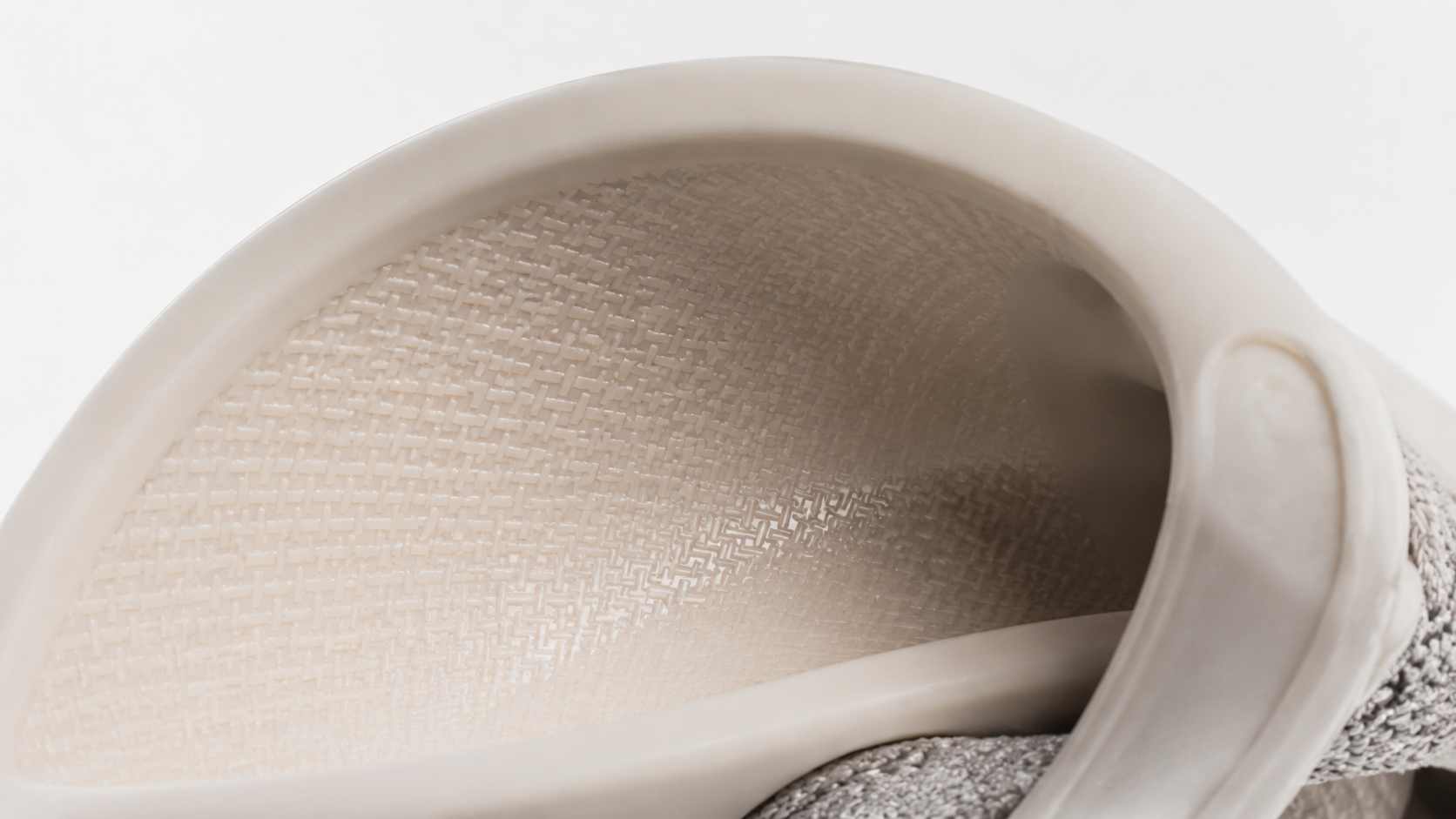
A successful horse tack upgrade must solve both horse comfort problems and business problems.
| Business Challenge | Silicone Comfort Tack Response | Expected Brand Benefit |
|---|---|---|
| Customer complaints about horse discomfort | Skin-friendly materials and pressure management | Higher customer confidence |
| Limited product differentiation | Advanced silicone comfort positioning | Stronger premium product identity |
| High maintenance concerns | Easy-clean surface design | Better user convenience |
| Complex supplier coordination | Integrated OEM/ODM manufacturing | Lower development complexity |
The McKinsey operations research resources highlight that stronger manufacturing processes and supplier collaboration can improve efficiency and reduce operational risks.
Effectiveness Support: Why Material and Manufacturing Choices Matter
The logic behind this solution is based on three connected principles.
First, better contact materials can improve comfort. Second, better product geometry can manage pressure. Third, better manufacturing control can improve consistency between production batches.
Silicon Chain applies manufacturing practices developed from industries that require strict process control. The company highlights documented production management and traceability capabilities developed through experience serving demanding industries.
The ASTM International standards organization provides widely recognized technical standards that help manufacturers improve product reliability, testing methods, and quality systems.
The European Union chemical safety information also shows why material compliance and responsible product development are increasingly important for companies selling into European markets.
Implementation Path: From Tack Concept to Market-Ready Product
Horse tack brands usually begin this type of upgrade project with three stages.
Stage One: Product Evaluation
Review current girth designs, customer feedback, return reasons, target horse types, and riding environments.
Stage Two: Prototype Development
Work with a manufacturing partner to test silicone materials, shapes, sizes, and appearance options.
Stage Three: Production and Brand Launch
Confirm quality requirements, packaging, private-label details, and production plans before market release.
Before contacting a supplier, brands should prepare key information:
- Current product problems and customer feedback.
- Target horse breeds and riding conditions.
- Required sizes, materials, and design preferences.
- Expected order volume and launch timeline.
Silicon Chain supports project evaluation, sample development, OEM/ODM customization, and purchasing assistance. The company also provides quotation responses within about 24 hours after receiving project details.
Conclusion: Building More Comfortable and Competitive Horse Tack Lines
Girth galls are not only a horse comfort problem. They are also a product quality and brand trust challenge. A successful solution requires more than changing one material. It requires a complete design and manufacturing strategy.
With medical-grade silicone material capability, ergonomic design support, custom development experience, and private-label production services, Silicon Chain helps European horse tack brands create more comfortable, easier-to-maintain, and more competitive products.
Start exploring a silicone comfort tack upgrade strategy with Silicon Chain through a custom horse tack development consultation.