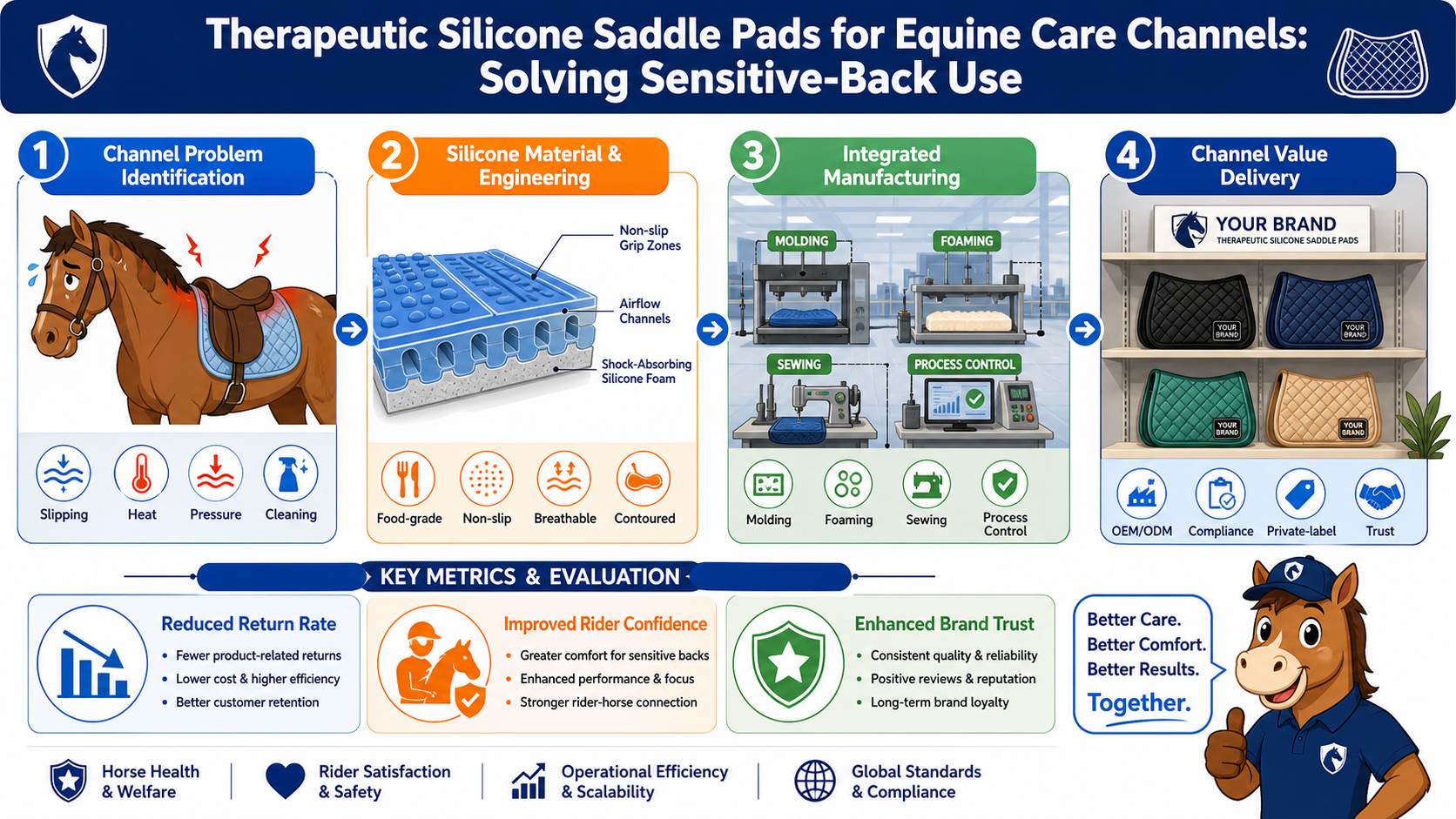
For equine care retailers, saddle fitters, therapy product distributors, and private-label tack brands, sensitive-back horses create a daily product challenge. Riders need comfort, grip, easy cleaning, and visible horse-friendly design, but many pads still slip, trap heat, or create new pressure points.
This article explains why a therapeutic silicone saddle pad program can solve that channel problem. It shows how Silicon Chain combines food-grade silicone, multi-process manufacturing, OEM/ODM support, and documented production control to help equine care channels offer safer, cleaner, and more reliable saddle pad choices.
Why Sensitive-Back Use Is a Business Problem for Equine Care Channels
A sensitive-back horse may react to pressure, heat, rubbing, or unstable tack. For the rider, this looks like pinned ears, short steps, poor forward movement, or refusal to work. For a channel buyer, it becomes a return, a complaint, or a lost repeat order.
World Horse Welfare says saddle fitting should consider both the horse and the rider, and it notes that poor fit can raise the risk of back pain. Its saddle fitting guidance also reminds owners to assess the saddle together with the pad, not as a separate item. This supports a key point for buyers: a pad is not a simple accessory. It is part of the comfort system. See the guidance from World Horse Welfare on saddle fitting and maintenance.
The British Horse Society also advises regular saddle checks and points to evidence that poorly fitted tack can affect horse welfare, comfort, and performance. For wholesalers and retailers, this means the pad category is linked to welfare trust, not only color and price. See The British Horse Society saddle fit guidance.
| Channel Pain Point | Impact on the Business | What Buyers Need From the Product |
|---|---|---|
| Pad slipping during riding | More complaints, more exchanges, and lower trust in the brand | A non-slip saddle pad silicone surface that helps stabilize tack |
| Heat and sweat under the saddle | Lower rider confidence and weaker repeat purchase | A silicone breathable saddle pad design with channels or vented zones |
| Pressure on the spine or withers | Higher welfare risk and more fitting questions for staff | A contoured spine relief saddle pad that avoids direct central loading |
| Skin sensitivity and cleaning issues | More hygiene concerns in therapy, rental, and lesson barns | A hypoallergenic saddle pad concept using stable, easy-clean silicone |
| Hard-to-differentiate private-label products | Price pressure and weak shelf value | OEM/ODM styling, sizes, textures, colors, and packaging |
The Solution: A Therapeutic Silicone Saddle Pad Built for Care Channels
A therapeutic silicone saddle pad is not a medical device. It does not replace a vet, a saddle fitter, or correct training. Its role is practical and clear. It helps manage grip, surface comfort, cleaning, and pressure distribution within a correct tack setup.
For equine care channels, the product should do four things well. It should stay stable. It should reduce rubbing. It should allow easier cleaning. It should give the buyer a product story that is easy to explain to riders.
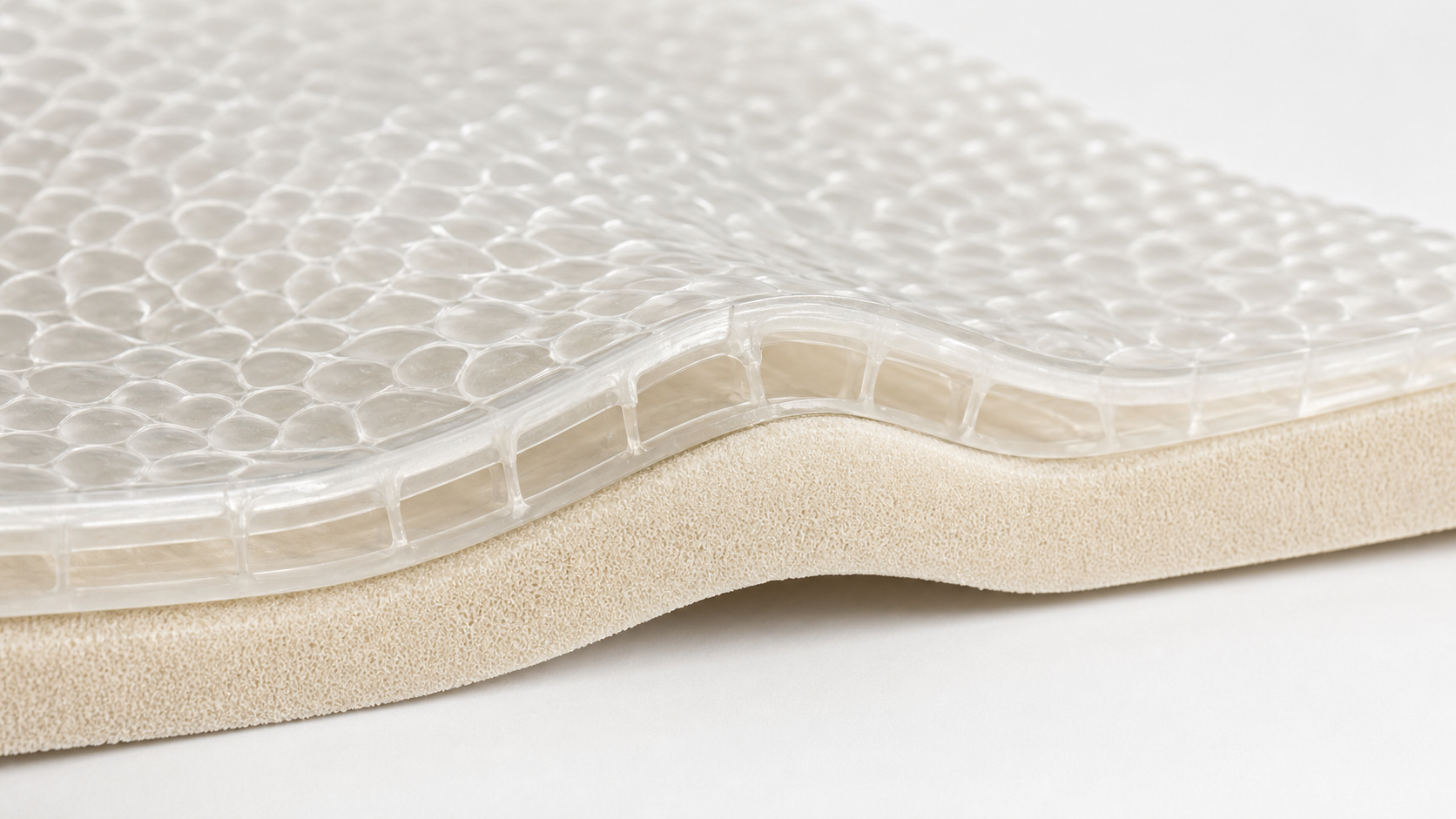
Silicon Chain supports this product logic as a silicone saddle pad manufacturer with integrated production. In one factory, the company combines molding, injection, extrusion, foaming, and sewing. This matters because a modern silicone saddle pad is not only a sheet of material. It may need a shaped grip surface, a soft foam layer, a stitched textile layer, a raised spine channel, and brand-specific edge finishing.
How the Silicone Saddle Pad Works in Business Terms
The value of silicone is simple to explain. It gives grip without a rough surface. It can be shaped into raised zones and channels. It is easy to wipe clean. It can also stay flexible across a wide temperature range when the right compound is used.
Silicon Chain applies food-grade silicone experience to equestrian goods. The company also states that its silicone material base supports REACH, FDA, and LFGB-related compliance needs. For European equestrian brands, this helps reduce material-risk questions during supplier review.
REACH is the main EU chemical law for protecting human health and the environment from chemical risks. That makes REACH awareness important when a saddle pad is sold through European care, tack, or sports channels. See the European Commission overview of the REACH Regulation.
Grip Without Over-Tightening the Girth
A non-slip saddle pad silicone surface can help reduce unwanted pad movement. This matters because some riders try to solve slipping by tightening the girth too much. That can create discomfort and new complaints.
With silicone grip zones, the pad supports stability through surface friction. The business value is clear. Fewer slipping complaints mean fewer staff explanations, fewer returns, and stronger confidence in the product line.
Spine Relief for Sensitive-Back Horses
A contoured spine relief saddle pad helps keep the center line clear. This is important because the spine should not carry direct pad pressure. The load should be guided toward the muscles beside the spine, when the saddle fit is correct.
For care channels, this makes the product easier to recommend. It gives the buyer a simple message: the pad is shaped to respect the horse's back, not just to add thickness.
Breathable Structure for Sweat Control
A silicone breathable saddle pad uses channels, holes, or textured zones to help air and sweat move. This is not the same as making the back dry in all riding conditions. It means the pad design does not trap moisture as a flat, sealed layer would.
For lesson barns, rehab channels, and high-use retailers, this can improve cleaning and daily handling. It also gives the brand a stronger comfort claim than a basic gel or fabric pad.
Hypoallergenic Positioning for Sensitive Skin
Hypoallergenic means the material is designed to reduce the chance of irritation. It does not mean every horse will react the same way. Still, stable silicone is widely used in medical and food-contact fields because it can be made clean, flexible, and skin-friendly.
The FDA explains biocompatibility as part of a risk-based review for materials that contact the body. While a saddle pad is not a medical device, the idea is useful for buyers. Materials should be judged by contact time, contact area, and safety data. See the FDA biocompatibility assessment basics.
Product Formats for Wholesale and Private-Label Channels
Different channels need different formats. A therapy tack retailer may need a soft silicone saddle pad half pad. A dressage brand may need a silicone saddle pad dressage cut. A wholesale distributor may need several levels for good, better, and best price points.
| Product Format | Best Channel Use | Key Value Message | OEM/ODM Options |
|---|---|---|---|
| Silicone saddle pad half pad | Therapy tack shops, saddle fitters, premium retailers | Extra comfort and grip without a full pad change | Thickness, edge binding, logo plate, grip pattern |
| Silicone saddle pad dressage cut | Dressage brands and English tack distributors | Close-contact feel with a clean discipline-specific shape | High-wither shape, spine channel, color, packaging |
| Anti-slip saddle pad for horses | General tack retailers and online sellers | Stable riding feel for daily schooling | Surface texture, size range, private-label branding |
| Hypoallergenic saddle pad | Care channels, rehab barns, sensitive-skin product lines | Easy-clean material for horses with comfort concerns | Material grade, test documents, label claims, care card |
| Contoured spine relief saddle pad | Saddle fitters and welfare-focused retailers | Shape that supports back clearance and pressure management | Contour height, foam layer, textile top, stitched finish |
Why Silicon Chain Is a Strong Manufacturing Partner
For a buyer, the question is not only whether silicone works. The bigger question is whether the supplier can turn a good idea into a repeatable product. This is where Silicon Chain's factory model matters.
Silicon Chain has about 7,000 square meters of factory space and more than 100 employees. It has over 15 years of industry experience and serves customers in more than 20 countries and regions. This gives buyers a stronger base than a trading-only supplier.
The company also supports OEM and ODM orders. OEM means the factory makes products under the buyer's brand. ODM means the factory can help develop the design. This is useful for brands that want a custom silicone saddle pad line but do not want to build silicone tooling knowledge from zero.
Silicon Chain integrates five silicone processes in one factory: molding, injection, extrusion, foaming, and sewing. This reduces handoff risk. It also helps the team control the full product from raw silicone to finished pad.
| Capability | Why It Matters to Buyers | Silicon Chain Evidence |
|---|---|---|
| Integrated silicone processes | Supports complex pad structures and faster development | Molding, injection, extrusion, foaming, and sewing in one factory |
| Material compliance base | Reduces risk for European and global brand review | Food-grade silicone focus with REACH, FDA, and LFGB-related certification base |
| Thermal durability experience | Helps pads stay stable in storage, transport, and outdoor use | Automotive-grade thermal cycling tolerance from -40°C to +150°C |
| Documented process control | Supports distributor audits and traceability | Manufacturing documents shaped by automotive-industry process control |
| Flexible order support | Helps brands test the market before scaling | Low MOQ support, small-batch wholesale, and better pricing for larger orders |
| Fast quotation path | Shortens sourcing time for buyers | Quotation usually provided within 24 hours after inquiry |
Evidence Behind the Design Logic
Pressure under the saddle is not a guesswork topic. Researchers have used pressure mats to study how saddle design, saddle fit, rider movement, and pads affect the horse's back. A peer-reviewed study on saddle pads and dressage saddles found that different pad types can change pressure results under a correctly fitting saddle. See the study record on the effects of different saddle pads on pressure exerted on the equine back.
Another review of pressure mat studies explains that saddle fitting is difficult because it must consider both saddle design and the shape of the horse's back. This supports a balanced claim. A pad can help comfort and pressure management, but it should work with correct saddle fit. See the review of pressure mat studies of saddle fitting to the horse's back.
ISO 10993 is a well-known framework for biological safety evaluation of medical devices. A saddle pad is not a medical device, but the risk-based thinking is useful. It shows why brands should ask about material composition, exposure, and contact conditions when they source any product that touches skin. See ISO 10993-1 on biological evaluation within a risk management process.
The FEI has also raised the global focus on equine welfare. Its welfare strategy work shows that horse comfort, safety, and public trust are now central to the future of horse sport. This gives care-channel buyers a clear market signal. Comfort-focused products are not a trend only. They are part of a wider welfare direction. See the FEI equine welfare strategy action plan.
How the Solution Maps to Each Pain Point
Pain Point: Riders Complain About Slipping Pads
The feature is the non-slip saddle pad silicone surface. The mechanism is controlled friction. The business value is fewer complaints and clearer product positioning.
Instead of asking riders to tighten tack more, the pad helps the surface stay in place. This gives retailers a simple selling point. It also helps online stores reduce negative reviews about movement under saddle.
Pain Point: Sensitive Horses Need Comfort Without Bulk
The feature is a shaped silicone saddle pad half pad or contoured pad. The mechanism is targeted support. The business value is a premium product that can be sold as a comfort upgrade.
A bulky pad can change saddle balance. A better solution is shape, not just thickness. Silicon Chain's molding and foaming abilities make it possible to create different zones for grip, relief, and cushioning.
Pain Point: Dressage Buyers Want Discipline-Specific Fit
The feature is a silicone saddle pad dressage cut. The mechanism is a shape that fits the longer, straighter dressage saddle profile. The business value is better product-market fit for English riding brands.
Private-label buyers can request discipline-specific shapes, colors, logo positions, and retail packaging. This helps the product feel like a brand line, not a generic import.
Pain Point: Care Channels Need Clean and Repeatable Products
The feature is easy-clean silicone with documented manufacturing control. The mechanism is a stable surface and controlled production process. The business value is lower hygiene concern and easier audit preparation.
Silicon Chain's experience in automotive, medical, and food-contact silicone manufacturing supports better document habits. For distributors, this can make supplier review simpler and less stressful.
Traditional Pads Versus Therapeutic Silicone Saddle Pads
Traditional fabric pads are familiar and useful. Gel pads can add cushioning. Wool pads can help with moisture and comfort. But each format has limits. Fabric may slip or absorb sweat. Some gel products may feel heavy. Thick pads may change saddle balance.
A therapeutic silicone saddle pad is different because it can combine grip, shape, easy cleaning, and brand design in one product. It is especially useful when the channel needs a clear comfort story and a repeatable wholesale range.
| Pad Type | Main Strength | Main Limit | Best Use Case |
|---|---|---|---|
| Basic fabric pad | Low cost and wide rider familiarity | Can absorb sweat and may move under some saddles | Entry-level daily use |
| Thick foam pad | Soft feel and simple cushioning | May alter saddle balance if too thick | Short-term comfort support |
| Gel pad | Shock absorption and weighty feel | Can be heavy and may trap heat depending on design | Selected performance or comfort use |
| Therapeutic silicone saddle pad | Grip, contour, easy cleaning, and custom surface design | Needs correct design and responsible fitting advice | Care channels, premium retail, private-label programs |
Implementation Path for Buyers
A good sourcing process does not start with the lowest unit price. It starts with the use case. Buyers should define the horse type, saddle type, rider level, and retail channel before choosing a pad design.
Start With the Use Case
Decide whether the product is for dressage, general schooling, rehabilitation support, lesson barns, or online retail. This will guide the shape, thickness, grip pattern, and packaging.
Ask for Material and Compliance Information
Ask the supplier about silicone grade, colorant control, odor, cleaning guidance, and REACH-related documentation. For European channels, this step is important for brand protection.
Test Samples With Real Riding Conditions
Do not test only on a table. Test under a correct saddle, with a rider, and after movement. World Horse Welfare also advises checking saddle fit under the conditions in which the tack will be used.
Build a Private-Label Range
After the sample is approved, build a small range. A basic anti-slip model, a silicone saddle pad half pad, and a contoured spine relief saddle pad can cover many channel needs.
Scale With Documentation and Clear Packaging
Use care cards, fitting notes, and simple product claims. Avoid overpromising. State that the pad supports comfort and grip, but it does not replace professional saddle fitting or veterinary advice.
Key Questions to Ask a Silicone Saddle Pad Manufacturer
- Can the factory support both silicone molding and sewing in one production flow?
- Can it develop a non-slip saddle pad silicone surface without making it harsh?
- Can it create a silicone breathable saddle pad with real vent or channel design?
- Can it provide REACH, FDA, or LFGB-related material support where needed?
- Can it support low MOQ for a market test and larger pricing for scale orders?
- Can it provide samples, packaging support, and a quotation within a practical time frame?
Frequently Asked Questions
Is a therapeutic silicone saddle pad a medical product?
No. It is a comfort and tack-support product. It can help with grip, cleaning, cushioning, and pressure management, but it does not diagnose or treat back disease.
Can a silicone saddle pad fix a badly fitting saddle?
No. No pad should be used to hide a serious saddle fit problem. It should support a correct fit and should be tested with the saddle and rider together.
Why is silicone useful for sensitive-back horses?
Silicone can be soft, grippy, easy to clean, and shapeable. These features help brands design pads that reduce slipping, rubbing, and hygiene concerns.
What is the best format for a private-label launch?
Many buyers start with a silicone saddle pad half pad or an anti-slip saddle pad for horses. These formats are easy to explain and suitable for broad retail channels.
Does Silicon Chain support silicone saddle pad wholesale orders?
Yes. Silicon Chain supports wholesale supply, OEM/ODM orders, low MOQ trials, samples with sample fees and freight, and larger-volume pricing for scale.
Conclusion: A Better Pad Program Starts With Better Manufacturing Logic
Sensitive-back use is not only a horse comfort issue. It is also a product trust issue for equine care channels. Buyers need pads that are stable, clean, explainable, and ready for private-label growth.
Silicon Chain is positioned to support this need. Its silicone process integration, food-grade material focus, compliance base, factory scale, and OEM/ODM support make it a strong partner for brands that want a therapeutic silicone saddle pad range.
If you are planning a silicone saddle pad wholesale line, a silicone saddle pad dressage cut, or a custom hypoallergenic saddle pad for care channels, you can start a product discussion with Silicon Chain.