Factory Verification & Quality Systems · 31 October 2026 · 12 minute read
Supplier Audit Checklist: Evaluating a Horse Tack Factory
Source-compiled factory walkthrough and supplier due-diligence notes from a Product Manager. Not a third-party accreditation certificate, statutory legal opinion or universal product guarantee.
Building a practical supplier audit checklist is the most reliable way for an equestrian brand, wholesale distributor or procurement manager to verify what happens on the factory floor before placing a commercial order. When evaluating silicone and composite horse tack, a generic apparel or trading-company questionnaire often misses the technical checkpoints that govern product durability in the stable: compound batch mixing, CNC mould maintenance, press curing parameters, flash trimming on horse-contact edges, heavy-duty strap stitching and stainless steel hardware assembly.
This guide sets out a field-tested walkthrough framework for both live video inspections and on-site visits at our roughly 7,000 m² facility in Dongkeng Town, Dongguan. You can review our Dongguan horse tack manufacturer profile to inspect our nine in-house production stages before customizing this checklist for your own quality team or third-party inspection agency.
1. Why equestrian buyers need a specialized factory audit checklist
Standard consumer-goods audits frequently treat a factory as a single assembly hall, checking fire exits, basic business licences and final carton counts while overlooking how multi-material equestrian components interact under rider and horse loads. Whether your team calls the document a factory audit checklist or a technical vendor audit checklist, evaluating a silicone horse tack plant requires tracing both cross-linked elastomer processing and traditional saddlery assembly under one roof.
Under UK Office for Product Safety and Standards guidance on product safety law for manufacturers and importers, conformity assessment typically rests on four pillars: product design, manufacturing process controls, technical documentation and product testing, alongside clear manufacturer address and product or batch reference markings on the goods or packaging.
Similarly, Chartered Trading Standards Institute guidance on product safety due diligence emphasizes that businesses cannot simply sit back and rely on verbal assurances; a defensible due-diligence system must be written down, coordinated by a responsible person or department, and kept under regular review. In a composite horse tack plant, that written control system must bridge two very different manufacturing worlds:
- Elastomer compounding and precision moulding: Solid silicone rubber and liquid silicone rubber (LSR) require controlled storage away from contamination, accurate catalyst dosing, verified cavity temperature and cure time in the moulding workshop, and flash-free trimming along lip, chin, spine and girth contact zones.
- Composite lamination, stitching and hardware integration: Products such as contoured girths, breathable saddle pads and padded bridles combine moulded silicone with bamboo-charcoal mesh, shock-absorbing foam cores, synthetic microfibre or genuine leather straps, and 304 or 316 stainless steel or aluminium hardware.
- Lot-to-carton traceability: Each finished unit or retail box needs a batch reference that connects final inspection sheets back to the exact silicone batch ticket, fabric roll and hardware sub-lot used during production.
2. Verify raw compound storage, mixing logs and mould maintenance first
Every thorough audit should follow the physical flow of materials from the receiving bay rather than jumping straight to the packing tables. In our Dongguan facility, production starts with raw silicone compound verification, pigment dispersion and pre-form cutting before any material reaches a heated press.
When walking the raw material zone, auditors should ask to see incoming batch labels for silicone gum, vulcanizing agents, bamboo-charcoal mesh rolls, synthetic leather backing and stainless steel buckles. Check that uncured silicone compounds are stored in sealed, clearly dated containers away from dust and direct sunlight, and verify that operators record compound weight, Pantone pigment ratios and mixing date on a physical or digital traveller card that accompanies the tray to the next workstation.
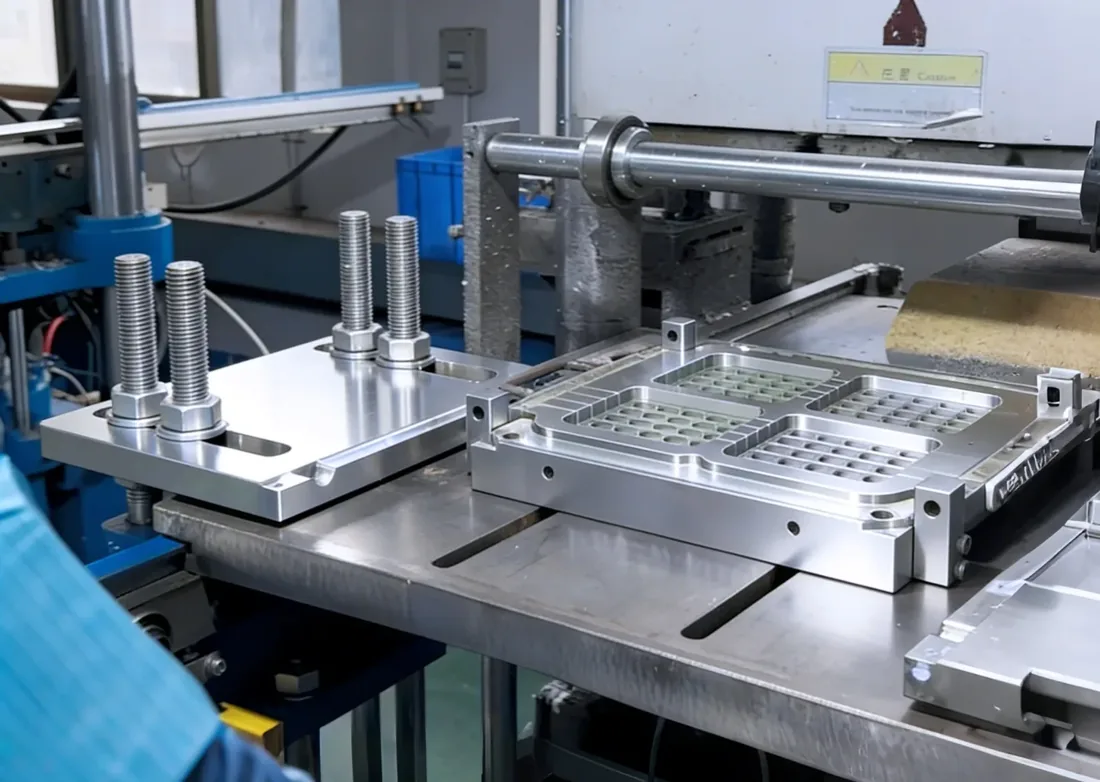
Adjacent to raw material preparation, inspect how CNC and EDM steel moulds are stored, cleaned and maintained between production runs. In elastomer manufacturing, worn parting lines or blocked vent channels quickly cause thick flash edges or trapped air pockets on horse-contact surfaces. A disciplined toolroom keeps a maintenance log for each mould number, recording cavity cleaning intervals, locator-pin checks and storage rust protection.
3. Inspect the moulding workshop and multi-material assembly stations
From the mixing and cutting area, follow the batch traveller into the moulding workshop where solid compression presses, LSR injection machines, silicone extrusion lines and foaming units operate. Auditors should compare the parameter card posted at an active press—showing upper and lower platen temperatures, clamping pressure, vacuum dwell and cure seconds—against the approved engineering specification for the SKU currently in the cavities.
As Chartered Trading Standards Institute guidance for general product safety producers notes, producers must put quality systems into place to ensure that products are made in compliance with specification and assess how a product interacts with other items with which it is foreseeably used. For horse tack, that means auditing not only the moulded rubber component but also the downstream trimming, die-cutting, lamination and sewing stations where composite items take shape.
For example, when auditing a composite girth line producing our Silicone Leather Girth (Flagship Model), verify how trimmed silicone contact pads are aligned with the perforated synthetic leather backing, how heavy-duty stitch density and thread tension are checked around the 316 stainless steel roller buckles, and how operators inspect every buckle tongue and roller for burrs before the strap moves to final QC.
4. Check metrology, calibration records and batch traceability on the line
Visual walkthroughs alone cannot confirm whether a moulded bit guard, stirrup cover or contoured girth matches its 2D tolerance drawing or target Shore A durometer. During the floor audit, examine the gauges used by in-process and final inspectors—including Shore A durometers, digital calipers, thickness gauges, seam-tension fixtures and reference colour plaques—and review their calibration records.
Public metrology guidance provides an essential benchmark for B2B auditors. In its policy on metrological traceability, the National Institute of Standards and Technology (NIST) notes that traceability is a property of a measurement result—linking it to a reference through an unbroken calibration chain—and that owning a calibrated gauge is insufficient unless shop-floor procedures and quality controls are maintained. NIST also stresses that while the result provider must support its claim, the buyer or auditor is responsible for assessing validity.
Furthermore, when a supplier presents external calibration certificates or material test sheets, check the accreditation status of the issuing laboratory. As outlined in NIST NVLAP laboratory accreditation guidance, ISO/IEC 17025:2017 is the international standard used to assess the management and technical competence of testing and calibration laboratories. Combining calibrated shop-floor gauges with clear lot numbers on every work-in-progress bin ensures that dimensional and Shore A readings recorded during production can be tied back to the exact shipment batch.
On narrow screens, scroll this table sideways. Keyboard users can focus the region and use the arrow keys to inspect every audit column.
| Workshop stage | Primary process controls to verify | Shop-floor evidence & records | Equine tack defect prevented |
|---|---|---|---|
| 1. Compound mixing & cutting | Silicone gum lot logging, catalyst/pigment weighing & sealed storage | Material receiving log, scale check sheet & dated batch traveller card | Inconsistent Shore A hardness, surface tackiness or batch colour drift |
| 2. Moulding workshop (Compression & LSR) | Platen temperature, cure timer, clamping pressure & metal insert seating | Press parameter sheet, mould maintenance log & first-piece sign-off tag | Thick parting-line flash, under-cured elastomer cores or loose bit inserts |
| 3. Extrusion & silicone foaming | Extruder profile gauge, post-cure oven cycle & foam cell density check | Profile calliper log, oven temperature chart & rebound thickness record | Uneven cushion thickness or premature compression set under saddle load |
| 4. Trimming, die-cutting & sewing | Flash removal on contact edges, stitch density & 304/316 hardware assembly | Golden Sample at workstation, needle/thread spec & buckle burr inspection | Sharp flash rubbing horse skin, seam separation or rough hardware edges |
| 5. Final QC, calibration & packing | Durometer/calliper checks, batch reference printing & incident plan | Instrument calibration records, AQL pre-shipment sheet & retained sample | Untraceable cartons, mixed size shipments or unverified dimensional drift |
5. Walk through a real SKU from compound batch to packed carton
The most revealing part of any factory audit is a vertical trace—selecting one or two active SKUs from the silicone girth category or saddle pad line and following their exact paper and physical trail from start to finish. Whether you are visiting Dongguan in person or conducting a live two-hour video audit, structure the walkthrough in three sequential phases:
- Pre-audit document request (48 hours prior): Confirm the factory's registered legal name, physical Dongkeng Town production address, workshop layout map and the specific catalogue or custom SKUs that will be running during the audit window.
- Live end-to-end floor trace: Start at raw silicone and backing-fabric storage, read the batch ticket at the mixing mill, verify press cure parameters in the moulding workshop, inspect flash trimming and strap stitching at the assembly benches, and watch final QC measure Shore A hardness and dimensions with calibrated tools.
- Close-out review and corrective actions: Document any minor observations on the spot, agree on concrete corrective actions with target completion dates and responsible owners, and verify how the factory logs customer feedback and batch holds.
An illustrative remote and on-site factory audit log (Audit Record FAC-402)
This example is clearly fictional and provided solely to illustrate how a B2B buyer records a structured factory walkthrough; it is not a historical third-party audit report or a certified compliance guarantee. In fictional Audit Record FAC-402, Sourcing Lead H from a European equestrian distributor conducts a hybrid video-and-floor audit of our Dongguan facility focusing on two composite builds: the SC-SG-01 Silicone Leather Girth and the SC-SSP-02 Breathable Silicone Saddle Pad.
At Station 1 (compound mixing and pre-forming), H verifies that the black silicone batch prepared for the SC-SG-01 contact channel carries a dated lot card linking raw elastomer drums to the mixing scale log. Moving into the moulding workshop at Station 2, H compares the press display against the posted process card and watches the operator inspect the freshly demolded girth channel against the workstation Golden Sample to confirm zero flash along the elbow relief contour.
At Station 3 (die-cutting, foam lamination and sewing), H traces the SC-SSP-02 saddle pad build, checking how the bamboo-charcoal mesh top, shock-absorbing core and silicone non-slip grip array are aligned before perimeter binding, and how the 316 stainless steel roller buckles are stitched onto the SC-SG-01 synthetic leather backing. At Station 4 (metrology and final inspection), H reviews the calibration records for the shop-floor Shore A durometer and digital callipers, noting that five girth samples measure within the specified 48–52 Shore A window.
During the carton-packing check at Station 5, H notices that one outer master carton label lists the purchase order number and SKU but places the production batch reference sticker on the top flap rather than the side panel specified in the buyer's warehouse manual. Before closing the audit, both teams log a written entry under corrective actions: the packing line updates its visual work instruction, relabels the affected cartons on the spot, and sends a timestamped photo verification to H within 24 hours.
6. Review complaint registers, incident preparedness and corrective actions
A mature manufacturing partner is judged not by claiming that mistakes never happen, but by how systematically it prevents, isolates and resolves non-conformities. When reviewing quality office records at the end of your audit, ask how in-process rejects are segregated in locked red bins and how customer quality inquiries are traced back to retained production samples.
UK Office for Product Safety and Standards guidance on supporting better product recalls and corrective action planning (PAS 7100) highlights that businesses of every size should maintain a prepared product safety incident plan and clear procedures for corrective actions before any issue arises in the market. On the factory floor, that preparedness translates into keeping a retained sample from each production batch, maintaining a written register of distributor feedback, and being able to isolate affected lot numbers within hours using the batch reference printed on the product or packaging.
7. Connect your factory audit findings to certificate and test-report checks
Completing a physical or live-video walkthrough of the moulding and sewing lines gives your procurement team first-hand evidence of manufacturing capability. The next step in supplier qualification is verifying the paperwork that sits behind those production lines—ensuring that quality management certificates, laboratory test sheets and material declarations match the exact legal entity, factory address and composite BOM you just audited.
Continue to our companion guide on verifying ISO 9001 certification, test reports and batch traceability to learn how to check certificate scope and distinguish in-house inspection sheets from ISO/IEC 17025 accredited laboratory reports. When you are ready to schedule an on-site visit in Dongkeng Town, book a live video workshop walkthrough or request SKU-specific batch documentation, contact our Dongguan team with your target product list.