Skip to content
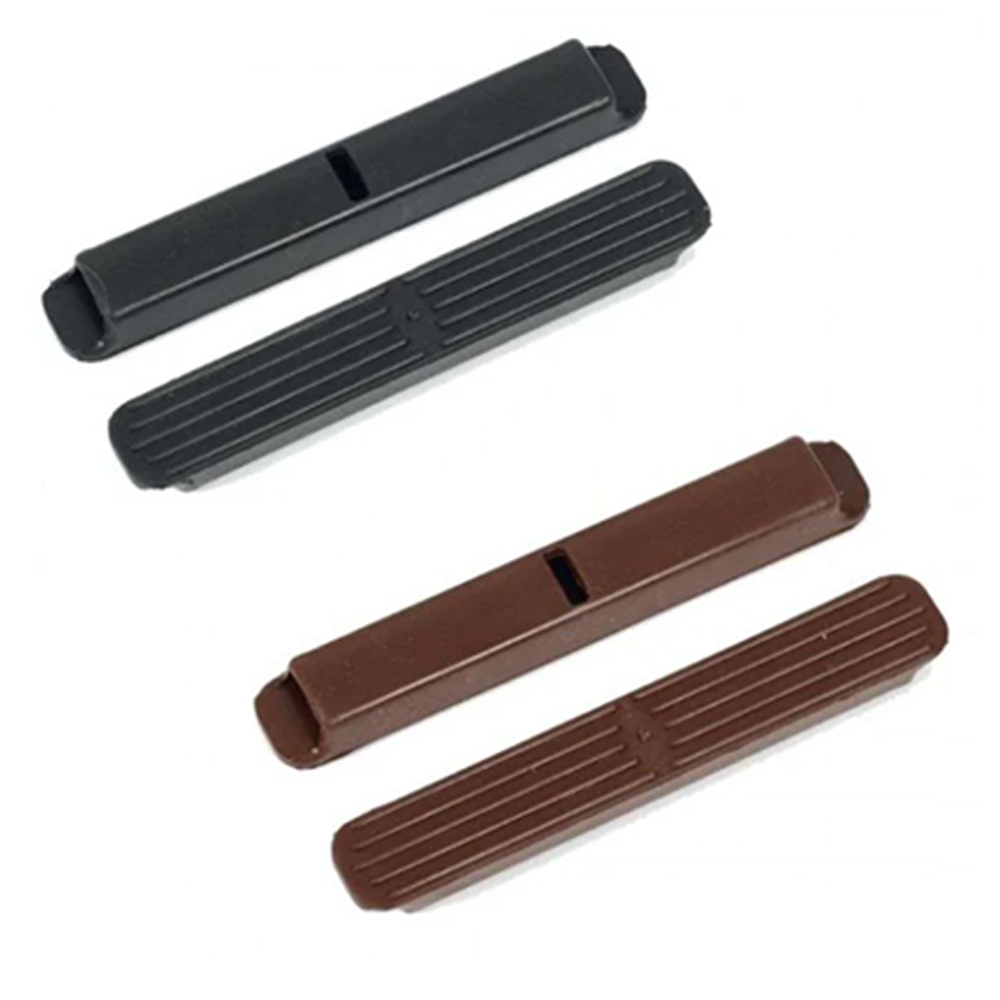
Black and brown ribbed curb-chain covers on a brown background
Bits & Curb Chain Accessories · OEM / ODM

Silicone Curb Chain Protectors

A silicone cover over the curb chain softens metal-to-skin contact in the chin groove while keeping the chain you already use. Choose the length, match the bore to the link gauge, and approve a sample before ordering.

Length and Bore, Before Anything Else

Five Lengths, Three Bores

The cover has to pass over the links and stay where the chain sits. Match both numbers to the chain you already use.

Bores 6 / 8 / 10 mm; confirm against the actual link gauge before ordering
Catalogue lengthMetricInner bore options
5 inch127 mm6 / 8 / 10 mm
6 inch152 mm6 / 8 / 10 mm
7 inch178 mm6 / 8 / 10 mm
8 inch203 mm6 / 8 / 10 mm
9 inch229 mm6 / 8 / 10 mm

Measure the chain end to end, including the end links, then count the links. Length picks the sleeve; link count and gauge confirm the bore. A chain that has been shortened, or one with heavier links than a standard double-bridle chain, should be described by both numbers in the enquiry.

See how to measure and fit the sleeve
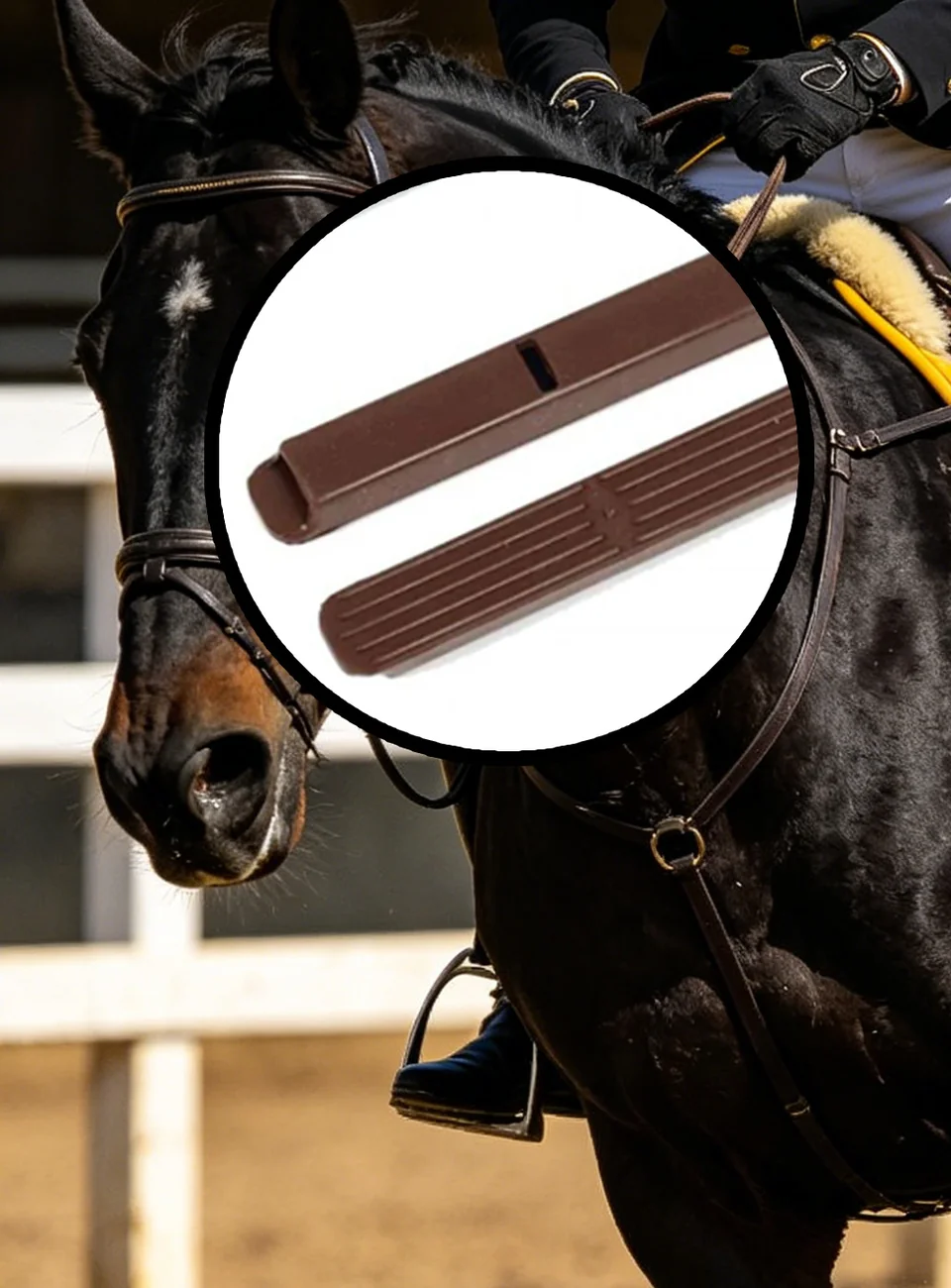
Brown chain-cover channel and ribbed surface on a riding background
Brown curb-chain cover with a close-up of its ribbed surfaces. Confirm bore and length against your own chain.

Curb Chain Cover, Coated Chain or Leather Guard

Three Products Buyers Call the Same Thing

A cover, a silicone-coated chain and a leather strap are different purchases. Compare them on what they change, not on the material name.

Silicone curb chain cover vs silicone curb chain vs leather curb guard

Silicone-coated or moulded curb chain

What you are buying
The chain itself, with links coated or moulded in silicone. It replaces your existing chain.
Effect on the curb cue
Weight and how the chain settles in the groove may differ from the original chain. Re-set the hooks and test the feel.
What determines fit
Chain length is fixed by whoever makes it. Match it to the bit and to the horse, not to a cover size.
Care and replacement
Follow the chain maker’s care instructions. Worn coating on a link is not repairable locally.
Sourcing basis
Usually bought together with a bit rather than as a separate accessory line.

Leather or neoprene curb guard / strap

What you are buying
A strap or padded guard that takes the place of the chain under the chin.
Effect on the curb cue
The contact is wider and softer than a chain, so the cue usually feels different. Confirm the intended use with the bit maker.
What determines fit
Strap length, width and the hook or buckle type on your bit.
Care and replacement
Leather needs conditioning and can stiffen; neoprene can harden or trap grit. Replace when the surface breaks down.
Sourcing basis
Widely available from tack retailers; compare pack unit and material before price.
If the chain already suits the horse and you want to keep its feel, specify a cover sized to your chain. If you are replacing the chain anyway, a coated chain can simplify cleaning but changes the hardware. A leather or neoprene guard is a different contact surface, not a cover.

If the choice is still open, the comparison guide works through cue, cost and replacement for each form. Buyers who already know they want a cover can go straight to the SC-SCCP-01 record.

Which Configuration for Which Horse

Match the Cover to the Work in Front of You

Length, bore and colour follow the job. These six starting points cover most first orders.

Pairing the chain with the right bit matters as much as the cover. Our silicone bit guards address the mouth corners, which is a different contact point from the chin groove.

Material, Construction and Care

What the Silicone Sleeve Actually Does

Four things determine whether a cover works on a given chain: compound, construction, fit and cleaning.

  • Material

    Food-grade platinum-cured silicone, Shore A 30

    • A platinum-cured food-grade silicone with a nominal Shore A 30 hardness, so the sleeve flexes with the chain instead of creasing.
    • Material documents reference FDA 21 CFR 177.2600, LFGB, REACH and ISO 10993; ask for the report that matches your order’s colour and compound.
    • Silicone does not absorb sweat the way leather does, which is why the surface can be rinsed rather than conditioned.

    Daily double-bridle work and repeated cleaning routines.

  • Construction · 1

    Slide-through sleeve

    • Threaded over the chain before the hooks are attached, so it stays captured between the end links.
    • Covers the full length of the chain and cannot be pulled off mid-session by a horse that rubs.
    • Fitting means removing a hook once; the sleeve is then left on the chain between washes.
  • Construction · 2

    Open-channel wrap

    • Closes along its length and can be fitted with the chain still attached to the bit.
    • Quick to add or remove when one cover is rotated between horses.
    • The closing edge is an extra inspection point: check it has not rolled open or trapped grit.
  • Fit · 1

    Inner bore against the link gauge

    • Bores of 6, 8 and 10 mm cover common curb chain gauges; measure the widest part of a link, not the nominal wire size.
    • A bore that is too small will not pass over the links; one that is too large lets the sleeve travel along the chain.
  • Fit · 2

    Length, link count and wall thickness

    • The catalogue covers 5, 6, 7, 8 and 9 inch lengths. Length follows the chain you already use, not the horse’s height.
    • A thicker wall adds separation from the skin but reduces clearance under the chin, so re-check the hook position.
    • If the chain has been shortened, send the link count as well as the length.
  • Care

    Rinse, dry, inspect, replace

    • Rinse under running water in about 30 seconds to clear sweat, saliva and arena sand, then dry before storage.
    • The silicone part supports 85°C cleaning for commercial yards; confirm the process suits your own workflow first.
    • Inspect for splits at the ends, stretching, or a sleeve that slides along the chain. Replace rather than repair.
Curb-chain cover shown under the chin of a bridled horse
Curb-chain cover shown on a bridled horse. Assess the selected cover with your own chain and bit; the photograph does not establish fit.

Wholesale Economics for Brands and Retailers

Cost, Replacement and Working Capital

A cheaper guard that is replaced twice a season is not cheaper. Compare landed cost per horse-month.

Leather or neoprene curb guard bought per season

Unit cost basis
Retail leather or neoprene guards are priced per piece or pair, and the pack unit varies by brand.
Replacement cadence
Leather can stiffen with sweat; neoprene can harden or hold grit. Replacement is driven by surface condition.
Cleaning time per horse
Leather needs cleaning and conditioning; neoprene needs rinsing and thorough drying.
Brand and packaging
Ready-made guards come in the maker’s colours and packaging.
Working capital
Buying several sizes from a distributor ties up cash in mixed stock.

Compare landed cost per horse-month, not the ticket price

Add unit cost, freight and duty, then divide by the number of horses in work and the replacement interval you actually observe.

  • Request a sample set in the sizes you use before committing to a mixed order.
  • Confirm the pack unit (single or pair), label language and barcode in the quotation.
  • Buy replacement sleeves for the sizes in daily use rather than duplicating every colour.

Standard colours start at 500 pcs with tiered wholesale pricing of US$6–10 per piece. Custom Pantone colour, logo and packaging minima are confirmed in the written quotation, together with the trade term (EXW Dongguan, FOB Shenzhen, CIF Rotterdam or DDP) and the sample approval step.

Sizing, Cue and Sourcing Questions

Frequently Asked Questions

The four questions buyers ask before approving a curb chain cover sample.

What lengths and inner diameters are available for silicone curb chain protectors?

The catalogue covers 5, 6, 7, 8 and 9 inch lengths and lists 6 mm, 8 mm and 10 mm inner bores. Choose the length by measuring the curb chain you already use, and match the bore to the link gauge. Confirm the bore against your own chain before ordering: a cover that is too tight will not slide over the links, and one that is too loose will travel along the chain.

Will a silicone cover change how the curb chain works?

The cover wraps the metal links; it does not change the number of links, the hook position or the chain tension. Curb action still depends on how the chain is adjusted and where it sits under the chin. The silicone layer removes direct metal-to-skin contact and adds a small, even thickness, so re-check the adjustment after fitting instead of assuming the previous setting still applies.

What is the MOQ and price for private-label curb chain protectors?

The standard private-label programme starts at 500 pcs, with tiered wholesale pricing of US$6–10 per piece depending on quantity and configuration. Custom Pantone colours and logo programmes are quoted in writing, because the minimum and any tooling depend on the brief. Typical lead time is 7–10 days for private label and 15–25 days for custom OEM work, counted after sample approval.

Do the protectors fit every curb chain and double bridle?

No single bore or length suits every chain. Fit depends on the link gauge, the number of links and the position of the curb hooks on your bit. Our material documents (FDA 21 CFR 177.2600, LFGB, REACH and ISO 10993 references) describe the silicone compound; they are not approval of a complete bridle or confirmation of competition legality. Check your discipline's rules and the bit maker's fitting instructions.

Request a Curb Chain Cover Sample

Send the chain length, link count, bore, colour and pack unit. We will confirm the available bore, colour programme, MOQ and lead time in writing.

We use only necessary browser storage to remember privacy preferences and support core site functions.