Outdoor Preparation · 29 October 2026 · 12 minute read
Horse Riding on Roads: Prepare Before You Leave
A sales and equipment-communication perspective using official guidance, not riding instruction, a road-readiness assessment or legal advice.
Horse riding on roads starts with a decision about the outing, not a shopping list. Even a familiar off-road ride may begin with a road crossing or end along a different lane. Identify those sections before leaving, alongside the actual horse, rider and conditions. A route name alone says little about the traffic connections that make it possible.
Use your everyday riding equipment brief to keep product questions clear, but make the road decision separately. This guide brings together British official guidance and practical preparation questions. It does not teach riding manoeuvres or assess your combination remotely. If that assessment is unresolved, preparing more paperwork or buying an accessory is not the next answer.
1. Establish which road guidance applies to your ride
Start with the place where you intend to ride. The Highway Code introduction states that the Code applies to England, Scotland and Wales. That is Great Britain, not every part of the United Kingdom or a worldwide rulebook. For a ride elsewhere, find the relevant official rules rather than transferring British wording to a different jurisdiction. The aim is an informed decision, not one reassuring sentence that overrides the rest of the plan.
When checking horse riding on roads law, preserve the difference between legal requirements and advice. The Code uses “MUST” and “MUST NOT” for legal requirements and links the underlying legislation. Other wording, including “should”, is not the same category. However, the introduction explains that those advisory rules may still be used in court proceedings to establish liability.
Read the current horse-rider section as a whole rather than relying on a remembered quotation. Its clothing, equipment and riding provisions address different questions. A product description that mentions road use does not establish that you have met all applicable requirements. Equally, an online summary cannot decide a particular legal dispute or replace advice on your circumstances. Keep the official page available during preparation and note any question that needs local clarification.
Rule 49 shows why that distinction matters. It says children under 14 must wear a helmet that complies with the Regulations and is securely fastened. It includes an exception for a Sikh child wearing a turban. Other riders should follow the requirements too. Read the rule and its linked legislation for the applicable detail; do not turn that age-specific legal wording into an identical offence for every rider.
2. Resolve horse and rider readiness before equipment choices
Road-readiness concerns the horse and rider together. In the Highway Code’s horse-rider rules, Rule 52 says you should ensure tack fits well and is in good condition, and make sure you can control the horse. These are separate responsibilities. A suitable-looking bridle cannot establish the rider’s ability or the horse’s preparedness for traffic.
Be specific about rider experience. Recent familiarity with one horse in an arena is not evidence about every horse or road setting. If you are inexperienced or returning after a break, Rule 52 points to the British Horse Society’s Ride Safe Award. Consider appropriate instruction and assessment before committing to a road outing; reading a guide is not that assessment.
- Identify which horse and rider combination the proposed outing actually involves.
- Raise any unresolved traffic-readiness question with an appropriate riding professional before departure.
- Keep equipment suitability and the rider’s ability as distinct questions, not one combined confidence score.
- Do not use a quiet-looking road as a substitute for resolving those questions.
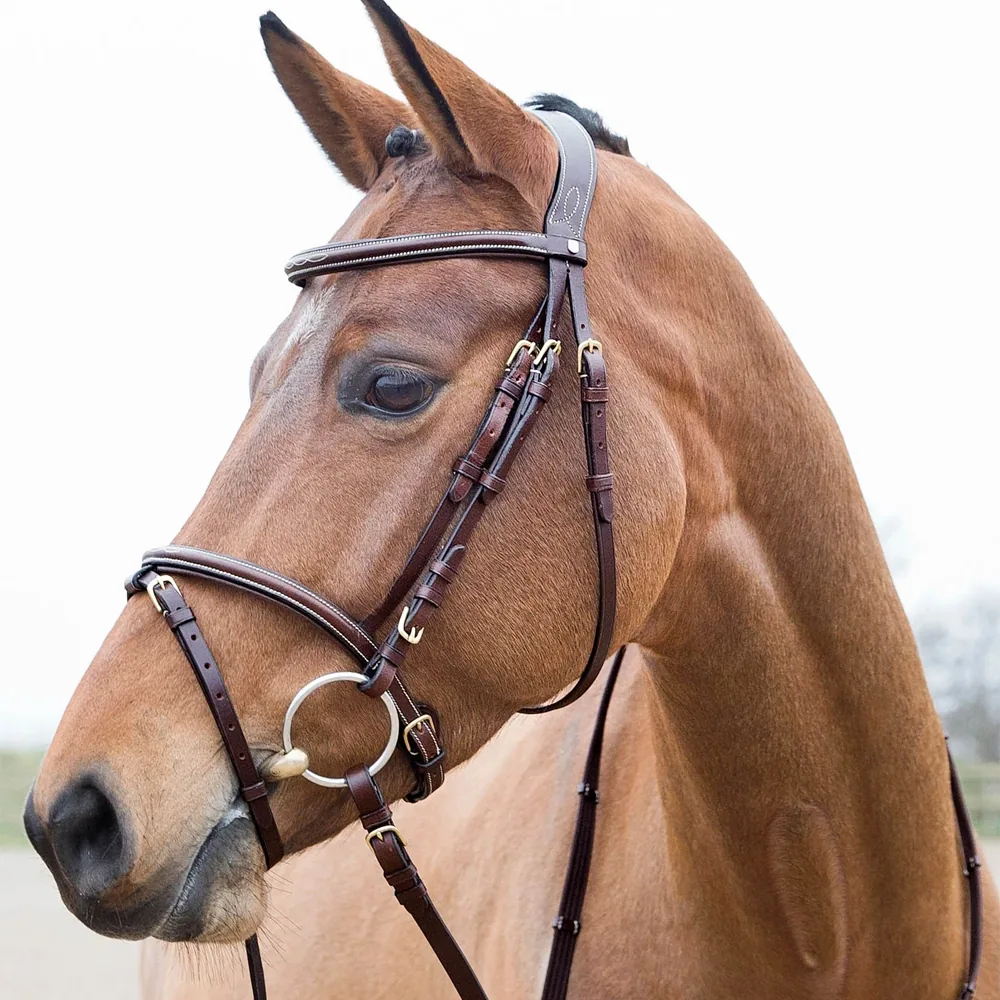
If you are considering the selected silicone padded horse bridle, identify the existing configuration and the product question first. Seek the appropriate individual fitting assessment separately. New padding, a familiar size label or a matching colour does not establish control. This is a purchasing boundary, not a bridle-adjustment lesson or a test you can pass from a catalogue photograph.
3. Decide on visibility before relying on brighter clothing
Visibility is a reason to reconsider the journey, not merely a colour choice. Rule 50 distinguishes light-coloured or fluorescent clothing in daylight from reflective clothing if riding at night or in poor visibility. Fluorescent and reflective are not interchangeable descriptions. Nor does an ordinary bright product colour establish either property or a tested visibility performance.
Rule 51 begins with the more important planning point: it is safer not to ride on the road at night or in poor visibility. Its further provisions do not turn difficult conditions into an approved outing. Consult the complete rule if those circumstances arise; this page does not replace its equipment details with a simplified accessory list.
Consider the expected return as well as the departure. A daylight start does not describe the whole journey if the plan changes or takes longer. Check the forecast and timing before committing to the road section. Do not set a universal weather threshold from this guide or assume that an additional reflective item makes every change acceptable.
- Separate the forecast for the outing from what conditions happen to look like while preparing.
- Identify where the plan depends on daylight or acceptable visibility remaining available.
- Check the actual description and instructions of visibility equipment rather than guessing from colour.
- Change the proposed journey when the underlying visibility question remains unresolved.
Make that change while you still have practical choices. A different departure time or a suitable alternative activity may be more useful than adding items. Choosing not to take the road is a valid outcome. It should not require proving that every possible accessory has first been tried.
4. Examine the road connections, not only the scenic section
Review how the route reaches and leaves the road. A short connection can contain the junction, crossing or roundabout that determines whether the outing is appropriate. Rule 54 advises using a bridleway where possible and equestrian crossings where available. Rule 55 says to avoid roundabouts wherever possible. These are prompts for route selection, not instructions here for riding through a difficult junction.
Check the connections in both directions. A route that looks continuous on a screen may depend on a particular exit, an unavailable link or a road return you have not considered. Resolve access and continuity with the guide to planning horse riding routes. Do not replace an uncertain section with an improvised path simply because it appears quieter.
- Identify where the planned outward and return journeys join a road.
- Locate any available equestrian crossing relevant to the proposed connection.
- Flag a roundabout or changed road section for reconsideration before departure.
- Check that a proposed alternative really connects to the rest of the permitted route.
Other road users also have responsibilities. The Code’s guidance on road users requiring extra care, particularly Rule 215, tells drivers to pass horses wide and slowly. It also recognises that horses can be unpredictable despite their rider’s efforts. Driver guidance is not a promise that every approaching vehicle will respond as expected.
Rule 213 recognises uneven surfaces and obstacles, including oily, wet or icy patches, that may affect riders. Consider reported conditions when deciding whether to use a connection. Do not treat silicone equipment as a remedy for a questionable surface or evidence of grip. Where the link remains unsuitable or unclear, revise the whole route instead of assuming the horse can compensate.
5. Arrange carrying and communication before mounting
Plan necessary belongings around the riding task. Rule 53 says riders should not carry anything that might affect balance or become tangled with the reins. It also advises keeping both hands on the reins unless signalling. Decide how to meet your information and carrying needs beforehand, rather than planning to hold a phone, loose map or bag while riding.
Check the intended carrying arrangement with appropriate advice and the relevant equipment instructions. This guide does not certify a phone holder or suggest attaching an improvised bag to a bridle. Avoid treating any unused strap or loop as a convenient fixing point. If a necessary item cannot be carried appropriately, resolve that problem before making the road journey depend on it.
For countryside outings in England and Wales, the Countryside Code’s preparation advice says to tell someone where you are going and when you expect to be back. It warns that rural phone signals can be unreliable. A charged phone alone is therefore not a complete communication arrangement.
Agree which route version your contact has and how you intend to confirm your return. Discuss how to communicate a change without depending on uninterrupted coverage. These are practical planning extensions, not a prescribed official check-in timetable. Give the contact useful details privately; posting a route publicly is not the same as agreeing that someone understands the arrangement.
6. Record the decision that remains open
A short preparation note can expose an assumption that a long packing list hides. Record what affects this outing and what remains undecided, not every object you own. The framework below is a suggested decision record, not an official road form, a legal certificate or evidence that the horse and rider have been assessed.
On narrow screens, scroll this table sideways. Keyboard users can focus the region and use the arrow keys to read all columns.
| Decision | Record before departure | If the answer is unresolved |
|---|---|---|
| Horse and rider | Actual combination and the readiness question requiring advice. | Obtain appropriate instruction or assessment; do not substitute new tack. |
| Visibility and timing | Expected departure and return conditions, with the information checked. | Reconsider timing, route or whether to take the road. |
| Road connection | Identified crossing, junction or road section and current uncertainty. | Resolve the connection or choose a suitable confirmed alternative. |
| Carrying needs | Necessary items and the intended carrying arrangement. | Resolve interference or balance concerns before the outing. |
| Return communication | Agreed contact, route version and expected return arrangement. | Agree the plan without assuming continuous phone coverage. |
Make entries specific enough to change a decision. “Visibility checked” leaves out what the journey relies on; naming the expected return conditions makes the assumption visible. “Ask instructor” should identify the unanswered readiness question, not imply that advice has already been obtained. An honest blank or unresolved entry is preferable to an invented answer.
Keep supply questions separate. The padded bridle range can help identify the model under discussion, but a supplier’s configuration response does not complete this record. If the ride changes, update the affected decision rather than copying yesterday’s conclusion. The useful outcome may be a revised plan or postponement, not a page full of ticks.
7. Keep a genuine option to change or cancel
Choose alternatives before the original plan becomes a commitment you feel obliged to complete. The Countryside Code advises checking forecasts before setting off and not being afraid to turn back when conditions change. It also calls for the skills and knowledge needed for the activity. Treat those principles as support for changing the outing, not pressure to continue because the equipment is ready.
Distinguish an alternative from an unverified shortcut. Replacing an uncertain road connection with a different unknown section has not resolved the problem. Check the revised route and its permissions before relying on it. If no appropriate option is established, postpone the road outing or choose an activity that does not depend on that connection.
Discuss the change with anyone sharing the plan, including your return contact where appropriate. State what has actually changed: timing, route or the decision not to go. Do not let an old shared map remain the only account of the outing. A simple clear update is more useful than reassurance that everything will probably be fine.
Finally, keep equipment enquiries focused on what the seller can answer: the selected model, configuration, supplied components and instructions. Horse riding on roads requires decisions beyond a purchase. Appropriate riding advice, current conditions and a workable plan remain essential questions even when the product order is settled.