How to Choose Silicone vs Sheepskin and Foam Saddle Pads for B2B Tack Lines
How to choose silicone vs sheepskin and foam saddle pads depends on saddle fit, the care routine, and the evidence behind the product claims. This guide gives equestrian brand managers, tack distributors, and riding-school buyers a non slip horse saddle pad comparison framework, rather than an assumed service-life ranking.
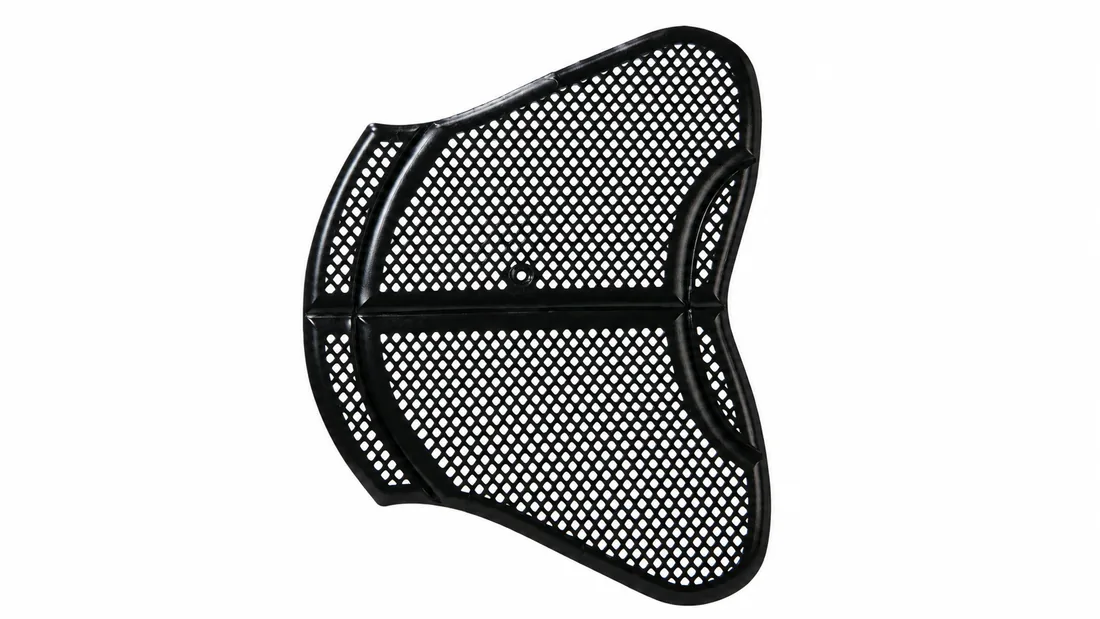
1. What to Check Before Replacing Foam, Fleece, or Gel Pads
When evaluating a washable saddle pad for riding schools or private-label retail lines, make the sample review repeatable:
- Compression set recovery: Request the load, cycle count, rest period, and thickness measurements. A fixed recovery percentage cannot be inferred from a material name.
- Cleaning and shared use: To manage equine ringworm cross-contamination, agree on the finished product's wash and disinfection routine with your stable's adviser. Rinsing visible dirt is not proof that a pad is disinfected.
- Material identification: Silicone, PVC, and TPE are not interchangeable descriptions. Ask for the compound and care documents (for example, raw elastomer test scopes referencing FDA 21 CFR 177.2600 or EU REACH). A Shore 00 gel hardness number alone does not predict comfort or saddle fit.
2. Non Slip Horse Saddle Pad Comparison: Silicone, Sheepskin, Foam & Gel
At Dongguan Silicone Chain New Material Technology Co., Ltd., we apply 12+ years of silicone engineering experience to equestrian products. You can explore our complete silicone saddle pad lineup while using the same sample checklist for each material:
| Buyer Check | Silicon Chain Silicone Designs | Sheepskin / Wool Fleece | Foam / Cotton Quilt | PVC / TPE Gel |
|---|---|---|---|---|
| Compression Set Recovery | Ask for pad-specific compression and recovery data; no verified 1,000-ride recovery percentage is available | Ask for thickness and resilience after the intended load and care cycles | Specify density, thickness, and compression-test conditions | Confirm the polymer formulation and compare recovery under the same conditions |
| Pressure Distribution & Fit | SC-SSP-01 has a contoured spine-relief profile; the manufacturer's 40% comparison concerns more even pressure distribution vs ordinary sponge | Assess total thickness and channel space on the intended saddle | Assess compression and channel space under mounted load | Assess profile, thickness, and ventilation instead of selecting by the word gel |
| Grip | Grip zones or strips; the 35kg reference concerns a pad-and-girth combination, not a stand-alone pad | Check movement and strap requirements with the intended saddle | Check movement and strap requirements with the intended saddle | Test the actual contact surfaces when clean and after normal use |
| Cleaning & Shared Use | SC-SSP-02 supports rinsing or 30°C machine washing; obtain the finished pad's disinfection instructions | Follow the supplier's detergent and drying guidance | Follow the supplier's wash and drying guidance | Confirm detergent, disinfectant, and temperature compatibility |
| Evidence Before Volume Purchase | Approve model-specific hardness, wash cycles, and service-life evidence; general silicone temperature ratings do not certify a composite pad for heat sterilization | Run the same fit, care, and durability checks | Run the same fit, care, and durability checks | Run the same fit, care, and durability checks |
3. Selecting the Right Silicone Architecture for Your B2B Product Line
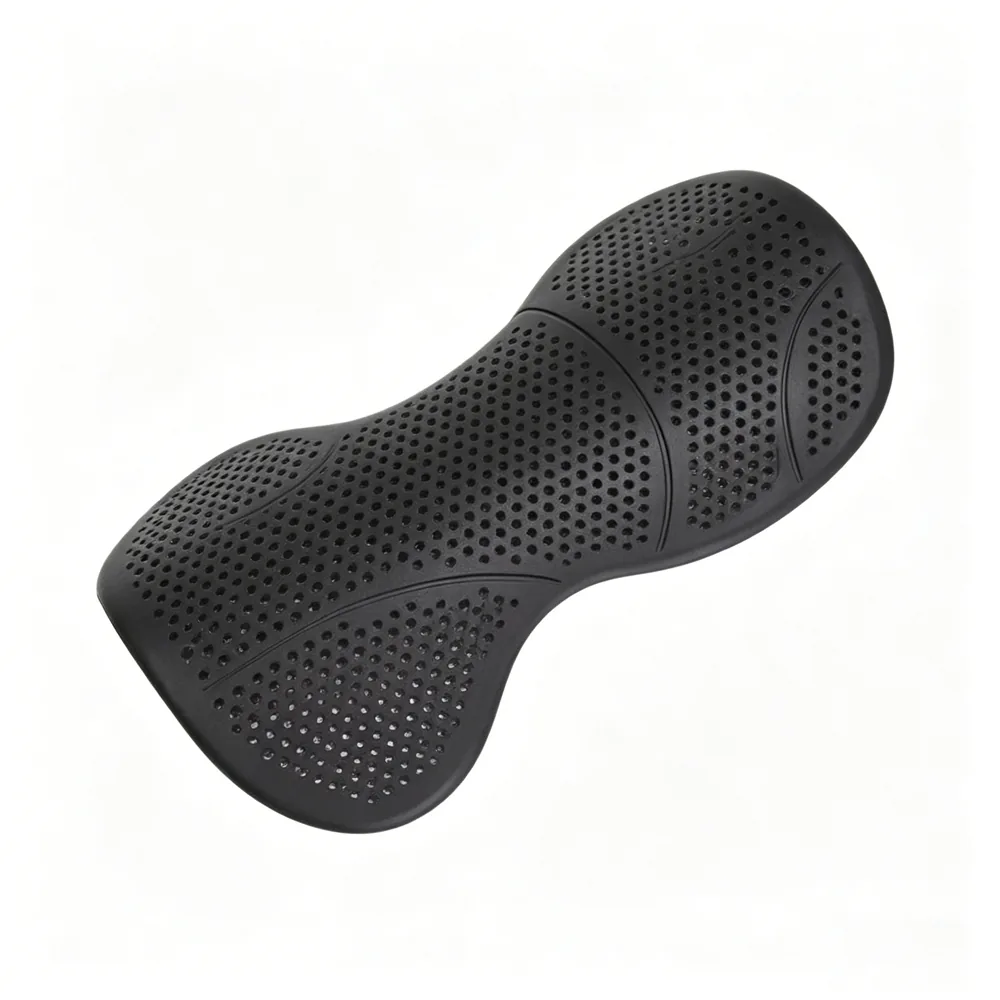
Compare the two registered designs before choosing the product mix:
- Contoured Spine Relief Silicone Saddle Pad (SC-SSP-01): A contoured spine-relief profile, silicone grip zones, and a composite silicone-foam core. The manufacturer states 40% more even pressure distribution than ordinary sponge; ask for the test setup before repeating that claim.
- Breathable Bamboo-Charcoal Silicone Saddle Pad (SC-SSP-02): A three-layer construction with bamboo-charcoal breathable mesh, strategic silicone grip strips, and perforated silicone cushioning. It supports rinsing or 30°C machine washing.
4. A Three-Year Cost Worksheet for Riding Schools & Tack Brands
Use the same formula for each option: initial purchase + replacement purchases + hands-on cleaning hours × labor rate + detergent/energy + shipping. Record actual pad usage, wash time, and replacement history; do not assume that every foam pad fails after six months or that every silicone pad lasts five years.
The published SC-SSP-02 reference tiers are 100–499 pieces at US$59.2, 500–999 at US$55.9, and ≥1,000 at US$49.5. These are reference wholesale prices, not a current landed-cost quote. The contoured model needs its own quotation.
For riding schools and clubs, a general 30-second hose rinse claim describes visible cleaning, not a proven disinfection cycle for every pad. For private-label brands, general service terms are MOQ 250 pcs/SKU and 7–10 day sampling; OEM reference terms are MOQ 500 pcs/SKU and 15–25 days total sampling. Confirm the chosen pad's MOQ, care label, and schedule in writing.
Before making a durability or savings claim: request model-specific compression-recovery, wash-cycle, and service-life data. These values remain to be confirmed; no fixed savings percentage is presented here.
5. Frequently Asked Questions
Why do traditional polyurethane foam and PVC gel pads flatten out after heavy riding?
Foam, fleece, and PVC/TPE products have different failure modes, and the result depends on density, construction, loading, and care. Ask a supplier for compression-set results under a stated test method instead of assuming a six-month failure date. Ask for the supplied compound specification and any additives or coatings relevant to the intended contact and care routine; the finished pad still needs model-specific recovery evidence.
Does platinum-cured silicone cause allergic skin reactions or hair loss on clipped winter coats?
The relevant questions are the compound, surface finish, edge geometry, cleaning products, and the horse's individual sensitivity. Our material documentation references food-grade and medical-grade silicone standards including FDA 21 CFR 177.2600, LFGB, and ISO 10993; request the applicable batch documents and introduce a new pad gradually.
How should tack retailers position silicone saddle pads against sheepskin half pads in their product range?
Position the two designs by use case rather than making an unsupported universal superiority claim: SC-SSP-01 is the contoured spine-relief option, while SC-SSP-02 is the breathable three-layer composite. Show the care routine, fit checks, sample evidence, and current quote so buyers can match the product to their horses and saddles.