Cold Climate Storage & Sourcing · 31 October 2026 · 12 minute read
Winter Tack Room Storage: Managing Composite Horse Gear & BOMs
Source-compiled winter storage and material specification notes from a Product Manager. Not a structural engineering blueprint, electrical heating certification or laboratory freeze-test guarantee.
Planning reliable tack room storage for Nordic and sub-zero riding seasons requires looking past the surface polymer and managing how moisture, cold metal and indoor condensation interact with multi-layer equipment. In many winter barns, riders hang damp saddle pads, sweat-salted girths, mud-crusted stirrup irons and snow-covered turnout rugs inside the same small enclosed room. Overnight temperature drops then turn trapped dampness into stiff frost or mouldy fabric.
This guide sets out a practical framework for stable managers and Nordic equipment buyers who store composite silicone tack through freezing months and prepare itemised procurement files. When you review the cold-climate equipment overview, you will see that moulded silicone contact zones are paired with bamboo-charcoal mesh, foam cores, synthetic leather backings, genuine leather frames and metal hardware. Organising racks and purchase specifications around those complete assemblies prevents winter damage and labelling mistakes.
1. Why raw polymer ratings do not replace winter tack room storage rules
Base silicone elastomers maintain flexibility across a wide laboratory temperature span, commonly referenced between -30°C and +260°C for raw polymer sheets. That material property explains why an unbonded silicone moulding does not stiffen the way oiled vegetable-tanned leather does when the thermometer drops below freezing. However, a raw elastomer rating describes only the silicone compound itself, not a finished multi-material saddle pad, girth or bridle.
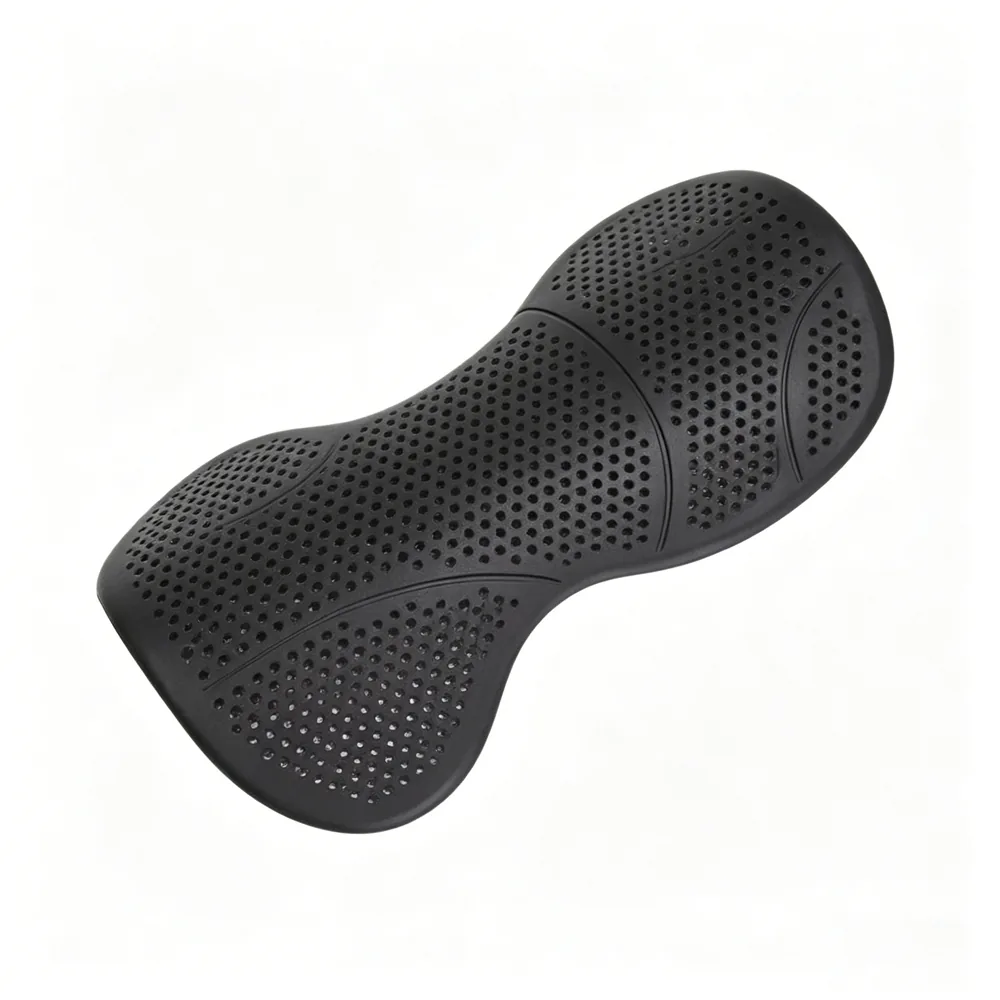
Most load-bearing equestrian equipment relies on a composite construction. For example, the Breathable Silicone Saddle Pad combines exterior silicone non-slip grip zones with a bamboo-charcoal mesh upper, an internal shock-absorbing cushioning core and stitched edge binding. Similarly, our flagship contoured girth pairs a wipeable silicone contact surface with a synthetic leather backing and 316 stainless steel roller buckles, while padded bridles pair internal silicone cushions with a genuine leather strap frame.
If a composite item is hung in an unheated room while its textile mesh, foam core, stitching or surface water film is still wet, the water trapped inside or on those non-silicone layers will freeze at 0°C regardless of what the silicone elastomer tolerates. Treating raw polymer numbers as a licence to store wet tack without drying or ventilation leads to frozen pad cores, ice-bridged buckle tongues and premature seam fatigue.
- Separate the raw silicone elastomer rating from the freezing behaviour of wet textile meshes, foam cores and stitched bindings.
- Inspect every layer of a composite item—top fabric, cushioning core, backing strap and hardware—before assigning a winter rack.
- Never hang snow-crusted turnout rugs or soaking wash towels on the same rack as dry bridles, girths and saddle pads.
- Wipe surface water films from silicone grip zones immediately after untacking so droplets cannot freeze into slick glaze overnight.
2. Control snowmelt humidity and condensation in enclosed winter barns
Cold air holds very little water vapour, which tempts barn staff to seal every door and window tightly once snow arrives. Yet horses, damp bedding, steaming wash buckets and snow-covered boots continuously release moisture into the building. In its guide on caring for your horse in the winter, the University of Minnesota Extension warns that in enclosed barns, snow blowing into attics and wall spaces can melt and create wet conditions suitable for mould and rotting, making ventilation essential to control temperature and humidity.
Inside an unventilated tack room, that moisture condenses on the coldest surfaces first: exterior walls, concrete floors, stainless steel buckles, aluminium stirrup treads and bit rings. From there, condensation wicks into adjacent saddle pad bindings, synthetic girth backings and leather cheekpieces. Even when the silicone contact face itself does not absorb water, surrounding fabric and stitching stay clammy for days.
Consistent moisture control starts with physical separation between wet-zone chores and dry equipment storage. Keep a dedicated drying vestibule or well-ventilated utility bay for steaming coolers, snowy hoof boots and freshly wiped pads. Only move composite gear into the main storage room once surface moisture has been towelled off and textile layers feel dry to the touch, using a hygrometer to monitor indoor relative humidity across freeze-thaw swings.
3. Position tack room heaters, dehumidifiers and airflow racks safely
Many northern yards install supplemental heating or desiccant dehumidifiers to keep winter storage rooms above the dew point. When planning tack room heaters, the goal is steady, moderate background warmth paired with gentle air circulation—not blasting high radiant heat directly onto hanging equipment. Direct hot air from a fan heater or radiator placed too close to racks can over-dry genuine leather bridle straps, warp foam cores and stress laminated adhesive joints.
Mount wall units and fans with clear distance from racks, and follow local electrical codes for agricultural buildings. Pair moderate warmth with slatted or swing-arm racks so air moves freely around each item instead of trapping dampness inside stacked pads.
As Rutgers Equine Science Center notes in Winter Care For Horses (FS1142), a wet horse covered by a blanket cools poorly and sweat trapped against a dirty winter coat contributes to skin irritation and infections. The same principle applies to tack storage: if composite pads from our silicone saddle pad range are stacked wet and cold, they return to the horse’s back clammy on the next ride. Hang each pad individually by its spine channel or on a wide-spaced swing arm so both the bamboo-charcoal mesh top and silicone grip underside breathe freely.
4. Organise horse bit storage ideas, girths and stirrup covers for sub-zero mornings
Small hardware and mouth-contact items benefit from dedicated winter organisation so riders are not fumbling with icy metal in dim morning aisles. In its veterinary overview of winter health hazards for horses and its companion article on winter hoof care, the United States Pony Clubs (USPC) notes that extreme cold numbs human hands and hinders precision work while temperatures around 15°F (-9.4°C) can irritate equine airways. Well-planned rack layouts reduce bare-hand handling time before exercise.
When comparing practical horse bit storage ideas for winter yards, avoid leaving bridles hanging on exterior stall doors or uninsulated masonry walls where mouthpieces and stainless cheeks drop to outdoor sub-zero temperatures. Store cleaned bits and bridles inside an insulated cabinet or on interior timber pegboards, and keep a clean warming cloth or lukewarm water bucket station nearby so riders can take the chill off metal rings or check silicone-covered mouthpieces before bridling.
As Rutgers Equine Science Center explains in Saddling and Bridling Horses Safely (FS348), riders should inspect tack for cracked leather or sharp bit edges and guide the bit into the mouth carefully without knocking the horse’s teeth. Alongside bit cabinets, hang contoured girths vertically or over broad half-round brackets so the synthetic backing and silicone face stay flat without sharp creases, and store silicone-covered stirrups on open drainage hooks after knocking slush out of the tread grooves.
On narrow screens, scroll this table sideways. Keyboard users can focus the region and use the arrow keys to inspect every winter storage and BOM column.
| Equipment group & SKU example | Complete composite construction | Winter drying & tack room storage protocol | B2B written specification & claim boundary |
|---|---|---|---|
| Composite saddle pad (SC-SSP-02) | Bamboo-charcoal mesh top, shock-absorbing foam core, silicone non-slip grip zones, stitched binding | Brush off dry hair, air-dry mesh and core on spaced swing arms away from direct heater blast before cold storage | Specify mesh gsm, core thickness and silicone grip pattern; never claim damp textile layers cannot freeze below 0°C |
| Contoured girth (SC-SG-01) | Moulded silicone contact face, synthetic leather substrate backing, stitched trim, 316 stainless roller buckles | Wipe sweat salt with wrung-out lukewarm cloth, towel dry around roller buckles, hang vertically without sharp folds | Separate raw silicone elastomer rating from synthetic backing cold-flex and buckle clearance tolerances |
| Stirrup covers (SC-SSC-01) | Textured silicone outer cover fitted over a lightweight aluminium tread support platform | Knock packed ice and arena sand from tread grooves after riding, dry metal interfaces and hang on open hooks | State cover geometry, aluminium platform dimensions and tread cleaning rules; not a guarantee against icy ground slips |
| Silicone-covered bits (SC-SMMB-01) | Food-grade silicone mouthpiece sleeve moulded over an internal stainless steel core and cheek rings | Rinse saliva with lukewarm water, dry thoroughly, store on insulated interior bit pegs and warm before bridling | Pair raw silicone FDA/LFGB sheet strictly with mouthpiece compound; inspect regularly for tooth wear or cuts |
| Padded leather bridle (SC-SPB-01) | Genuine leather outer bridle frame with internal silicone cushion pads at crownpiece and noseband | Wipe silicone cushions with damp cloth, condition leather straps separately, store away from damp rugs and direct radiators | Document hybrid leather-and-silicone BOM clearly; never market genuine leather straps as zero-care or all-silicone |
5. Separate raw elastomer ratings from whole-item claims in Nordic sourcing
For Nordic distributors, tack retailers and private-label brands, winter storage realities directly shape how product specifications and retail hangtags should be written. A common marketing pitfall is copying the raw silicone polymer temperature window (-30°C to +260°C) onto a composite product box as if the entire saddle pad, girth or bridle were an indestructible monolith that feels identical at -25°C even when left wet in a horse trailer.
An illustrative Nordic storage and specification audit (Brief SE-07)
The procurement and yard audit below is a clearly fictional example created to show how a distributor and partner riding facility align winter storage rules with B2B product documentation; it does not represent a real Swedish client contract or certified cold-chamber test report. In fictional Brief SE-07, Buyer M in Uppsala evaluates SC-SSP-02 breathable saddle pads, SC-SG-01 contoured girths and SC-SMMB-01 mullen mouth bits for winter retail distribution.
During the barn walk-through, Buyer M sees wet turnout blankets and damp pads hung inside an unventilated 3 m × 4 m room heated by one floor radiator. Pads near the radiator show stiff edge bindings, while pads against the cold wall retain moisture inside their cores. Buyer M moves wet rugs to a ventilated drying bay, spaces the tack room heaters 1.5 metres clear of the racks with a hygrometer-controlled dehumidifier, and adds an insulated interior pegboard with a lukewarm wipe station among their horse bit storage ideas.
On the procurement side, Buyer M updates the written specification for the Dongguan factory: item 1 (SC-SSP-02) is documented as a three-layer composite pad requiring full textile drying between winter rides; item 2 (SC-SG-01) lists its silicone contact face alongside its synthetic leather backing and 316 stainless roller buckles; item 3 (SC-SMMB-01) notes its food-grade silicone mouthpiece over a stainless steel core. All retail copy stating “never freezes when wet” is removed prior to print approval.
- Attribute the -30°C to +260°C range strictly to the base silicone elastomer compound, never as a blanket freeze-proof guarantee for wet textiles or leather.
- List every structural layer—mesh, foam core, synthetic or leather strap, stitching and metal alloy—on buyer specification sheets.
- Include practical winter drying, rack spacing and pre-ride warming instructions on Nordic language care labels.
- Verify production lead times and shipping schedules directly with the Dongguan factory rather than assuming local European stock holds.
6. Coordinate daily winter grooming, hot towelling and storage handoffs
Storage room discipline only works when paired with clean post-ride handoffs in the grooming bay. When barn hoses are drained and shut off for sub-zero weeks, riders cannot hose down mud-caked girths or sweaty saddle pads at an outdoor wash rack. In its guide to winter horse grooming tips and six winter grooming challenges, USPC notes that sweat, tack friction and long winter coats combine to create sores around the girth area and ears, and recommends hot towelling with a wrung-out warm cloth when full bathing is impossible.
Apply a parallel low-moisture cleaning routine to your equipment before it crosses the threshold into storage. Keep a dedicated two-bucket lukewarm water kit in the grooming area: use one wrung-out microfibre cloth to lift sweat salt and winter coat dander from the silicone face of the girth, bit rings and stirrup treads, and a second dry towel to blot away residual surface water. Brush loose winter hair from the underside of saddle pads with a stiff dry brush before hanging them on spaced drying arms.
For the horse-side sequence that precedes and follows storage, pair this facility setup with our companion guide on checking tack before and after riding horses in cold weather. Combining pre-ride hoof-ball and contact-zone checks with dry, well-ventilated storage keeps winter routines consistent across everyone sharing the tack room.
7. Prepare a clear written specification for cold-climate supply enquiries
When requesting quotations or pre-production samples for northern European or cold-weather equestrian channels, put your material and care requirements into a single written specification. Clear documentation allows the manufacturing team to confirm exact BOM layers, packaging translations and inspection checkpoints before production begins.
Specify each target SKU code (such as SC-SSP-02, SC-SG-01, SC-SSC-01 or SC-SMMB-01), required size breakdown, colourways and target order quantities. State clearly which components require raw compound documentation and which require complete-assembly BOM sheets covering fabrics, synthetic backings, leather straps and stainless or aluminium hardware.
Finally, include your draft hangtag or care-label text in the enquiry packet so engineering and sales teams can verify that temperature references, cleaning steps and storage instructions match the exact build of the selected models. Transparent specifications protect riders, horses and retail buyers throughout the winter season.
- List each selected catalogue SKU, size ratio and target order volume for your winter buying window.
- Request an itemised bill of materials separating the silicone contact compound from meshes, foam cores, straps and hardware.
- Confirm realistic winter care and tack room storage instructions for each composite or single-compound item.
- Verify ex-factory Dongguan production lead times, carton packing specs and custom care-label artwork in writing.