Show Equipment Logistics · 30 October 2026 · 12 minute read
How to Build a Horse Show Packing List That You Can Check
Source-compiled preparation and product-logistics guidance from a Product Manager. Not an official show list or professionally reviewed competition, fitting, transport or horse-health advice.
A horse show packing list is useful when someone can verify its entries without guessing. Begin with the particular show trip, then identify the equipment intended to go, who will pack it and where it will be found. A remembered item, a purchase request and an object physically inside a box are different things. Your record should make those differences visible.
This guide covers equipment logistics only, not everything needed to attend a show. It does not provide transport, horse-health, welfare, first-aid, medication, handling or training instructions. Use the competition and training equipment selection page for catalogue questions; obtain the other requirements through the relevant current sources and responsible people. Completing this record does not establish that a horse and rider are ready to compete.
1. Give the list a specific trip and event context
Put the event name, planned dates and relevant class or discipline context at the top before adding equipment. These details explain why an item appears on this version. A reusable master list can provide prompts, but it should not silently become the final record for a different show. Make the current trip distinguishable from an earlier draft.
Preparation is a useful lesson from US Pony Clubs’ 2023 account of preparing for a horse show. Its author describes organising equipment boxes and the value of having extra equipment available. That is a historical educational account, not a current universal checklist or evidence that Pony Club’s requirements apply to your event. The framework here is our own equipment-recording suggestion.
Separate the list’s purpose from event acceptance. A trip entry can state the equipment you intend to bring without stating that it may be used in every setting. Where different classes or sessions raise different questions, write down that context instead of merging them into one broad “show use” description. Do not invent an event rule to fill a blank.
Choose a version that the people packing can recognise. If the plan changes, identify the change and retire the superseded copy from active use. The aim is not elaborate administration: it is to stop one person checking yesterday’s bag list while another expects the revised items. Keep the current record accessible to those doing the work.
2. Turn broad equipment names into identifiable entries
“Pad” is a reminder, not an unambiguous packing entry when several similar items are available. Add a useful identifier such as the selected model, size description, individual reference or distinguishing photograph. Use the information that actually separates the intended item from the alternatives. Avoid relying on colour alone when more than one item shares it.
For example, the catalogue entry for the Breathable Silicone Saddle Pad identifies a supply model. If it is part of your proposed equipment, connect that model to the particular item you intend to pack. The catalogue name does not establish its suitability with an existing saddle, and buying it does not resolve that separate question. Do not add an unfamiliar layer merely to complete a list.
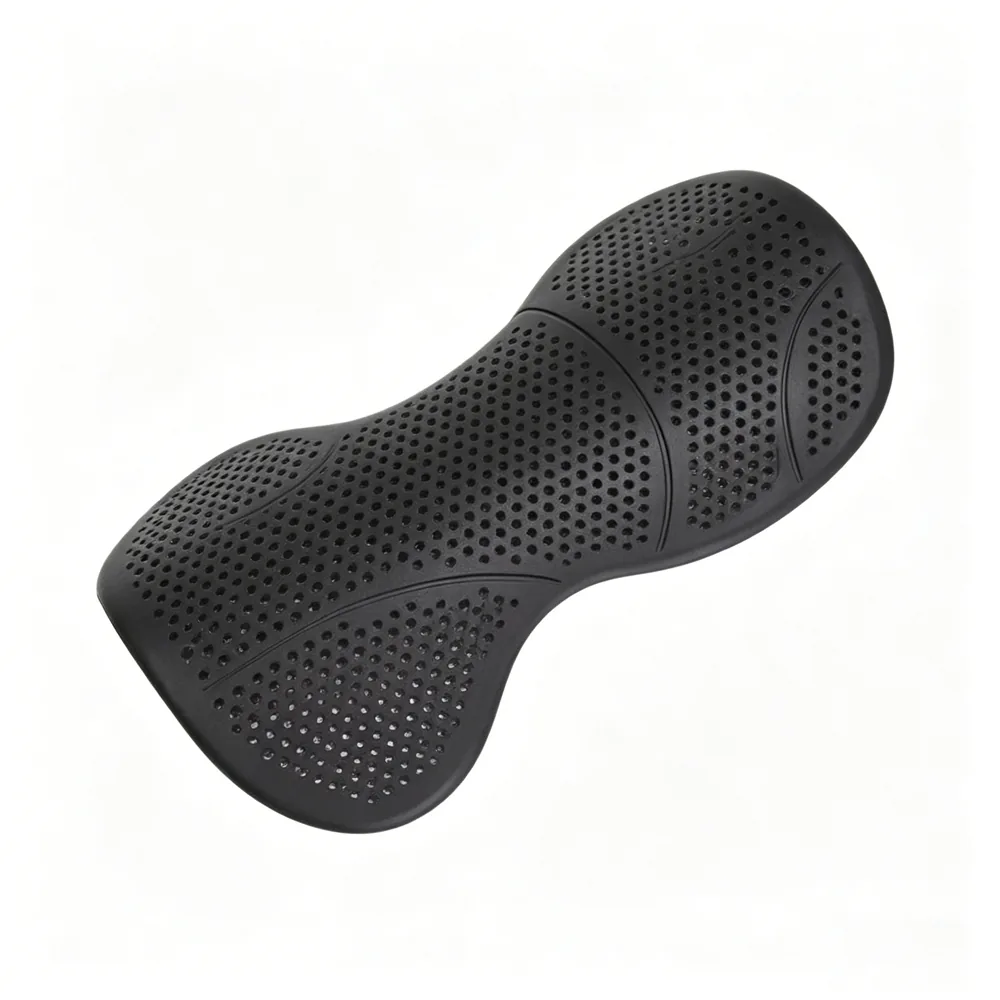
A product photograph can help with identification, but it has limits. The view below shows a black perforated pad on a white background. It does not establish internal layers, a complete textile construction, correct fitting or competition acceptance. Ask the supplier to confirm the complete item specification rather than reading invisible material details into the image.
- Name the actual item or model, not only its broad category.
- Add the variant or reference needed to distinguish similar pieces.
- Identify any separately packed component as a separate entry where useful.
- Keep a catalogue reference distinct from a photograph of your actual item.
3. Assign packing responsibility, including rider equipment
Give each equipment group a person who will confirm its physical packing. This is a practical responsibility for the trip, not a professional qualification or authority to approve use. A person ordering an item may not be the person putting it in the box. Write the handoff clearly when those jobs are separate.
Keep rider equipment identifiable in its own section so that it does not disappear inside the horse-equipment heading. Record the rider’s intended items and who will bring them, using the relevant event and personal requirements obtained elsewhere. This article does not prescribe a complete clothing or protective-equipment set. An inventory can track an item without certifying its standard or suitability.
Shared luggage needs especially clear wording. “In the large bag” means little if the group uses several similar bags. Choose a simple container reference that everyone involved understands and record who has it. If an item will arrive separately, name that arrangement rather than letting other people assume it is already with the main equipment.
Before the packing check, ask the assigned people to confirm what they are actually bringing. A reply that an item has been ordered is not a reply that it is packed. If responsibility changes, update the current trip record so that the next person does not work from an informal conversation. Keep supplier clarification and event decisions with their appropriate owners.
4. Record physical status instead of collecting reassuring ticks
A useful horse show checklist distinguishes an item identified for the trip from one physically packed. Use plain status words with a shared meaning, such as “not yet located,” “located” and “packed in box A.” These are inventory descriptions only. They are not condition grades, fitting judgments or authorisation to compete.
The four-column table below is an author-created working structure, not a governing body’s form. Adapt the fields to the people and containers involved. Record the state you can actually observe instead of turning an expectation into a packed mark. A person reviewing the record should be able to locate the item or see who must clarify its whereabouts.
On narrow screens, scroll this table sideways. Keyboard users can focus the region and use the arrow keys to read every column.
| Equipment entry | Identity to record | Physical status and location | Responsible person and follow-up |
|---|---|---|---|
| Selected tack item | Model, variant and individual reference | Located or physically packed; named container | Who checks the item and updates the entry |
| Rider’s equipment | Rider and identifiable intended item | Current bag or separate arrival arrangement | Who is bringing it and who needs the update |
| Separate component | Component and item it accompanies | Its own location, not an assumed place in a set | Who confirms that the recorded component is present |
| Spare | Individual identity and proposed spare role | Distinctly recorded spare container or compartment | Who tracks it; any use question remains separate |
| Return entry | The same item reference used at departure | Returned location or unresolved whereabouts | Who will reconcile the remaining discrepancy |
Choose the point at which a packed mark will be made and apply it consistently. If a bag is reopened and its contents change, update the affected entries. The record should follow the objects rather than remain fixed because someone has already signed it. This is especially useful when several people finish packing at different times.
Keep the detail proportionate. Naming a container and an item reference is often more useful than writing a long narrative about routine packing. Reserve explanation for a real discrepancy, a separate arrival or a changed arrangement. A short accurate record is easier to use than a comprehensive-looking list whose ticks have an uncertain meaning.
5. Keep unresolved equipment questions beside the packing record
A horse show preparation checklist can reveal a question without answering it. Give unresolved questions their own space, connected to the item reference and intended event context. “Packed” belongs to the physical record; the status of a rule, configuration or supplier question belongs to a different decision. Do not use one tick to represent both.
For FEI events, the FEI TackApp description and disclaimer explain the reference’s limits: its non-exhaustive database does not replace the rules or the relevant on-site officials’ decision. Keep that source check separate from the physical packing task.
An illustrative entry from departure to return
The following is invented to demonstrate the fields, not an actual customer record, a recommended kit or a product-use decision. For fictional Show A, Packer A records: “Pad A; catalogue reference SC-SSP-02; individual label A; located, not yet packed; intended container Box B.” The open question is the selected variant’s complete construction. Packer A assigns that supplier question to Buyer B and leaves its answer pending.
After physically placing the identified item in Box B, Packer A changes only the location and status: “Packed in Box B.” A second item, Pad C, has a separate entry marked “carried as a spare; use not selected.” Its presence does not close Pad A’s construction question. Before departure, anyone reading the two entries can distinguish the objects and see who is following up.
On return, Pad A is recorded in Box B, while Pad C’s location is unknown. Packer A records the discrepancy and names the person checking its whereabouts. The next trip starts with Pad C unresolved, not with a copied “packed” tick. This short example connects identity, responsibility and return status without pretending that every question has an answer.
Use the guide to FEI Tack App equipment questions to prepare the source and item information for an enquiry, not to manufacture a yes or no from a packing list. For another governing system, use its applicable current sources. A familiar reference from a different discipline or organisation is not automatically the right one.
- State the actual question and connect it to the identified item.
- Record the relevant event context and the source already consulted.
- Name who will seek clarification and where the answer should come from.
- Leave the question visibly open until an actual response addresses it.
6. Give spares their own identity and proposed role
Extra equipment can be useful without becoming an automatic replacement choice. Identify each spare separately from the item intended for the original configuration. “Another pad” does not explain which pad is being carried or why. A distinct entry prevents the presence of an alternative from being mistaken for a decision that it can be used.
Keep the reason for carrying it brief and factual. For example, the record may identify an additional item available for consideration, with its own reference and location. Do not label it “approved replacement” unless the relevant decision has actually been established for the intended use. A packing role describes what is carried, not how to alter equipment.
If you are comparing a proposed pad with the silicone saddle pad range, obtain the specific construction and variant information before confusing different catalogue entries. Similar names or appearances do not make two products interchangeable. Supplier identification can clarify what an item is; appropriate fitting and event decisions remain separate from that conversation.
When something changes during the trip, update what actually happened to the objects. Note a different location or an item that left with another person, without retrospectively rewriting the original selection. The purpose is traceability for the return check. It is not a guide to making a substitution or permission to bypass an unanswered question.
7. Reconcile the return inventory before reusing the template
The packing record should have an ending as well as a departure column. Compare the return inventory with the same individual references, including spares and separately carried items. Account for what came back, what remains elsewhere and who is following up. An item that was packed before departure is not necessarily available after the trip.
Record a discrepancy in ordinary language. If its location is unknown, say so rather than copying the previous status forward. If another person has it, identify the agreed arrangement and who will confirm its return. Avoid closing the record merely because the rest of the equipment has been unpacked; the unresolved entry is the part that still needs attention.
Keep lessons from this trip as prompts for the next one, not as inherited proof. A missing container label may justify a clearer reference next time. A question tied to one event may need different sources at another. Create the next trip’s version from the template, then review its entries rather than carrying forward old packed marks or implied decisions.
- Compare the departure entries with the actual returned equipment.
- Record changed locations and identify the person resolving each discrepancy.
- Close factual inventory questions when their answers are established.
- Start the next show list without copying previous packed or permission assumptions.
The result should be a manageable equipment record, not a claim to have solved every part of show preparation. Keep product enquiries specific: model, variant, complete construction and quantities. Keep readiness, suitability and event decisions with the relevant sources and people. A list earns its value by showing what is known and what is still missing.