Equipment Reference & Communication · 30 October 2026 · 12 minute read
How to Use the FEI Tack App for Equipment Questions
Source-compiled from official materials for product communication. No individual equipment ruling or professional review is asserted; the author is not presented as a coach, event official or legal adviser.
The FEI Tack App can help you organise an equipment question before a show. Its value starts with finding the relevant context and describing what you intend to use, rather than collecting a reassuring label. A buyer, rider and supplier may use the same product name while referring to different configurations. Make that difference visible before asking for an answer.
This guide follows the official app description and rules-source landing pages, not a live test of the app. No current individual database entry or Rubbrex product permission was verified. Use the competition and training equipment brief for the supply discussion; use the appropriate event reference and officials for the equipment question itself.
1. Establish the governing body and discipline first
Begin with the event you actually plan to attend. Identify its governing body, discipline and relevant class context before choosing a reference. A familiar show name or venue does not establish which rules apply. If the organiser’s information leaves that unclear, resolve the source question before comparing an item with a database illustration.
The official FEI TackApp description says its information is arranged by discipline, category and subcategory. Preserve that context when noting a result. An answer associated with one discipline should not silently become the answer for another because the equipment looks similar. The app description concerns FEI competitions, not every event that uses equestrian equipment.
FEI, British Dressage and British Showjumping are distinct reference systems. Do not combine their names into a generic “competition approved” status. Within the body relevant to your event, locate the current rules source and any separately issued updates. A national body’s handbook is not simply another presentation of the FEI database.
For example, British Showjumping’s handbook and amendments page lists equipment clarification and amendment resources separately, and warns that the amendments are not published in the online handbook. This illustrates why recording a handbook title alone may be incomplete. The linked rulebooks and equipment PDFs were not reviewed for this guide; no product permission is inferred from their labels.
2. Describe the complete item and its configuration
Write the equipment identity before searching by a broad material term. A name such as “silicone protection” leaves the reader guessing whether you mean a complete boot, a supplied component or a separate accessory. Include the catalogue reference and explain what the intended configuration contains. State any difference between the item shown in a listing and the item you have.
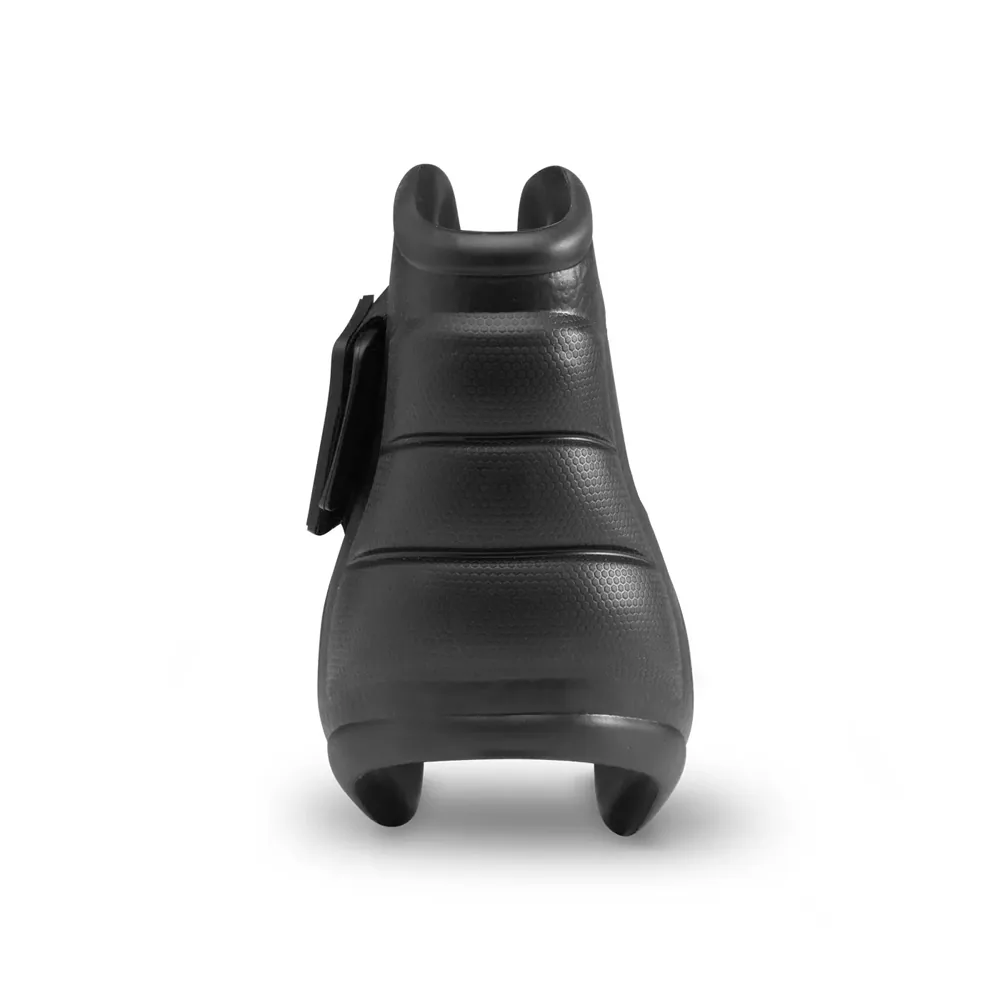
The selected Silicone Leather Horse Tendon Boots & Liner entry is a complete catalogue product. It is not a separately registered replacement liner. Calling the whole product a replacement liner would leave the recipient with a different equipment question. Identify the full product when asking the supplier for construction information. That identification does not establish that it corresponds to any particular FEI entry.
Prepare item photographs that show the details behind your question, while distinguishing stock pictures from the actual item. Give each image a clear label and explain which view contains the uncertain feature. Do not describe an obscured internal layer as visible, or infer a material specification from a black surface. Ask the supplier for a documented description where the photograph cannot answer.
- Name the complete selected model and the configuration being discussed.
- Separate catalogue views from photographs of the actual intended equipment.
- Point out the feature that prompted the question without guessing its ruling.
- Keep any missing construction information explicitly marked as unknown.
These are communication suggestions, not an official photography standard. A qualified person may need further views or an examination that pictures cannot provide. Do not ask a supplier to substitute a stock photograph for an event decision about the actual equipment.
3. Read the context and special conditions with the result
FEI describes the database as providing searchable information on allowed and prohibited tack, equipment and dress, with photographs, illustrations or videos and a relevant legal basis. Use those elements together. An isolated visual resemblance is weaker than an identified item considered within the correct discipline and the wording that accompanies it.
The official description says special conditions are marked with an exclamation mark. Treat that as a reason to read further, not as decoration beside an otherwise complete answer. Record the condition in context, together with the reference you consulted. Do not reduce a conditional result to a simple yes when passing it to another person.
This guide does not prescribe screen positions, search filters or a sequence of taps. Interfaces and entries can change, and no interactive app session was tested here. Follow the official service’s current presentation. If you cannot locate the relevant explanation or legal basis, note that limitation rather than inventing what an unavailable screen might say.
A search for FEI tack rules should lead to the applicable rules themselves, not stop at a product advertisement quoting them. When a rule reference is unfamiliar, keep its title and context intact for the person handling the question. Avoid rewriting a technical distinction into a convenient sales phrase. The aim is a traceable enquiry that another reader can check against the same source.
4. Leave N/A, missing entries and conflicts unresolved
The FEI description explains that N/A may mean the equipment is not relevant to the discipline, is not currently addressed or specified in its rules, or has not yet been addressed by FEI. Those are different possibilities. None supplies permission to use an item merely because the reader would prefer a positive answer.
FEI also describes the database as non-exhaustive and says equipment is added regularly. Therefore, failing to find a matching entry does not create an automatic prohibition or approval. Describe what you looked for and which identity remains uncertain. A broad category result should not be substituted for an exact match without acknowledging the difference.
The disclaimer makes clear that the database is not a substitute for the FEI Rules. Where there is incompatibility, conflict or divergence, those rules take precedence. Do not choose the source that gives the easier answer or blend two inconsistent passages into a new conclusion. Preserve the apparent conflict and ask the appropriate official to address it.
Leave room for a meaningful next action: obtaining the missing item description, checking the applicable current text or asking who should consider the question. “Not resolved” is useful when it identifies what is missing. It is not useful when it is quietly converted into “probably acceptable” in the order notes or shared equipment list.
5. Make an enquiry record another person can follow
Collect the question in a short record rather than forwarding a folder of unlabelled screenshots. Start with the event context, then the exact equipment, source consulted and issue still open. Keep observations separate from conclusions. A sentence describing a visible fastening is not the same kind of information as an official’s interpretation of a rule.
The table below is an author-created communication record, not an FEI form, inspection protocol or mandatory evidence list. Adapt it to the actual enquiry. Its purpose is to keep the origin of each statement visible so the recipient can see what needs an answer. Completing every field does not certify the item.
On narrow screens, scroll this table sideways. Keyboard users can focus the region and use the arrow keys to read all columns.
| Record field | Information to preserve | Question left open |
|---|---|---|
| Event context | Governing body, discipline and relevant class information | Is this the applicable reference system? |
| Equipment identity | Complete model, configuration and labelled views | Which actual feature requires clarification? |
| Source consulted | Page or entry context, rule reference and date checked | Are conditions or separate amendments still missing? |
| Response | Who replied, what was considered and any limitation | Does a change require a further question? |
Use plain language in the question column. “Please confirm everything” gives the recipient no clear issue to investigate. A more useful question identifies the uncertain feature and asks where the relevant requirement or interpretation should be obtained. Do not write the answer you hope to receive into the description of the problem.
The silicone leg protection range can help organise a supplier conversation about the model, supplied components or specification. Keep that commercial response in its own part of the record. Material documents and a quotation may clarify the product; they do not themselves answer the competition equipment question.
6. Address the right question to the right recipient
A supplier can describe what is offered. The organiser can help direct an event enquiry to the appropriate person. Those roles should not be merged merely because one person responds faster. Send a construction question to the supplier and a question about the applicable event requirements through the relevant event or governing-body route.
FEI’s disclaimer states that on-site officials have the final decision regarding interpretation and implementation of FEI tack, equipment and dress rules at the relevant FEI event. Preserve that event-specific scope. It does not establish who adjudicates a different body’s event, nor does an informal supplier reply replace the officials’ role.
- State the intended event context and exact equipment question.
- Attach clearly labelled information rather than an assumed approval claim.
- Identify what reply is needed and who is responsible for following up.
- Retain the response with its scope and any remaining conditions.
A reply should remain attached to the question it answered. If the response considered a particular configuration, do not forward it as a certificate for a different item. If it only identifies another source or contact, record that next step rather than marking the issue closed. Silence, an automated acknowledgement or an unanswered message is not an affirmative equipment decision.
This is not a promise that a remote enquiry can settle every issue before arrival. Make unresolved matters visible to the responsible event participants so they can obtain appropriate guidance. Do not rely on this article to assess fitting, welfare or the horse and rider’s readiness.
7. Keep the reference check connected to the actual kit
Once the question has a usable response, preserve the equipment identity and context alongside it. If the model, configuration, discipline or event changes, identify which part of the previous enquiry may no longer describe the situation. Reusing an old note is convenient only when its assumptions are still visible.
The horse show packing list guide handles a different task: recording which identified items are physically ready to pack, who takes them and what remains missing. Link the enquiry reference to that list without turning “packed” into “permitted.” A spare can be present in the bag while its intended use remains undecided.
- Keep the reference and labelled item photographs together in the equipment record.
- Mark a superseded configuration clearly instead of leaving competing versions unlabelled.
- Tell the person preparing the kit which question remains open and who is following it up.
For a purchase, name the selected product and the specification information you still need. Keep a request for size or supplied-component clarification separate from any competition interpretation. If the product ordered differs from the item discussed, do not carry the earlier response across by assumption. Update the identification before relying on it.
A useful outcome is a clear question, a traceable source and a responsible next step. It is not an endorsement of Rubbrex by FEI, evidence that our products appear in the database, or a professional equipment review. Use the official materials for their stated purpose, and keep individual event decisions with the appropriate people.