Wholesale Purchasing · 27 October 2026 · 10 minute read
Sample Approval Matrix for Wholesale Horse Tack
Editorial scope: purchasing records and a summary of cited sources, not legal, veterinary or product-compliance approval.
A sample approval matrix connects a wholesale horse tack sample to the decision that permits the next purchasing step. It should show what was checked, what remains unknown and who can release each condition. For a mixed assortment, the useful result is not one signature covering every accessory. It is a record that another buyer can follow without reconstructing conversations or guessing whether “one” meant a piece, pair or retail pack.
Define the approval boundary before requesting samples
Start with the proposed buying line, destination and intended sales presentation. Record the supplier, model, size, colour and packaging choice before anyone evaluates the sample. A brush requested for loose sale and the same brush in a branded retail pack have different approval scopes, even if the physical brush looks unchanged.
Use the European distributor assortment and enquiry overview to establish which products belong in the first order. Then give each selected combination its own reference, or explain explicitly which combinations a sample represents. Do not let “assorted colours” stand in for an agreed allocation or imply that checking one colour establishes every other version.
- Buying identity: supplier, model, requested variant and purchasing-line reference.
- Physical identity: sample identifier, receipt date, quantity and condition on arrival.
- Controlled documents: specification, drawing, artwork and instruction revisions, with filenames or references.
- Commercial boundary: selling unit, proposed order quantity and sample charges to confirm separately.
Keep the assessment purpose visible on the sample approval form. Appearance review, dimensional comparison and document review are different activities, with different evidence. A person signing for colour should not accidentally appear to have accepted construction, confirmed suitability for a horse or authorised market release.
Build a matrix around evidence and ownership
Each row should answer a purchasing question that can be closed or deliberately left open. Put the agreed requirement beside the evidence, rather than recording “good” without a comparison point. The fields below organise the decision; they do not prescribe a tolerance, inspection frequency or testing programme for every product.
Swipe horizontally to compare all columns on a narrow screen. Keyboard users can focus this table region and scroll across.
| Check row | Requirement and evidence to record | Decision owner | Release condition |
|---|---|---|---|
| Identity and version | Model, sample ID and current specification; identify any difference between the request and received item. | Buyer, with supplier confirmation. | The decision names the exact revision reviewed. |
| Dimensions and construction | Agreed endpoints, units, method and actual observations; reference the component drawing where needed. | Assigned technical reviewer. | Results are compared with agreed criteria, not an invented universal limit. |
| Appearance and pack | Colour reference, artwork version, piece/pair definition and contents of each selling pack. | Buyer or packaging owner. | Accepted presentation and any differences are explicit. |
| Documents and claims | Report reference, object covered, issuer and scope; match instructions to the complete product. | Designated document reviewer. | Missing coverage stays open; a material report is not whole-product approval. |
| Final purchasing decision | Accepted rows, unresolved conditions, action owner and dated decision linked to the proposed order. | Authorised purchasing approver. | Release is limited to the stated product, version and purpose. |
One employee may hold several roles, but the record should still distinguish them. A supplier can confirm the supplied construction while a buyer accepts the commercial presentation. Neither role automatically replaces the competent assessment needed for a safety concern, a fitting question or a destination-specific legal requirement.
Also distinguish arrival damage from a manufacturing observation before assigning corrective action. Photograph the received condition and packaging, note whether the item was altered during review, and preserve the relevant references. If a sample is cut, marked or otherwise changed for assessment, identify that change so it is not later mistaken for the intact production reference.
Agree how observations become acceptance
Write the measurement convention before comparing numbers. An overall outside length, an opening diameter and a usable fastening range answer different questions. Identify the units, endpoints, condition and method so the supplier and buyer are not approving two different interpretations of the same dimension.
If a criterion is missing, record the gap instead of choosing a convenient pass value. Do not borrow a moulding tolerance, hardness range or sampling ratio from another product. Establish the requirement with the supplier and an appropriate reviewer, then decide whether the existing evidence is sufficient or another sample is needed.
- Identify the requirement and the document revision that defines it.
- Describe the observation and attach its measurement record or other evidence.
- Compare the observation with the agreed criterion without silently changing that criterion.
- Record acceptance, rejection or an open question, with the responsible person and next action.
A photograph can help locate a surface mark or measurement endpoint, but it cannot replace the missing comparison method. Likewise, a hand-feel comment describes an observation, not a material identification or durability result. Keep those distinctions visible so a practical review does not become an unsupported performance claim.
Keep different product families on different acceptance rows
Mixed orders need product-specific questions, even when the products share a material description. For silicone bit guards, identify the opening, intended matching hardware and whether the purchase unit is a pair. Do not infer pack contents or fit from a photograph showing guards beside a bit.
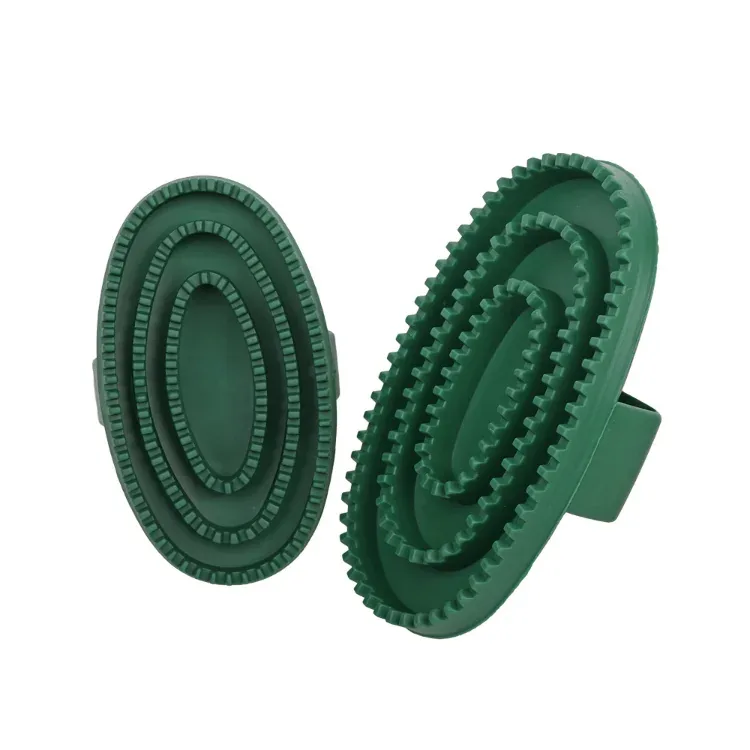
For a grooming brush range, identify the tooth pattern, overall shape, chosen colour reference and retail presentation. Confirm care instructions for that model, rather than importing a temperature claim from a different silicone item. A sample review can record visible construction without claiming to verify hidden formulation or cleaning performance.
- Bit guards: keep piece count, pair count and compatibility questions separate.
- Brushes: distinguish the product colour from packaging artwork and mixed-colour allocation.
- Saddle pads: identify size landmarks and the complete construction covered by care instructions.
- Mixed-material tack: record leather, textile, fasteners and silicone components separately where their requirements differ.
This separation also protects the quantity calculation. Two individual guards and one pair can describe the same physical count but different order units. Require the quotation, purchase order and packing description to use the accepted unit consistently; a lower unit price is not comparable if its contents differ.
Make conditional approval a controlled decision
“Approved with comments” is incomplete unless the comments say what can proceed. An accepted colour may allow artwork preparation while a construction question still prevents production release. State the permitted activity and the activity on hold, rather than letting the most optimistic reader interpret the signature.
For each condition, identify the issue, responsible person, required evidence and closure decision. Agree a review date with the relevant parties instead of inventing a standard response period. If the answer changes the product or accepted presentation, give the replacement its own revision and assess the affected rows again.
- Accepted: the named requirement is met within the recorded evidence and scope.
- Rejected: the stated requirement is not met; record the discrepancy and requested response.
- Pending verification: the evidence or criterion is insufficient to decide.
- Conditional release: only the named activity may proceed, subject to the written restriction.
Retain superseded decisions without leaving them available as current instructions. Link the original issue to the revised sample and the person closing it. A new photograph or a message saying “corrected” should not quietly replace the controlled drawing, artwork or inspection record used by the purchasing team.
Separate purchasing approval from market requirements
The European Commission’s Access2Markets product-requirements overview explains that market entry can involve design, labelling, marking, packaging and functionality or performance requirements. It also explains that requirements differ between countries or trading blocs. Consequently, accepting the physical sample does not close every destination-market question.
Keep the intended country and label-language version beside the document review. An EU order should not silently cover Great Britain, Switzerland or Norway under one “Europe approved” heading. Ask the responsible reviewer to determine the requirements for the actual item and destination, rather than treating this purchasing worksheet as a legal checklist.
The official Your Europe guidance on selling products safely states the general requirement for products sold in the EU to be safe. It also describes action when unsafe products are identified. It does not establish that every item of horse tack needs CE marking or that a signed sample is a safety certification.
Match any supplied report to its actual subject, version and scope before relying on it. A food-contact material statement, a management-system certificate and a finished-product test answer different questions. Arrange appropriate professional review where needed, and keep an unresolved safety or compliance question outside a routine commercial release.
Carry the accepted record into the first order and reorders
The purchase order should identify the accepted sample, specification and packaging revisions alongside quantities and units. Attach the closure record for any condition that affected release. Keep an identifiable reference sample where agreed, with its custody and storage instructions, rather than assuming an unlabelled item will remain a reliable comparison indefinitely.
Reorders need a change question, not just “same as last time”. Ask whether the construction, material, dimensions, colour reference, artwork, instructions or selling unit has changed. A change does not automatically require repeating every check, but the responsible reviewer should decide and document which acceptance rows it affects.
Agree how the supplier will identify that revision in production and shipment records. Ask which reference will appear on the order acknowledgement and where the receiving team can find the corresponding specification. This does not establish that every delivered item has been inspected; incoming checks and any bulk inspection plan remain separate arrangements that need their own criteria and evidence.
Finally, use the accepted product record in the FOB and DDP quotation comparison guide before agreeing shipment. Product acceptance and delivery responsibility are separate decisions, but they must reference the same buying lines. Request sample charges, bulk minimums and delivery assumptions in writing; none is settled by a sample approval signature alone.