Procurement & Receiving · 29 October 2026 · 12 minute read
Acceptance Sampling for Horse Tack: Plan the Lot Decision
A purchasing and supplier-communication guide, not a substitute for a qualified quality specialist’s sampling plan.
Acceptance sampling in quality control helps a buyer make a decision about an identified production lot using selected items. It is not the same task as approving a development sample before manufacture. For horse tack orders, useful receiving evidence connects the actual delivered lot to the agreed product requirements. Start that connection before dispatch, rather than asking warehouse staff to invent a plan when cartons arrive.
1. Define the lot before making a receiving decision
The inspection lot is the population to which the inspection decision will apply. Ask the supplier and your quality contact to identify its boundaries, product references and production records. A purchase order can contain several lots, and a delivery can contain several product lines. Do not treat a shared arrival date as evidence that all those items form one suitable inspection population.
Connect the lot reference to the model, variant, specification revision and quantity basis. For silicone bit guards selected for your order, define whether the inspection unit is an individual guard or another agreed unit. A pair used as a selling unit does not silently settle the sampling unit. Keep the link clear enough that an inspector can identify the items covered by the result.
- Retain the order line, model and specification revision beside the supplier’s lot reference.
- Record the delivered quantity and how carton or pack identifiers connect to that lot.
- Identify mixed, missing or unclear labels before selecting the inspection population.
- Assign an owner to resolve an identity gap before a dependent release decision.
In the receiving workflow, receipt and acceptance answer different questions. Receiving records what arrived and its apparent delivery condition; acceptance concerns the agreed requirements and authorized decision. Make your own status meanings explicit, including what a receiving signature confirms. Do not rely on a generic label such as “checked” to mean both counted at the dock and released following quality review.
Use the horse tack procurement brief and RFQ process to raise these requirements while the order scope is still being discussed. The inspection plan needs an identified population, not merely a product name on an invoice. Preserve separate lot identities when production histories differ. If proposed grouping is unclear, obtain a justified agreement rather than merging records for convenience.
2. Specify the characteristic and the inspection method
State exactly what each check examines before deciding how much to inspect. Appearance, a defined dimension, supplied contents and functional performance are different characteristics. Connect each requirement to the applicable drawing, specification or approved reference. A broad instruction such as “check the quality” gives staff no consistent basis for recording a result or explaining a disagreement.
For a selected silicone grooming brush, identify the model and the feature under review. A colour identity check, a measurement of a named feature and an agreed functional test need different evidence. Define the method, relevant equipment and conditions for each. Do not invent a tolerance from a photograph or substitute the inspector’s personal preference for an agreed requirement.
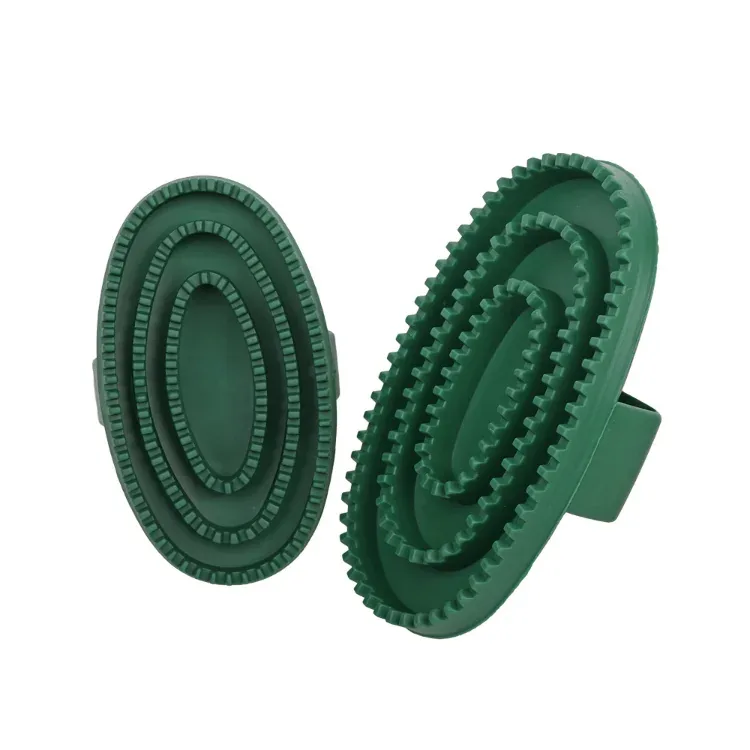
A sampling plan cannot repair an ambiguous inspection method. Confirm where a dimension is taken, which unit is recorded and what counts as nonconforming for that characteristic. Where reference samples are used, identify their revision and purpose. A reference for appearance should not become an unspoken acceptance limit for strength, durability or material composition.
- Requirement: identify the characteristic and its agreed acceptance criterion.
- Method: specify the observation or test and any required equipment or conditions.
- Evidence: retain the result with the sampled item and the relevant requirement.
- Authority: name the person who resolves an unclear or disputed result.
Keep quality checks distinct from suitability claims. A recorded dimension can establish conformity with that dimension, not correct fit for every horse or tack combination. Likewise, a clean visible surface does not demonstrate hidden mechanical performance. Ask a competent specialist to define checks where use-related risks or technical requirements extend beyond a routine visual inspection.
3. Plan random selection and preserve sample identity
The NIST explanation of acceptance sampling describes selecting a random sample from a lot and using its information to decide the lot’s disposition. It also distinguishes that purpose from estimating the lot’s quality. This is a useful limit: the selected items inform a defined decision, not a claim that every unexamined item has been verified.
Agree a practicable random-selection procedure with the responsible quality person before opening convenient packs. Record how the population is identified and how sampled units will be selected. Staff need access to the items the procedure can select. Taking whichever pieces are nearest the carton opening should not be described as random selection merely because no one chose them for their appearance.
- Confirm the lot population and the unit to which the selection procedure applies.
- Follow the agreed random-selection method and retain the selection record.
- Give sampled units traceable identities linked to their carton or other relevant location.
- Record access problems, missing units or substitutions for review rather than quietly changing the procedure.
Use the selection records to make the path from selection to observation traceable. A supplier photograph of attractive pieces is not evidence of random selection from your lot. Ask which lot and sampled units a report covers, not just whether a report exists. Retain enough identification to discuss a particular observation without confusing it with another model or delivery.
Plan the handling of tested items as well. Some methods alter or consume the sample, while others allow items to remain usable. Agree their identification and disposition so tested pieces are not silently returned to ordinary stock. Document a departure from the selection or test method and seek a decision on its effect before relying on the result.
4. Use an agreed acceptance sampling plan, not an AQL alone
A plan combines sampling arrangements with decision rules. NIST’s account of lot acceptance sampling plans explains that schemes can lead to acceptance, rejection or a further sample under their stated rules. That last possibility belongs to a defined plan. It does not authorize an inspector to add samples whenever the initial result is inconvenient.
Have the quality specialist identify the applicable acceptance sampling plan, its basis and the parameters required for your order. Where a standard is specified, record its exact reference and edition, alongside the agreed inspection conditions. Obtain the authorized sample size and acceptance and rejection criteria from that complete plan. A quotation containing an AQL value does not supply all those missing instructions.
AQL is not the customer return rate, the fraction of the shipment to inspect or a guaranteed permissible defect percentage in every batch. NIST discusses both producer’s and consumer’s risks, including accepting a lot with unacceptable quality. Acceptance sampling therefore does not eliminate decision risk. Do not translate its outcome into a promise of zero defects, automatic safety or universal product compliance.
On narrow screens, swipe across the table. Keyboard users can focus this region and scroll horizontally.
| Record | What it establishes | What it does not establish |
|---|---|---|
| Lot identity | The identified population covered by this inspection. | That different production histories can be merged. |
| Characteristic and method | The requirement checked and how observations are made. | That an appearance check proves hidden performance. |
| Approved sampling plan | The selection, inspection and decision rules to apply. | A plan inferred from an AQL number alone. |
| Sample observations | The recorded findings for identified sampled units. | The exact quality of every item in the lot. |
| Decision and disposition | The authorized outcome and subsequent action. | An automatic safety approval or permission to keep resampling. |
Check the plan’s counting basis as carefully as the plan reference. A nonconforming item and a nonconformity are not interchangeable: an item can have more than one nonconformity. Record findings using the counting rule specified for the characteristic and plan. If that rule counts nonconforming units, multiple findings on one unit do not become additional sampled units. Keep the individual findings available without substituting their total for the required count of units.
Agree any defect classifications and escalation rules before inspection. Buyers should not borrow a sampling table or choose acceptance limits without the applicable requirements and competent review. Lot inspection is only one part of the order’s quality arrangements. Characteristics requiring other evidence need their own method and authorization, rather than an assumption that one general screen covers everything.
5. Separate observations from the lot decision
An observation records what the inspector found; a decision applies the agreed rule to those findings. Keep both visible in the report. A measured value, visible condition or missing component should remain identifiable even if the eventual commercial outcome changes. Replacing the findings with a single “pass” stamp makes it harder to review the basis of the decision.
Connect each observation to the sample identity, characteristic, method and relevant requirement. Retain useful photographs or measurement records with their references rather than as an unlabelled attachment folder. Record who inspected the sample and when. If equipment or conditions required by the method were unavailable, state the limitation instead of reporting an unqualified result.
- Record the observed result without changing the agreed requirement to match it.
- Identify the applicable counting and decision rule, including any authorized escalation.
- State the lot decision, responsible reviewer and date separately from individual observations.
- Keep an unresolved finding visible and identify the action it prevents.
Distinguish an incomplete inspection from a rejected lot. Missing evidence may leave a decision pending without establishing that the physical product fails a requirement. Conversely, a confirmed nonconformity should not disappear behind a note saying that paperwork is still outstanding. Use clear status definitions so purchasing and receiving colleagues can see why a lot remains on hold.
Inspection reports also need boundaries. State which lot, characteristics and methods the decision covers, and identify any separate requirements still awaiting review. An acceptable result for a defined appearance check does not clear an unperformed functional test. The release authority should be able to see those dependencies without inferring them from a general summary.
6. Agree disposition and control any resubmission
Decide in advance who can authorize the actions following lot inspection. Depending on the agreed procedure, a result may lead to release, hold or rejection pending further action. Keep the affected lot identifiable while that decision is made. Avoid moving uncertain goods into normal available stock simply because the receiving quantity has been entered in the system.
Document the proposed disposition with the supplier and responsible buyer. Sorting, rework, replacement, return or another agreed action each needs a defined scope and authorization. Do not infer responsibility for costs, transport or delays from the inspection result alone. Those commercial arrangements belong in the order agreement and the written resolution of the particular issue.
- Preserve the lot identity and the original inspection findings.
- Agree the authorized action, affected quantity and responsible parties.
- Record what changed and which evidence is needed before further consideration.
- Link any authorized resubmission to the previous result and the applicable inspection procedure.
After rejection under the agreed plan, a lot needs a controlled response, not an improvised fresh start. Keep the decision history visible when goods are sorted or reworked. A new report should identify the relationship to the earlier lot and action. The responsible quality person should determine the applicable resubmission procedure before any further inspection is treated as evidence for release.
7. Hand over a complete, limited release record
Bring the lot identity, inspection brief, observations, decision and authorized disposition into one traceable handover. Purchasing staff need to know what has been agreed; receiving staff need to know what they may do with the goods. The lot decision is easier to communicate when each record has a clear purpose and the release scope is stated explicitly.
As a public-procurement example, U.S. FAR 46.501 connects acceptance with contract quality and quantity requirements and describes acceptance evidence. It also recognizes different acceptance timings under contract terms. These are U.S. government procurement provisions, not mandatory rules for a private horse tack purchase. Agree your own responsibilities and seek appropriate advice on legal consequences.
Keep commercial comparison upstream of the lot decision. The horse tack quotation comparison sheet helps establish whether suppliers are quoting the same requirement and cost scope. Carry the agreed revision into inspection planning rather than letting receiving become a late negotiation over what was ordered. A price difference is not evidence that an observed nonconformity should be accepted.
Finally, retain the limits as well as the reported result. A release concerns the identified lot and agreed requirements; it is not a statement about all future production or every use. Send open questions with the model, lot reference and existing evidence attached. That gives the next discussion a concrete starting point without replacing a qualified plan with a general assurance.