Boot Selection & Care · 2026-10-23
Silicone vs Neoprene Horse Tendon Boots Comparison
This silicone vs neoprene horse tendon boots comparison separates confirmed construction details from claims that need testing. For a tack brand, the useful question is not which material name wins, but whether the complete boot fits, cleans and performs as required. Start with the silicone leg protection range and construction choices, then compare equivalent samples.
1. Separate the Complete Boot from the Liner
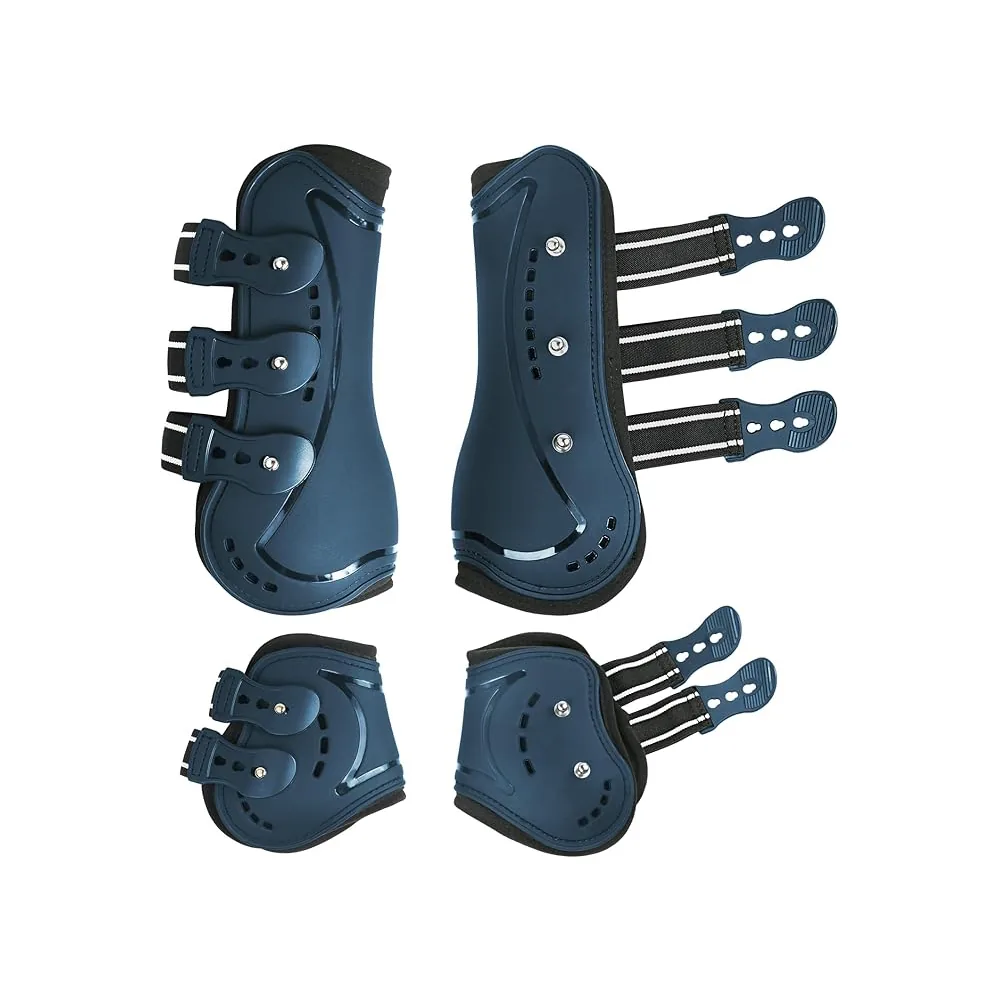
The SC-SLP-01 silicone tendon boot and SC-SLP-02 silicone-leather tendon boot are complete leg protectors. Both constructions combine an outer layer, cushioning, elastic nylon webbing and hook-and-loop fastening. Neither product code should be used as shorthand for a standalone foam insert.
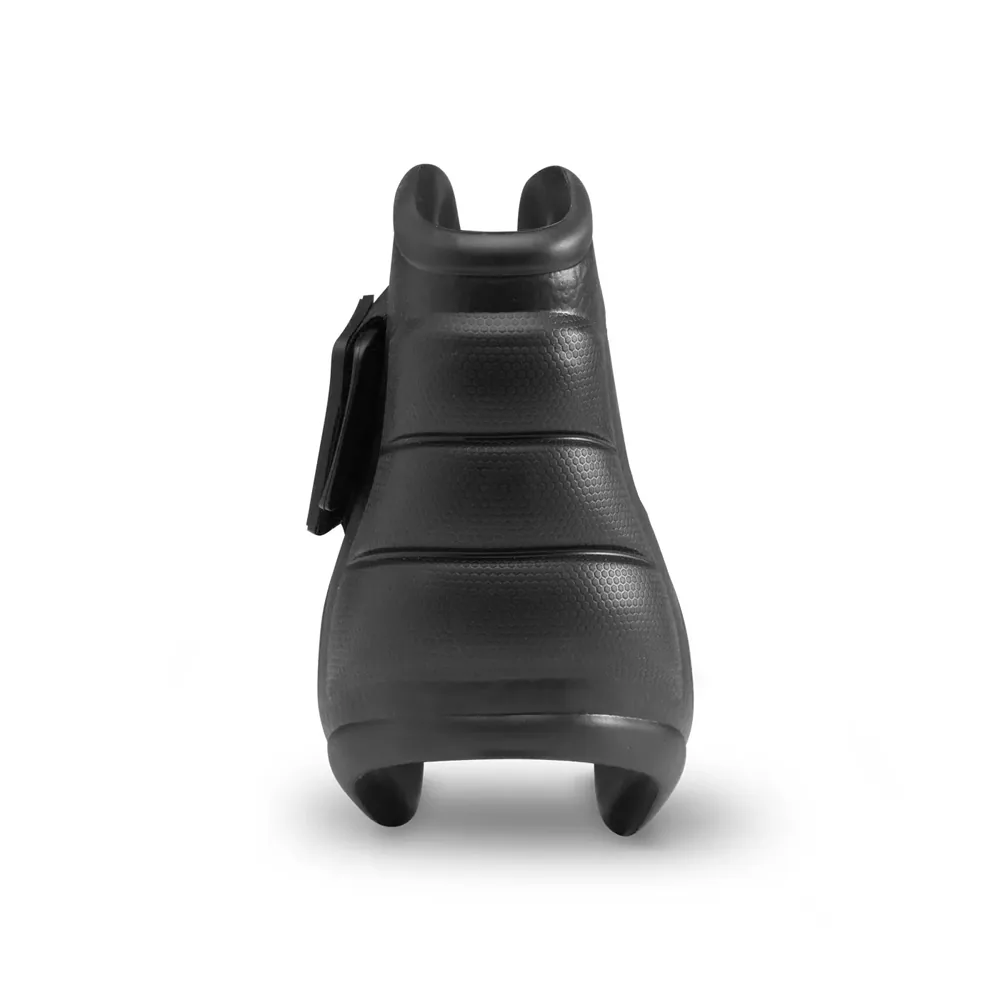
A breathable horse tendon boot liner is a separate item. Silicon Chain’s liner uses mixed open-cell / closed-cell micro-foam silicone in Pony / Cob / Full / XFull. Adding it inside another boot changes the available space and fastening overlap. Ask for the intended thickness and test the combined assembly rather than assuming that extra cushioning is always a better fit.
The phrase closed-cell micro-foam silicone does not fully describe this mixed-cell liner. Likewise, zero water absorption is not a verified measurement for the assembled product. A shell, lining, webbing and closure can behave differently from the raw silicone compound.
2. Compare the Evidence, Not Unmeasured Benchmarks
A valid comparison needs comparable coverage, sizing and use conditions. The table below is a sampling checklist, not a laboratory ranking of silicone against neoprene or fleece.
| Decision | Silicon Chain construction information | What to check in a neoprene or fleece alternative |
|---|---|---|
| Complete boot or separate liner? | Silicone / silicone-leather tendon boots are complete protectors. A separate mixed-cell micro-foam liner is worn inside another boot. | Identify the shell, lining, fastening and whether the liner is removable. |
| Size range | Tendon boots and the separate liner: Pony / Cob / Full / XFull. Use measurements to compare the samples. | Compare internal dimensions and fastening overlap rather than relying on an identical size name. |
| Water retention | No measured assembled-boot water-uptake value is available for this comparison. | Weigh both complete samples dry and after the same wetting and drainage procedure. |
| Thermal performance | Mixed-cell foam is a construction description, not proof of a measured cooling benefit. | Ask for a defined test method and comparable use conditions before accepting temperature claims. |
| Cleaning | Agree the wash-care method for the shell, foam, webbing and fastener together. | Record cleaning labor and drying time using equally soiled samples under the same conditions. |
For wet-weight checks, record retained water = wet sample mass − dry sample mass, using the same wetting and drainage method. For cleaning, record the time spent on each complete sample and its drying conditions. No gram value, drying-hour result or fastening-cycle life is claimed here without a test record.
Superficial digital flexor tendon hyperthermia is a clinical topic, not a proven outcome of choosing one liner. This catalogue does not provide comparative in-use temperature measurements or a claim that a boot prevents tendon injury. If heat management is central to your brief, have your qualified product or veterinary adviser define the evidence required before making a cooling claim.
3. Treat Cleaning and Disinfection as Different Tasks
Remove visible soil and follow the wash-care method for the exact assembly. A quick rinse does not prove that equipment has been disinfected, nor does it establish suitability for sharing between horses. Check the shell, foam, textiles, adhesives and fastening system together before choosing heat or a chemical disinfectant.
The factory states a silicone material temperature range of -30°C to +260°C. This is not permission to heat a finished boot to either extreme. A material range also does not validate an 85°C wash cycle, boiling or autoclaving for every boot. Request the model-specific temperature, contact time, rinse and drying instructions; these finished-assembly limits remain to be confirmed.
Silicon Chain supports compression moulding, injection, extrusion, foaming and sewing at its 7,000 m² Dongguan facility. Request applicable material compliance documents for EU REACH, FDA 21 CFR 177.2600, LFGB and ISO 10993 where relevant to the selected compound and order. Do not turn raw-material compliance into a blanket clinical or finished-product certification.
4. Turn the Comparison into a Sourcing Brief
For waterproof show jumping boots wholesale enquiries, define the required coverage, fastening, size measurements, wash-care routine, color and packaging. “Waterproof” should refer to the tested construction and intended exposure, not imply a sealed boot opening or a medical benefit.
The source catalogue lists historical tendon-boot prices of US$35 per pair for 100–499 pairs, US$33 for 500–999 pairs and US$30 for 1,000 or more pairs. These are reference tiers, not a current offer or a confirmed private-label MOQ. Ask for a fresh quote for the exact silicone or silicone-leather boot. For the separate liner, branded drawstring-bag packaging starts at 1,000 pairs; ODM thickness or size tooling starts at 2,000 pairs.
Compare ownership cost using landed price, actual cleaning labor, replacement records and fit-related returns. No fixed service life or percentage saving is established for this range. Review OEM / ODM and private-label options, then send your construction brief for samples and a current quote. If the requirement is hoof coverage rather than leg coverage, use the hoof boot fit and intended-use guide.
5. Sample Comparison Questions
What makes a retained-water comparison useful?
Compare complete samples of the same intended size and coverage, not a small silicone coupon against a full textile boot. Record dry mass, wetting conditions, drainage time and wet mass. Retained water equals wet mass minus dry mass. Repeat the same procedure for each construction and do not present an unmeasured zero as a test result.
How should I assess a sample on a horse with fine cannon bones?
Check the boot dimensions, edge contact, strap position and fastening overlap with your qualified fitter or product team. Inspect for rotation or movement during the intended activity. Do not correct an unsuitable size by pulling the straps progressively tighter; stop using a sample that causes rubbing or discomfort.
Does food-contact material compliance prove a boot stays cooler?
No. REACH, FDA 21 CFR 177.2600, LFGB and applicable ISO 10993 reports concern different material requirements. They do not establish airflow, tendon temperature, impact protection or complete-boot performance. Ask for evidence for each claim and the scope of the supplied material reports.