Full Cheek Snaffle Buyer Guide · 2026-10-27
How Does a Full Cheek Snaffle Bit Work? Fit and Keepers
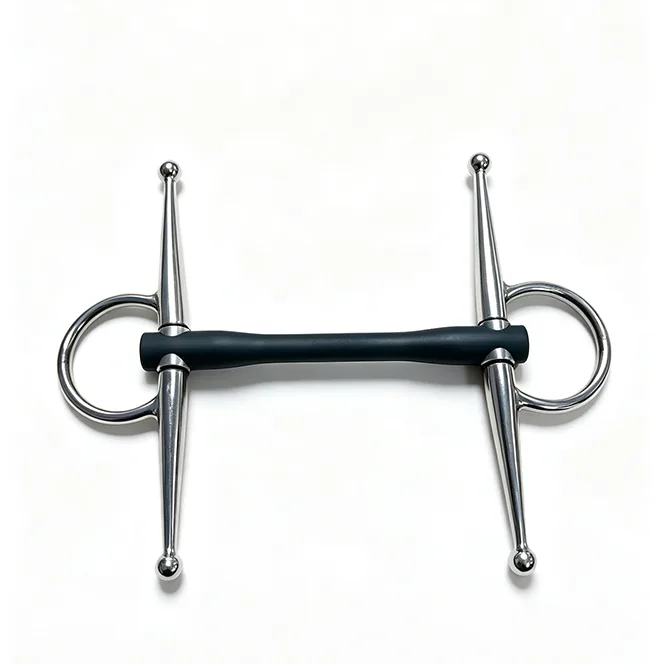
What is the purpose of a full-cheek snaffle?
The full-cheek design extends arms above and below the mouthpiece at each side. Those arms add a lateral structure beside the mouth and are commonly discussed in relation to guidance and stability. They should be assessed with the mouthpiece shape and rein arrangement; a full-cheek bit is not a generic promise of better steering for every horse.
The snaffle-bit reference separates mouthpiece and ring designs, a useful distinction for a procurement brief. “Full cheek” and “Mullen mouth” describe different features. The Mullen mouth guide covers a continuous curved mouthpiece; this guide focuses on the cheek-arm and keeper questions around SC-SMMB-02.
Keepers and clearance are product-specific
A buyer should not infer a keeper arrangement from a product photograph alone. Ask the supplier how the exact full-cheek design is intended to attach to the bridle, which keeper arrangement is specified and whether any accessory is included. Have the completed assembly reviewed by a qualified fitter before use.
- Check that the cheek arms and bridle parts have the intended clearance throughout normal movement.
- Confirm keeper size, mounting position and the supplier's instructions for the supplied bit.
- Do not stretch, cut or force a closed bit guard over a full-cheek arm.
- Stop use if any component traps tissue, rubs or obstructs the intended movement.
For competition use, consult the current rules for the discipline, class and event. The FEI regulations portal is a starting point for finding relevant rule documents, not evidence that this product is approved for every competition. A material report and a catalogue listing do not replace that check.
Compare the sample with the drawing and quote
The listed options are 115, 125, 135 and 145 mm, with Natural White, Classic Black, Apple Red and Sky Blue colours. Ask for availability of your selected combination, then confirm the measurement points on the drawing. Where an inch label and millimetre dimension differ, obtain the agreed dimension in writing instead of substituting a nearby size.
| Approval question | What to check on the sample | What to write in the quote |
|---|---|---|
| Mouthpiece width | Confirm the actual width and measurement points; listed widths are 115 / 125 / 135 / 145 mm. | SKU, dimension convention and agreed millimetre value. |
| Cheek arms and keepers | Check arm clearance, bridle attachment and the supplier-approved keeper arrangement. | The specified geometry and whether keepers are included or separately supplied. |
| Material wording | SC-SMMB-02 specifications describe silicone, while its title also says soft rubber-coated. | The actual supplied mouthpiece material, formulation and documents. |
| Commercial basis | Check pack contents, colour and sample approval. | Separate sample and bulk terms; do not assume a selector minimum is the wholesale MOQ. |
Confirm silicone and stainless-steel evidence
SC-SMMB-02 specifications describe a food-grade LSR silicone mouthpiece with polished 304 stainless-steel full cheeks. The product title also contains “soft rubber-coated”, so the written specification should resolve the material wording for the actual order. Do not assume that silicone, natural rubber and other coated compounds are interchangeable.
Ask for the formulation, colourant and applicable test-report scope. Where FDA 21 CFR 177.2600 is referenced, the regulatory text concerns specified rubber articles intended for repeated food use. It is not an approval of the complete horse bit, its structural life or its suitability for an individual horse.
- Match the document sample to the mouthpiece formulation being ordered.
- Request cleaning instructions for the complete assembly, not only a silicone temperature range.
- Inspect the mouthpiece surface, hardware finish and contact edges before acceptance.
Build a repeatable buying record
Keep the reference drawing, selected width, colour, pack unit, documents and sample observations in one approval record. Ask for separate sample and bulk terms, including minimum quantity and colour split, rather than assuming that the online selection quantity defines every purchasing situation.
- Record the intended use and complete cheek/mouthpiece configuration.
- Confirm the final SKU and the quoted millimetre width.
- Agree the keeper arrangement and supplied accessories.
- Approve material wording, care instructions, MOQ and sample acceptance criteria in writing.
Make keeper and pack decisions explicit
The bit, the keeper arrangement and the retail pack are three related but separate parts of a buying decision. A photograph of the bit can identify the visible arms, but it cannot establish what will be included in a carton. Start the enquiry from the SC-SMMB-02 full-cheek product page, then ask for a component list and the instructions that apply to the supplied assembly.
Do not solve an unclear mounting arrangement by copying a photograph of a different full-cheek model. Ask the supplier to identify the intended orientation, keeper requirement and attachment method for this exact design. A fitter reviewing the complete bridle needs that information as well as the bit dimensions. If the supplier cannot yet provide an arrangement, keep the issue open rather than treating the absence of a keeper in the image as permission to use any alternative.
- Bit specification: identify the SKU, listed mouthpiece width, cheek-arm geometry and material description.
- Accessory specification: state whether keepers are required, included, separately sourced or still awaiting confirmation.
- Pack specification: list the quantity per pack, labels, instructions and any accessories that the buyer expects to receive.
- Approval ownership: distinguish a purchasing check from a fitting assessment and a competition-rule decision.
For example, an enquiry can request a black SC-SMMB-02 sample in a listed millimetre width, while explicitly leaving the keeper supply and measurement points for supplier confirmation. That is more useful than a request for a “standard full cheek”, because standard can conceal different dimensions or accessories. It is still not a recommendation for a particular horse; individual fit and use remain separate decisions.
Check the full assembly, not just the mouthpiece
During an incoming sample review, compare the received bit with the identified drawing and photographs. Record visible surface condition, hardware finish and the transitions beside the mouthpiece. Check that the supplied cheek geometry matches the approved reference. Use photographs and a written discrepancy list to communicate differences; do not turn a visual inspection into an unsupported claim about fatigue strength or the long-term security of the mouthpiece construction.
A qualified fitter should review how the specified assembly sits with the actual bridle and horse. The purchasing team can make that review easier by supplying the correct instructions, accessory list and dimensional reference. It should not replace the assessment with a universal finger-width rule or a guessed number of mouth-corner wrinkles. Mouthpiece width alone does not describe every clearance created by the extended arms and bridle parts.
Agree what happens if the sample differs from the brief. A minor-looking change to an arm, ring or attachment feature can require another assembly review. Keep a record of the accepted sample and ask the supplier to identify any intended production revision. Do not approve a substitute solely because its title still contains “full cheek snaffle”. The title describes a family of configurations, not a controlled drawing revision.
Keep material, care and competition files distinct
Material documentation answers a different question from fitting instructions. A report may identify a formulation or test specimen without describing the keeper arrangement, the hardware finish or the complete cleaning process. Ask how each document relates to the supplied sample. Where the compound name differs between a title and a specification, resolve the wording in the written order rather than choosing whichever label sounds more attractive for the retail pack.
The care file should cover the complete assembly and the intended method, including any separate accessories. A silicone material temperature statement is not enough to set a cleaning cycle for all components. Ask which cleaning agents, exposure conditions and inspection steps the supplier specifies, and avoid relabelling a washing instruction as validated sterilisation. If damage or a loose component is observed, stop use and seek appropriate advice rather than assuming cleaning will restore the product.
A competition file should identify the discipline, class, event and applicable rule edition. Obtain the current rule documents and, when necessary, ask the event authority about the exact configuration before purchase or use. A rule portal helps locate the documents; it does not issue a universal approval for every bit pictured on a supplier's site. Do not carry a rule interpretation for a different mouthpiece or cheek assembly into this product without checking the details.
Finally, retain the accepted drawing, accessory list, material wording, care instructions and commercial terms together. On a reorder, ask whether any of those details have changed. Return to the two-product comparison if the next request switches between the Mullen mouth model and the full-cheek model. They can form one catalogue range while requiring separate samples, packing instructions and approval records.
Frequently Asked Questions
Are keepers included with SC-SMMB-02?
The product image does not show keepers and the supply record does not establish that they are included. State the required arrangement in the enquiry and request a packing list identifying any separate accessories.
Can I install a full-cheek bit using instructions for a loose-ring model?
Do not assume the arrangements are interchangeable. Extended arms affect attachment and clearance. Obtain instructions for the exact supplied bit and have the completed bridle checked before use.
What if the correct sample arrives with different coating terminology?
Pause approval and ask the supplier to reconcile the material name, formulation and document scope in the order specification. Similar appearance is not evidence that silicone and other rubber-coated compounds are the same.