Mullen Mouth Bit Buyer Guide · 2026-10-27
What Is a Mullen Mouth Bit Used For? Fit and Material Checks
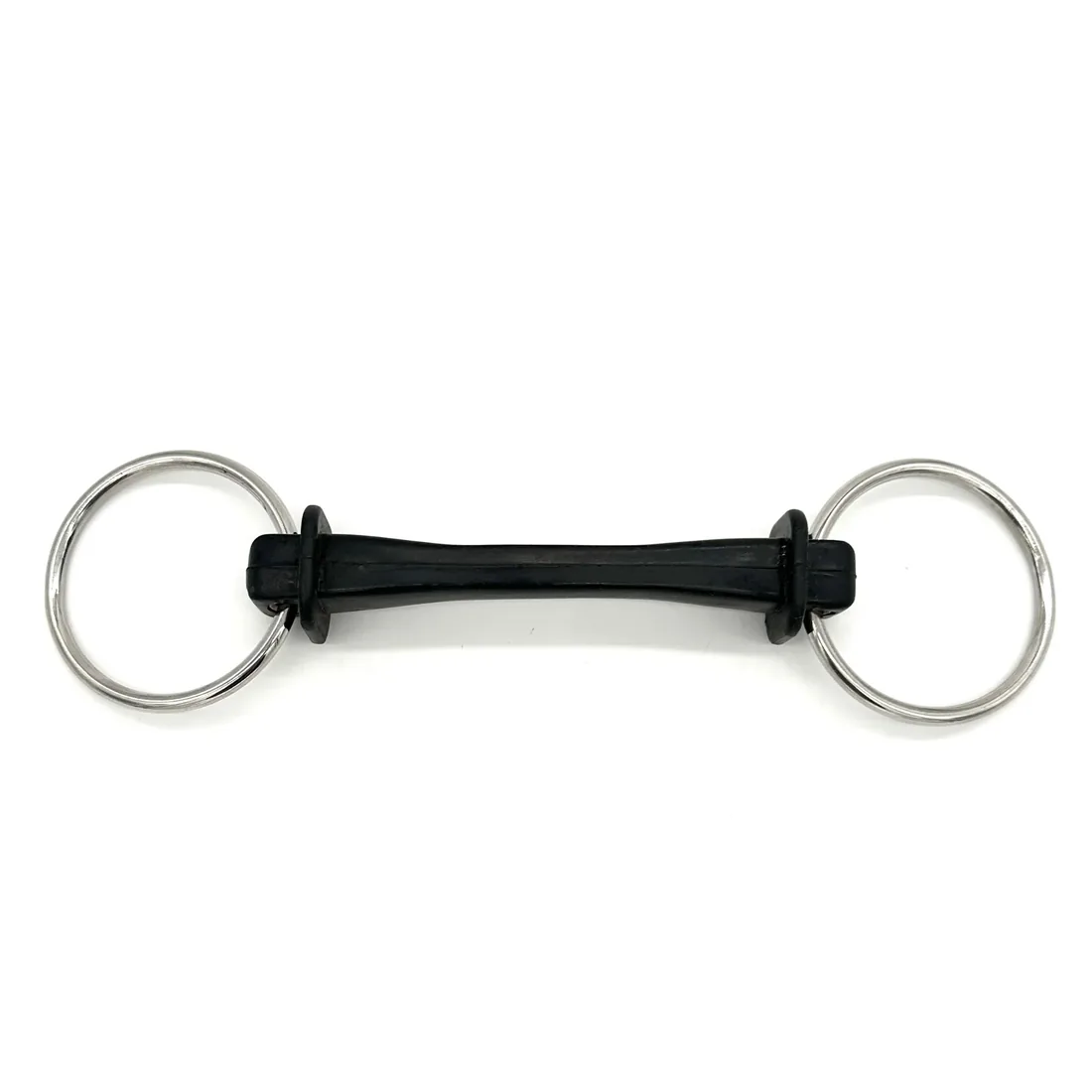
What does a Mullen mouth bit describe?
A Mullen mouth bit is identified by a continuous, gently curved mouthpiece rather than a centre joint. That distinction is useful when a buyer wants to compare mouthpiece geometry, but it is not a promise that one shape will suit every horse, hand or bridle. The general snaffle reference explains why mouthpiece and cheek-ring details should be considered together rather than treated as one label.
The purpose of the continuous mouthpiece is to offer a different contact geometry from a centre-jointed design. Its curve, thickness and cheek arrangement still matter, so the name alone cannot predict how an individual horse will respond. Compare the complete design with a qualified fitter rather than treating a change of mouthpiece as a guaranteed solution to discomfort or a training problem.
Separate mouthpiece fit from cheek fit
Before asking for colour or logo artwork, record the mouthpiece width, thickness, cheek configuration and the complete bridle arrangement. A Mullen mouthpiece can be paired with different side pieces; a full-cheek snaffle is a separate product structure with extended arms. If the buyer actually needs full cheeks, use the full-cheek fit guide rather than treating the arm geometry as a Mullen-mouth variation.
- Identify whether the requested product is SC-SMMB-01 Mullen mouth or SC-SMMB-02 full cheek.
- Ask the supplier which dimension the number refers to: mouthpiece width, outside width or another drawing dimension.
- Check the assembled bridle and stop the trial if the bit rubs, traps tissue or changes the intended clearance.
Check the listed width against the drawing
The listed width options are 115, 125, 135 and 145 mm. Treat these as starting points for an enquiry, not a horse-specific size recommendation. Put the SKU, millimetre width, colour and pack unit in the same brief, then request the dimensioned drawing and a sample of the final variant. If an inch label differs from the drawing, ask which measurement defines the supplied product rather than making your own substitution.
| Term | What it describes | What it does not confirm |
|---|---|---|
| Mullen mouth | A continuous curved mouthpiece rather than a centre-jointed mouthpiece. | It does not by itself specify cheek rings, width, thickness or suitability for every horse. |
| SC-SMMB-01 construction | Food-grade LSR silicone over an internal 304 stainless-steel core. | A material record is not a veterinary or finished-product approval. |
| Listed widths | 115 / 125 / 135 / 145 mm are listed options. | The quotation must identify the measurement points and agreed millimetre width. |
What material evidence should a B2B buyer request?
SC-SMMB-01 is described as food-grade LSR silicone over a 304 stainless-steel core. When reviewing references such as FDA 21 CFR 177.2600, LFGB or ISO 10993, check which formulation and specimen each document covers. The e-CFR text for 21 CFR 177.2600 defines a regulatory provision for certain rubber articles intended for repeated food use; it does not automatically approve a complete equestrian bit. Ask for the actual report, specimen, formulation and intended-contact scope.
Keep the following separate in your approval file:
- silicone formulation and colourant documentation;
- stainless-steel material or finish information;
- cleaning instructions and any stated thermal limit;
- sample inspection notes and the final commercial specification.
“Food-grade”, “medical-grade” or “mouth-safe” should not be expanded into a treatment, comfort or competition-safety guarantee. If the horse shows pain or an existing injury, stop and involve a qualified fitter or veterinary professional.
Sample approval checklist
- Confirm the selected mouthpiece width and the measurement convention.
- Check the curve, surface, edge transition and cheek-ring movement on the physical sample.
- Compare the sample to the quoted colour, pack unit and material wording.
- Record the agreed cleaning and replacement instructions before bulk production.
Turn the fit brief into an approval record
A useful Mullen mouth specification starts with a reference that everyone can identify. Record whether the request is for the existing SC-SMMB-01 configuration or a proposed change. Attach photographs of the reference bit and a drawing that labels the dimension being requested. Ask a qualified fitter to assess the horse and complete bridle separately; a procurement drawing cannot establish the suitability of a mouthpiece for an individual animal.
Keep three decisions distinct: the form being purchased, the physical sample being approved and the production terms being accepted. A drawing can define the continuous curve and width without proving how the sample will behave in use. A sample can be inspected without establishing the MOQ or the colour availability of the next batch. Recording each decision separately helps prevent a seemingly minor artwork or colour revision from silently changing the product specification.
- Reference field: record the SKU, drawing revision, photograph and the date of the sample review.
- Dimension field: name the measurement points and units, rather than placing an unexplained number beside the product name.
- Assembly field: identify the mouthpiece and cheek configuration, and list any accessories that are part of the supplied pack.
- Decision field: separate accepted details from open questions and record who can authorise the next step.
For example, a brief might request “SC-SMMB-01, listed 125 mm option, black sample, measurement points to be confirmed on the supplier drawing”. This is an enquiry format, not a recommendation that 125 mm fits a particular horse. It avoids guessing the dimension convention while giving the supplier enough information to respond with a specific variant. Open the SC-SMMB-01 product page to identify the product before attaching the final drawing.
Review the physical sample without inventing a test result
Use the sample review to compare observable details with the agreed brief. Check whether the surface is continuous, whether the visible transitions match the reference, and whether the cheek-ring arrangement is the one requested. Photograph any difference beside an identified drawing feature. These are incoming inspection observations; they do not establish the fatigue life of the internal core or the strength of a bond beneath the surface.
If a supplier offers a mechanical test report, ask what was tested, how the specimen was held, which loading method was used and which acceptance criteria applied. A headline force value without this context cannot be transferred to another geometry or interpreted as a complete service-life guarantee. Do not ask the purchasing team to improvise destructive tests on a bit intended for riding. Agree any independent testing and its sample requirements with an appropriately qualified laboratory.
Keep one approved reference sample where practical, together with the corresponding specification. When production samples arrive, compare like with like: the same stated width, cheek design, colour and pack contents. If the new sample differs, pause approval and ask whether the difference is a deliberate revision or an error. A repeated product name is not enough to establish that two samples were made to the same specification.
Handle private-label claims and substitutions separately
A private-label artwork review should not be used to create new product evidence. Keep the agreed product description close to what the supplied documents and sample support. A logo, a premium-looking pack or the words “food-grade silicone” do not establish veterinary approval, structural durability or competition eligibility. Ask for the proposed instructions and warnings alongside the label so the buyer can review the complete presentation, not just the front-of-pack phrase.
Material or colour substitutions deserve their own approval step. A similar-looking black mouthpiece is not proof that the same formulation, pigment or manufacturing process was used. Ask the supplier to identify the proposed change and whether it affects the supporting reports or care instructions. Record the answer before accepting a revised sample; do not silently carry a previous report across a different formulation.
For a range containing both products, return to the Mullen mouth and full-cheek comparison and keep separate sample records. The two SKUs can share a buying project without sharing every structural detail, document or accessory. This prevents the approval of one photographed sample from becoming an unintended approval of a different cheek-arm assembly.
Finish with a written response from the supplier that names the accepted specification, outstanding items and next action. If a dimension, material description or care condition remains unresolved, keep that item open instead of replacing it with a generic marketing promise. The result is a practical purchasing record that can be used for sampling, artwork review and a later reorder without pretending to be a horse-specific fitting prescription.
Frequently Asked Questions
Does the absence of a centre joint mean the mouthpiece can never pinch?
No. A continuous mouthpiece still has contact edges and cheek-ring interfaces, and an unsuitable width or bridle adjustment can cause problems. Do not use the joint-free description as a universal no-pinching claim.
Can I order a replacement by the Pony or Large label alone?
No. Retain the original drawing, measured width and SKU. A size name is not a transferable measurement across different suppliers or cheek designs; confirm the replacement against the approved sample.
Should I apply a general silicone boiling temperature to the whole bit?
No. Ask for cleaning instructions for the complete mouthpiece, core and hardware assembly, including the method and exposure time. A material temperature statement alone does not validate a complete cleaning or disinfection process.